POSTGRADUATE ENGINEERING · ADMISSIONS 2026
M.Tech in
Electric Vehicle
Technology
Understand the systems.
Build the engineering behind them.
A two-year M.Tech from Ajeenkya DY Patil University, with DIYguru-led EV labs, live classes and engineering project work.
2 years · 4 semestersB.Tech · B.E. · M.Sc · MCA
Application deadline

YOUR NEXT STEP
Find your fit.
Talk to admissions.
Discuss eligibility, the learning schedule and your path into EV engineering.
₹50,000per semester
₹2,00,000 tuition fee
₹2,00,000 tuition fee
Registration and examination fees are additional.
Apply by
Prefer a conversation? +91 99109 18719
DEGREE AWARDED BYADYPU, Pune
DELIVERY PARTNERDIYguru
PROGRAM FEE₹2 lakh + additional fees
PRACTICAL LEARNINGDelhi · Pune · ADYPU
FROM COMPONENTS TO COMPLETE SYSTEMS
Study the vehicle.
Work through the details.
Battery behaviour, motor control and vehicle integration belong in the same engineering conversation. This program connects the academic work with labs and projects.

01
Learn the system
Live classes and recorded modules cover electric powertrains, batteries, embedded systems and charging.
02
Work with the hardware
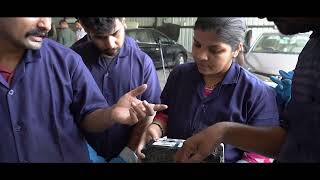
Scheduled workshops and EV labs connect the coursework to test benches, diagnostics and vehicle platforms.
03
Develop a project
Project work spans powertrain design, battery management, charging infrastructure and embedded EV systems.
BUILT FOR
Engineering graduates
Working engineers
Technical founders
THE PROGRAM, IN DETAIL
Make an informed next move.
Start with the question that matters to you.
Every section is a direct link.
01 / PROGRAM & DEGREE
A university M.Tech.
An applied EV focus.
The M.Tech in Electric Vehicle Technology is a two-year postgraduate engineering program offered by Ajeenkya DY Patil University (ADYPU), Pune, in collaboration with DIYguru as the delivery and academic execution partner.

The program combines university academics with live instruction, recorded modules, workshops, EV labs and capstone engineering projects. Students study how the battery, power electronics, motor, embedded controls and charging systems work together in a vehicle.
- Qualification
- M.Tech in Electric Vehicle Technology
- Duration
- 2 years, across 4 semesters
- University
- Ajeenkya DY Patil University, Pune
- Delivery partner
- DIYguru Mobility Pvt. Ltd.
ADYPU awards the university degree. DIYguru contributes the EV training, practical learning and career-support ecosystem. Ask admissions for the current university handbook and the degree requirements for your intake. View the university program listing.
02 / ELIGIBILITY
Bring your engineering background.
Build your EV specialisation.
Applicants with a B.Tech, B.E., M.Sc or MCA qualification are eligible to apply. The program is designed for fresh graduates, working professionals and technical founders who want to develop expertise in electric vehicle engineering.
| Your background | What to discuss with admissions |
|---|---|
| Fresh engineering graduates | How Mechanical, Electrical, Electronics, Automotive, Mechatronics or an allied background connects to EV systems. |
| Working engineers | How the live classes, practical attendance and project work fit alongside your current role. |
| Technical founders & product leads | Which project direction could deepen your understanding of your EV product or subsystem. |
| M.Sc and MCA graduates | How your science or computing background connects to EV modelling, embedded systems and vehicle technology. |
Eligible qualifications: B.Tech, B.E., M.Sc and MCA. Final admission is subject to document verification and the university's selection process. Ask admissions about any minimum marks or entrance requirements.
Discuss your eligibility03 / CURRICULUM & TOOLS
Four semesters.
From EV architecture to research.
The published curriculum progresses from vehicle fundamentals and component systems to integration, manufacturing and research. The outline below groups the subjects listed on the current program page; admissions can provide the approved semester syllabus and elective choices.
SEMESTER 01
Build the technical foundation
Electric and Hybrid Vehicles; Automotive Engineering and Vehicle Dynamics; Power Electronics for Automotive Systems; Battery Management System; Embedded Systems Development; EV Architecture Modelling using MATLAB; Advanced EV Modelling using SOLIDWORKS.
SEMESTER 02
Develop the major EV subsystems
EV Design using AUTOSAR; Advanced Powertrain Development; Battery Pack Design and Modelling; EV Charging Infrastructure; Hydrogen Fuel Cell Vehicle Technology. Published elective options include ANSYS or Altair, and EV Business Management or EV R&D Product Development.
SEMESTER 03
Integrate, analyse and manufacture
Data Analytics for EV and Automotive Systems; Sensor and Actuator Technology; PCB Design using Altium; 2-Wheeler EV Manufacturing and Development; FEA Analysis with Abaqus; Research Project I.
SEMESTER 04
Complete the research and development work
Cybersecurity for Automotive Vehicle Systems; 4-Wheeler Design and Development; Research Project II / Major Thesis; Industrial Training and Certification.
Software in the published curriculum
MATLAB, SOLIDWORKS, ANSYS, Altair, Altium and Abaqus appear in the course outline. Ask about the tools selected for your electives, the required laptop specification and whether software licences are included in the fee.
Subjects, electives, sequencing and project requirements follow the university's approved curriculum for the intake.
04 / LABS & PROJECT WORK
Get closer to the hardware.
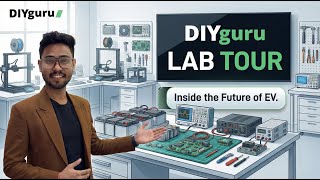
The program materials list practical learning at DIYguru Delhi, DIYguru Pune and the ADYPU campus. Sessions are scheduled as part of the program; your assigned location and attendance requirements should be confirmed before enrolment.

| Learning area | Listed lab platform |
|---|---|
| Powertrain & vehicle systems | 2-wheeler simulator and test bench; complete EV 2-wheeler development; EV 4-wheeler systems. |
| Charging | Charging station simulator and test bench. |
| Electronics & integration | Electronics and embedded-system development; EV harnessing systems. |
| Diagnostics & conversion | On-board diagnostics; EV retrofitment solutions. |
Choose a project direction with technical depth
Capstone areas include EV powertrain design, Battery Management Systems, charging infrastructure and embedded EV systems. A useful project connects a clear engineering question to a design, implementation or test result.
For example, a battery-management project could investigate estimation or monitoring behaviour; a powertrain project could examine component selection against a defined use case. These are illustrative directions, not a guaranteed allocation. The project scope, supervision and assessment are agreed within the program.
Ask about lab schedules and project options05 / LEARNING SCHEDULE
Plan for the classes.
Make room for the practical work.
The learning format combines live classes, recorded modules, workshops and physical EV lab sessions. The brochure indicates a commitment of around 20 hours per week.
- Live classes: instructor-led academic and technical sessions.
- Recorded modules: material to review alongside the scheduled teaching.
- Workshops and labs: practical sessions requiring attendance at the assigned venue.
- Projects and research: work completed across the degree, including thesis requirements.
Working professionals should check class timings, mandatory campus visits, examination arrangements and employer leave requirements before applying. The blended learning description does not remove physical attendance obligations.
06 / FACULTY & MENTORS
University teaching.
EV engineering perspectives.
The brochure brings together ADYPU academics, DIYguru practitioners and industry mentors. Listed academic contributors include Dr. Ipsita Swain for EV Technology, Prof. Uttam Kumar for Power Electronics and Dr. Niteen Bhirud for Automotive Architecture.
Listed DIYguru and industry contributors include Avinash Singh, Ashutosh Dehury, Rahul Kumar and Sajeeth Kumar of ReynLab. Faculty and mentor assignments may vary by module and intake.
During counselling, ask who will lead your core modules, supervise your project and support the practical sessions. Those details are more useful than a long logo list.
07 / FEES & PAYMENT
₹2,00,000 in tuition.
Paid across four semesters.
The M.Tech tuition fee is ₹50,000 per semester. Registration and examination fees are payable in addition to the ₹2,00,000 tuition total.
| Semester | Tuition fee |
|---|---|
| Semester 1 | ₹50,000 |
| Semester 2 | ₹50,000 |
| Semester 3 | ₹50,000 |
| Semester 4 | ₹50,000 |
| Total tuition fee | ₹2,00,000 |
Additional charges: registration fee and examination fees. Request the current amounts and payment schedule from admissions before paying.
Ask for the complete written fee schedule and refund terms. Confirm any travel, accommodation or software costs associated with your learning plan. The ₹2,00,000 figure covers tuition; it is not the all-inclusive payable amount.
Request the complete fee details08 / CAREERS & ASSISTANCE
Prepare for a specific engineering role.
Use your coursework and project direction to build evidence for the work you want to do. Relevant role families include battery and BMS engineering, powertrain development, embedded systems, charging infrastructure, vehicle testing and EV design.

| Career direction | Relevant study areas |
|---|---|
| Battery / BMS engineering | Battery management, pack design and battery-focused project work. |
| Powertrain / power electronics | Motor-drive systems, converters and advanced powertrain development. |
| Embedded / automotive software | Embedded systems, AUTOSAR, sensors and PCB design. |
| EV design / testing / CAE | Vehicle dynamics, modelling, simulation and engineering analysis. |
| Charging infrastructure | Charging-system design, deployment and relevant lab work. |
What DIYguru's placement assistance covers
Support includes CV preparation, mock interviews, career coaching and access to EV job opportunities through eMobility.careers and DIYguru's hiring ecosystem.
Placement assistance is subject to meeting internal evaluation criteria. Selection, role and compensation depend on the employer, available opportunities and your profile. The program does not guarantee a job or salary.
09 / ADMISSION PROCESS
Review. Discuss. Apply.
Start with an eligibility conversation
Share your qualification and goals with the admissions team. Review the current program handbook, schedule and fee terms.
Submit the application and documents
Complete the formal application and document-verification process. Confirm the registration fee, examination fees and payment terms before payment.
Attend the screening conversation
Discuss your background and fit with the admissions team, as described in the program brochure.
Receive confirmation and onboarding details
After selection and the required payment, receive your official enrolment confirmation and learning schedule.
The application deadline for the next intake is . Ask admissions for the scheduled class start date. Submitting the enquiry form on this page requests counselling; it does not reserve a seat or complete university admission.
10 / COMMON QUESTIONS
The questions worth asking.
Is this an M.Tech degree or a certificate course?
This is the two-year M.Tech in Electric Vehicle Technology offered by Ajeenkya DY Patil University with DIYguru as the delivery partner. ADYPU awards the degree. Ask admissions for the current university program handbook and requirements.
Can I join after Mechanical or Electrical Engineering?
Yes. B.Tech and B.E. graduates are eligible to apply, alongside M.Sc and MCA graduates. The admissions team will review your documents and advise how your background connects to the program.
Can M.Sc and MCA graduates apply?
Yes. B.Tech, B.E., M.Sc and MCA are the eligible qualifications. Final admission is subject to document verification and the university's selection process.
Is a GATE score required?
Confirm the current entrance and screening requirements with admissions for your intake. The brochure describes document verification and a screening conversation.
Can I pursue this M.Tech while working?
Working engineers are an intended audience. Live classes and recorded modules are combined with scheduled physical labs and workshops. Confirm the timetable, examination mode and mandatory attendance before committing.
Can the program be completed entirely online?
The described program includes on-site practical learning and campus experience. Confirm the required visits and examination arrangements with admissions; do not plan on a fully online course.
Where will I attend the EV labs?
The program documents list DIYguru Delhi, DIYguru Pune and the ADYPU campus. Your assigned lab location and session schedule will be confirmed by the program team.
What is the M.Tech in EV Technology fee?
Tuition is ₹50,000 per semester, totalling ₹2,00,000 for four semesters. Registration and examination fees are additional. Request the current amounts and the full payment schedule from admissions.
What is the application deadline?
Apply by for the next intake. Contact admissions to confirm the class start date and required documents.
Is there a PG Diploma pathway?
The brochure also describes a PG Diploma pathway. This page focuses on the full two-year M.Tech. Ask the university for the current exit, credit-transfer and remaining-degree requirements before choosing that route.
Does the program guarantee placement?
DIYguru provides placement assistance, including CV preparation, mock interviews, career coaching and job opportunities. Eligibility depends on internal evaluations; a job offer and salary are not guaranteed.
START WITH THE RIGHT QUESTIONS
Does this M.Tech
fit your next move?
Eligible: B.Tech, B.E., M.Sc and MCA. Apply by .