


From BSc Maths to EV Trainer
Satyam Shrivastava
PG Graduate
Currently Trainer at DIYguru
BSc Mathematics graduate who joined DIYguru's PG programme with zero automotive background. Today, Satyam is an EV Research professional and full-time Trainer at DIYguru — teaching the next batch of EV engineers the same skills that transformed his own career.
His story is a proof point that EV careers are not limited to engineering graduates. A science background combined with the right practical training can open doors that traditional placements never could.
Programme
PG in EV & Embedded
Current Role
EV Trainer
Background
BSc Mathematics
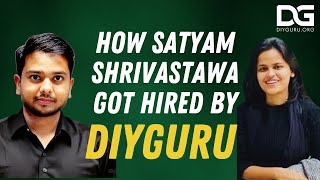
Watch Satyam's full story — from BSc Maths to EV Trainer
The Journey
BSc Maths → EV Research → Trainer.
Before DIYguru
BSc Mathematics Graduate
Satyam completed his BSc in Mathematics — a pure science degree with no automotive or electrical engineering component. While strong in analytical thinking and problem-solving, the path from a maths degree to a technical career in the EV industry was anything but obvious.
The Decision
Enrolled in DIYguru PG Programme
Rather than pursuing a traditional MSc or shifting to an unrelated field, Satyam chose DIYguru's 12-month PG in EV & Embedded Systems. The programme's hands-on focus — real hardware, real vehicles, real lab time — made it accessible even without a core engineering degree. The CoE labs bridged the gap between theory and industry expectations.
During the Programme
Mastering EV Systems from Scratch
Over 12 months, Satyam worked across all major EV subsystems — battery management, motor control, embedded programming, vehicle diagnostics, and charging infrastructure. His analytical background from mathematics proved to be an asset for BMS logic, data analysis, and simulation-based testing. By the capstone project, he was designing and validating EV subsystems independently.
After Graduation
EV Research — DIYguru
Satyam's performance during the programme was strong enough that DIYguru brought him on board for EV Research. He started working on curriculum development, lab module design, and applied research projects tied to the academy's training infrastructure. His role required the exact blend of technical depth and pedagogical clarity that the PG programme had developed.
Current
Full-time EV Trainer at DIYguru
Today, Satyam is a full-time Trainer at DIYguru — the same academy that trained him. He leads lab sessions, mentors new cohorts, and contributes to programme development. His BSc Maths background, combined with the practical expertise from the PG programme, makes him uniquely effective at breaking down complex EV concepts for students from varied academic backgrounds. He is living proof that the programme works — a graduate who now helps create the next generation of graduates.
Why this story matters
Most students assume EV careers require a B.Tech in Electrical or Mechanical. Satyam's journey demonstrates that a BSc graduate with the right practical training can not only enter the EV industry but rise to a position where they're training others. The PG programme's lab-first approach levels the playing field.
From consumer to creator
Satyam didn't just use the DIYguru system — he became part of it. Going from enrolled student to full-time trainer is the strongest possible endorsement of a programme's value. When the academy trusts its own graduates to teach the next batch, that tells you everything about the quality of the training.
The non-linear career path
BSc Maths → PG in EV → EV Research → Trainer. This is not a conventional career ladder. But in a fast-moving industry like electric vehicles, unconventional paths often produce the most adaptable professionals — people who can think across disciplines, learn quickly, and communicate complex ideas clearly.
Skills Acquired Through the PG Programme
What Satyam learned.
BMS & Battery SystemsMotor ControlEmbedded C / ArduinoCAN Bus ProtocolEV DiagnosticsMATLAB/SimulinkHV Safety ProceduresCharging InfrastructureVehicle DynamicsData Analysis for EVCurriculum DesignLab Module DevelopmentTechnical Training Delivery
Hired Through eMobility.careers
Every placement runs through eMobility.careers.
India's dedicated EV jobs platform. 183+ hiring partners. Every DIYguru graduate gets a visible profile.
Explore eMobility.careers →
Your Turn
Satyam started with a BSc. Where will you start?
You don't need an engineering degree. You need the right programme, the right labs, and the right placement ecosystem. The PG programme accepts graduates from all disciplines.
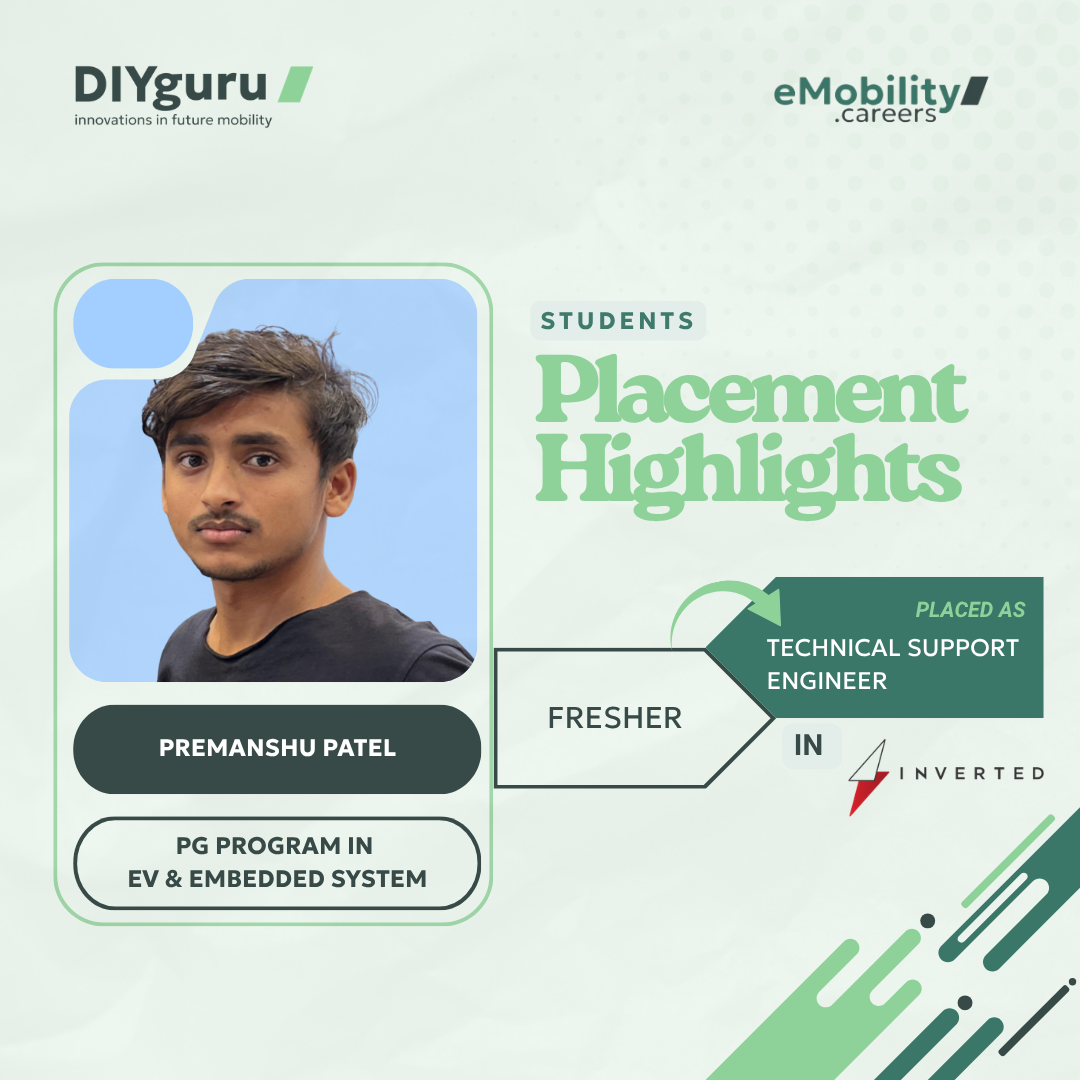
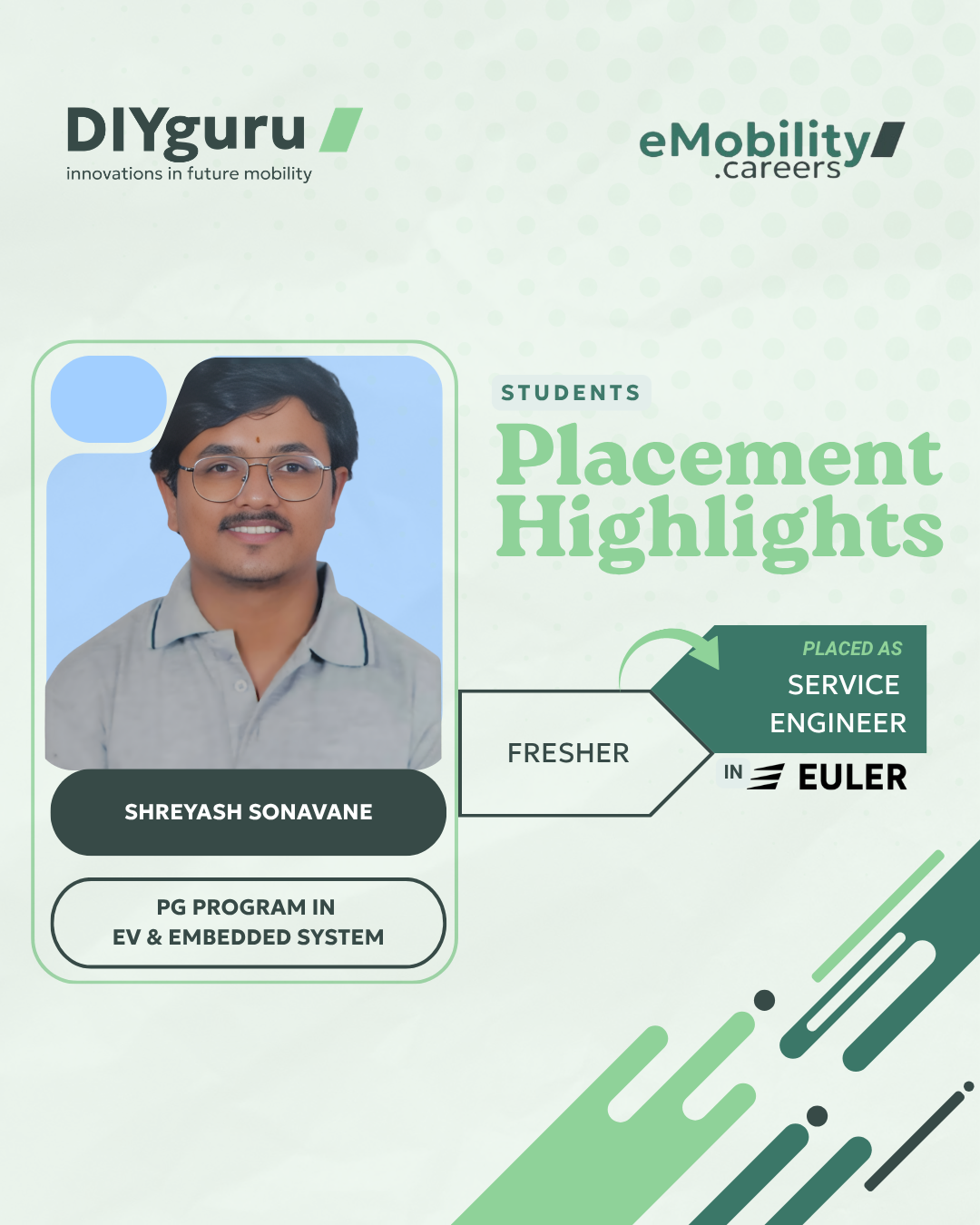
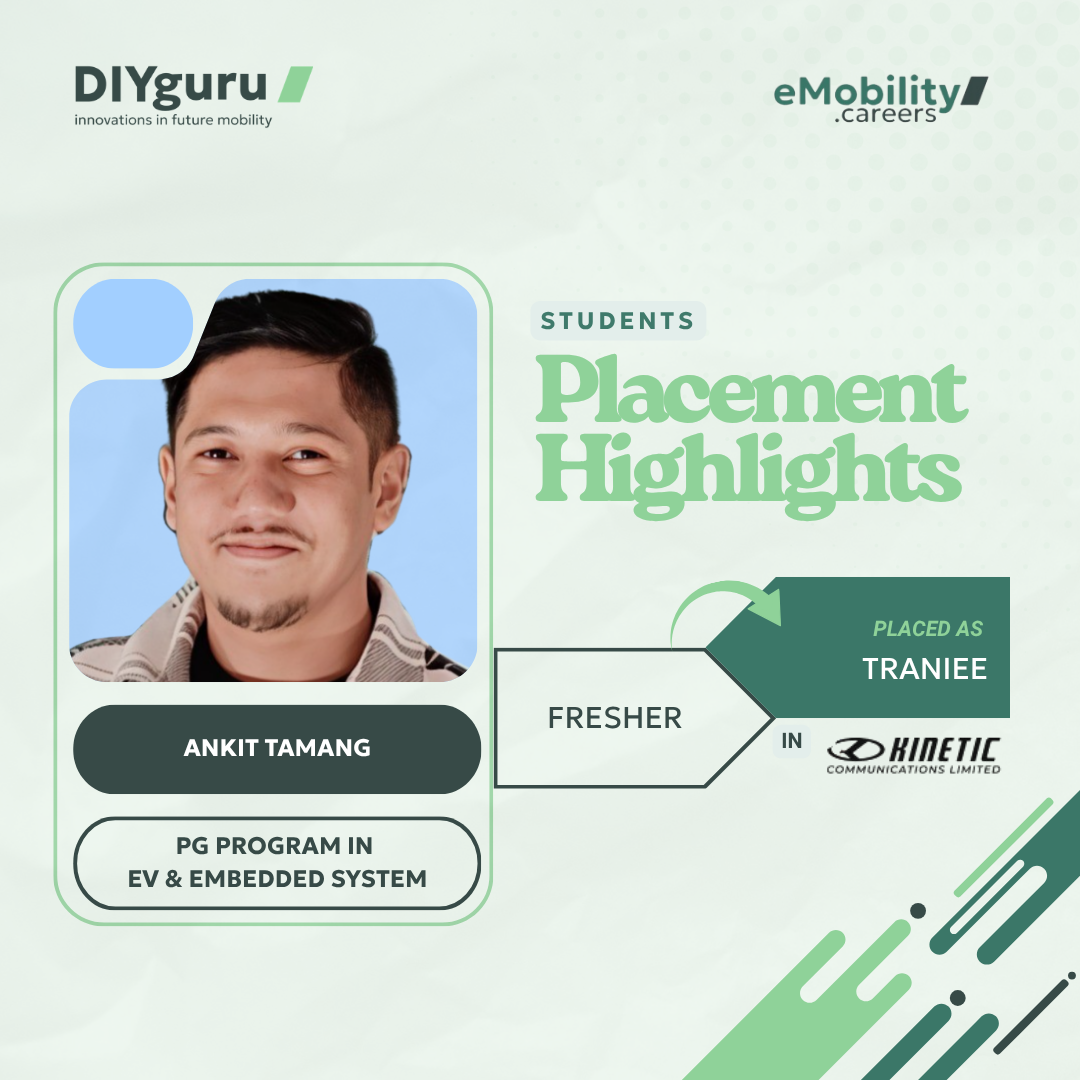
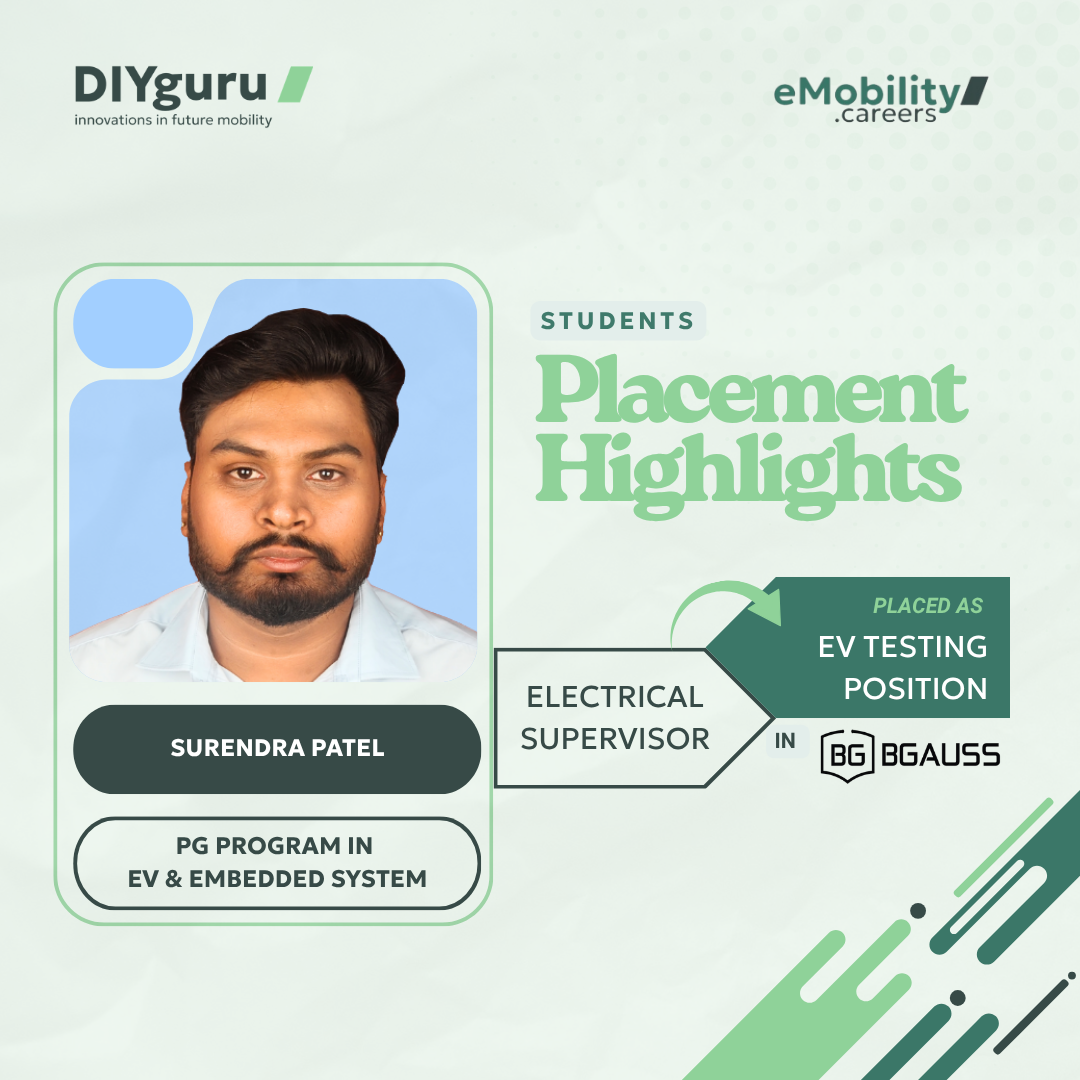
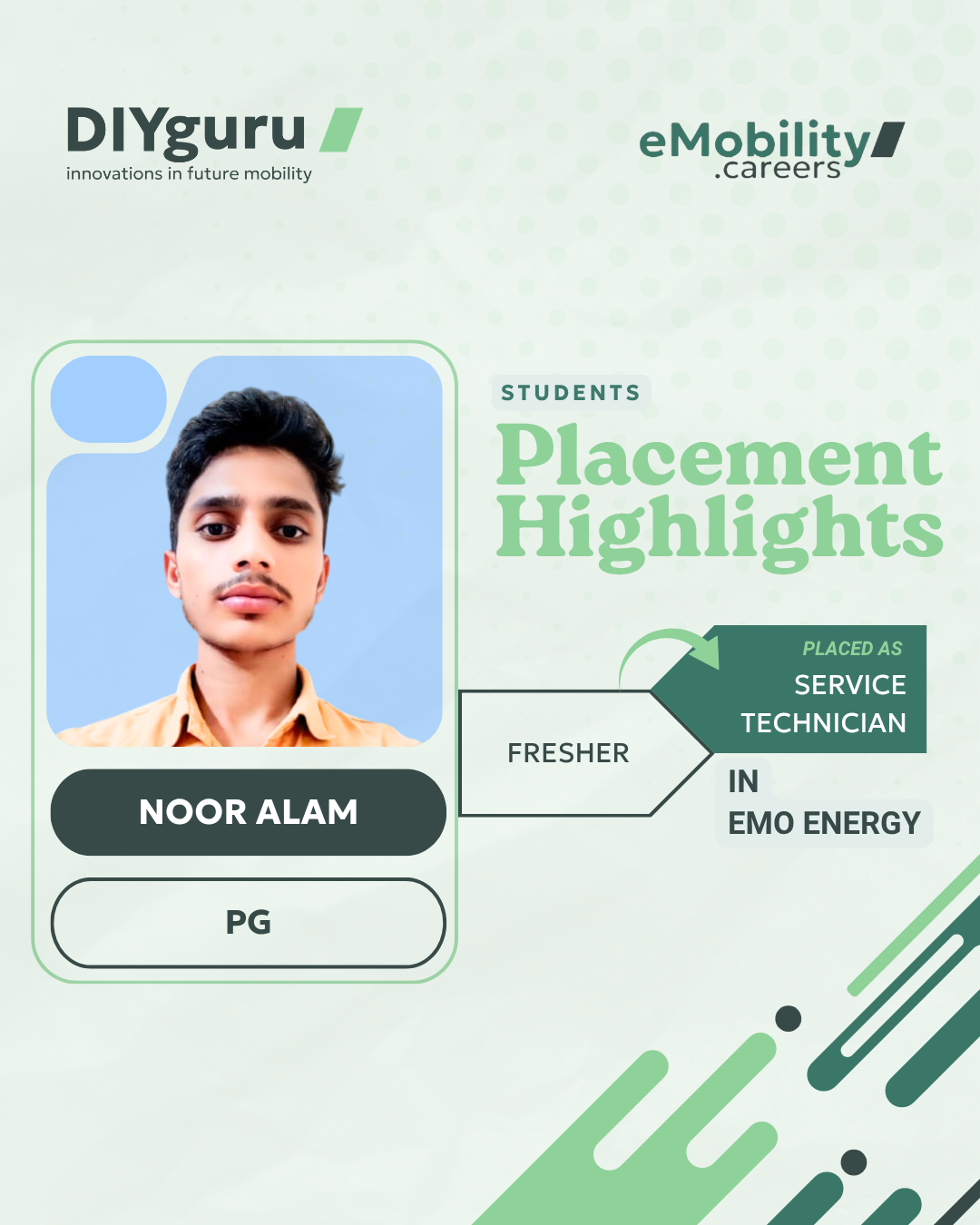
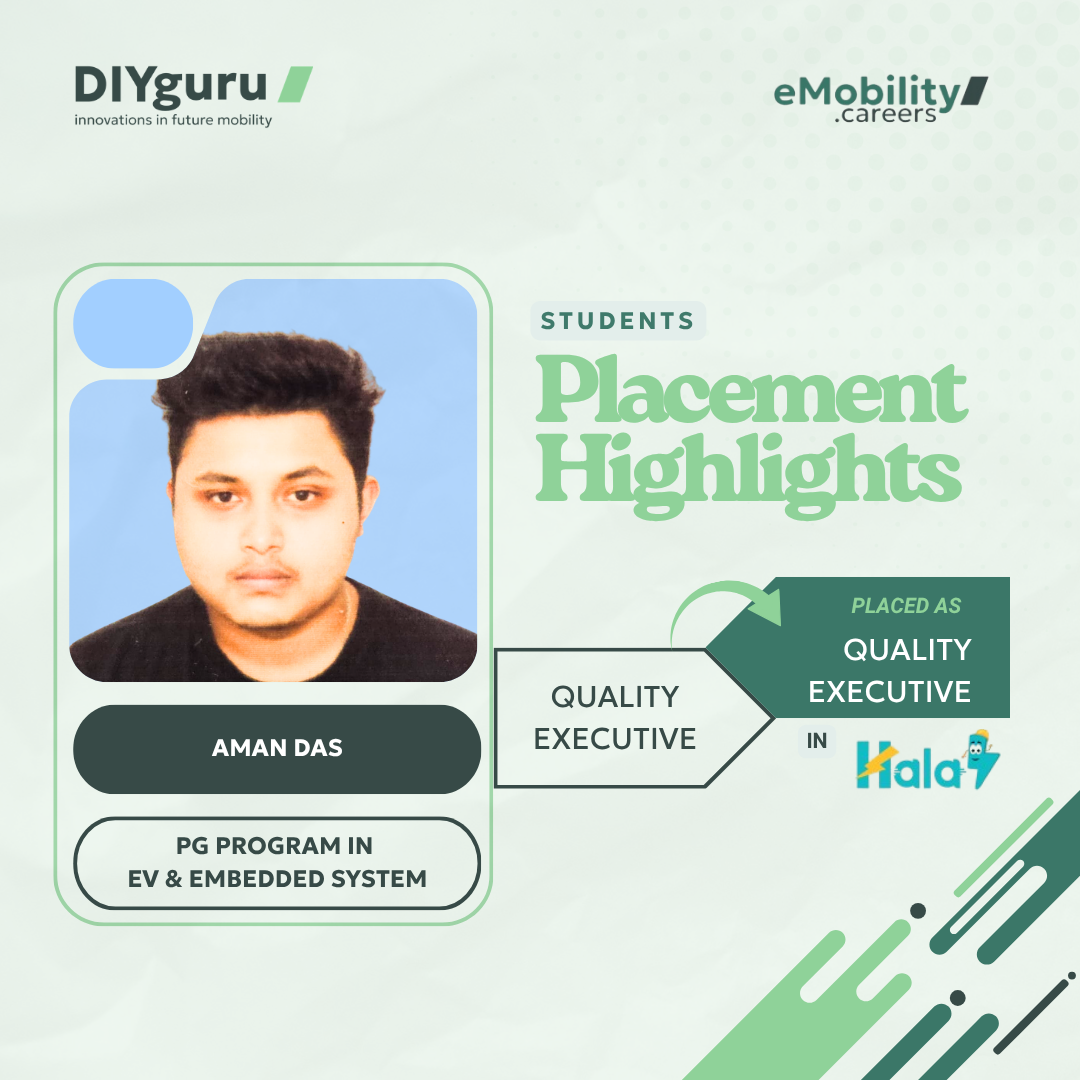
More PG Success Stories
Peers from the programme.
Want the full placement picture?
CTC ranges, sector breakdown, company partnerships — all in the Annual Placement Report.
Our Clients
Trusted by 528+ Companies & OEMs
From global automotive OEMs and Tier-1 suppliers to EV startups, government bodies, and Fortune 500 companies.


Swipe to see more partners
Showing 39 of 528+ corporate training partners
Accreditations
Programs Recognised by Govt. Bodies & Industries
DIYguru is recognized and endorsed by major educational and governmental organizations including the Ministry of Education, NITI Aayog, and NEAT AICTE for its commitment to upskilling in automotive and EV technologies. The institute also collaborates with industry leaders like TATA Technologies and the Ola Mobility Institute to ensure the relevance and practicality of its training programs.


Swipe to see more accreditations
In The Media
DIYguru in the Press
ANI News
IIT Jammu Enters Into Collaboration With DIYguru To Launch Certificate Programs in EV Sector
Read →
PTI News
Tata Technologies Partners With DIYguru for Industry-Relevant E-Mobility Programs
Read →
The Print
DIYguru Partners With L&T Edutech for E-Mobility Training — Hardware-Enabled PG Program
Read →
Times of India
DIYguru and ADYPU Launch M.Tech Program in Electric Vehicle
Read →
Economic Times
DIYguru and Ajeenkya DY Patil University To Launch Integrated PG, M.Tech in EV
Read →
India Education Diary
AICTE–DIYguru MOU To Provide Jobs To One Million EV Workforce
Read →
Autocar Professional
ASDC & DIYguru Launch Nanodegree Program To Upskill Students in EV Technology
Read →
SiliconIndia
Tata Technologies & DIYguru Join Forces To Power India's Next-Gen eMobility Talent
Read →
TV9 Hindi
इलेक्ट्रिक कारों के मैकेनिक की बढ़ रही मांग — DIYguru से बना सकते हैं करियर
Read →
Zee News
Great Opportunity To Earn in the World of Electric Vehicles — Training & Method
Read →
National Skills Network
Roundtable on Skill Development for Electric Vehicles — DFID, ASDC & SSOU
Read →
Hindustan
DIYguru से हार्डवेयर सक्षमता के साथ EV बिजनेस और इंजीनियरिंग सीखें
Read →
Watch DIYguru
Lab Tours, Placements & Real Stories
🔧 Hands-On
EV Hands-on Training in Pune on Tata Tiago EV 🚘🔧
🎓 Placement
Build Your Career in the EV Industry Like Prabhat Gautam!
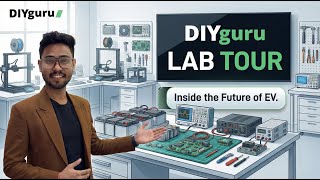
🏭 Lab Tour
DIYguru Lab Tour — E-Mobility Hardware Lab
🔩 Hardware
Introducing the Ultimate EV Training Kit by DIYguru & EVI Technologies

🌟 Alumni
Empowering Futures: Nitin Agarwal's Journey with DIYguru in EV
🚀 About Us
Welcome to DIYguru — India's #1 E-Mobility & FutureTech Platform
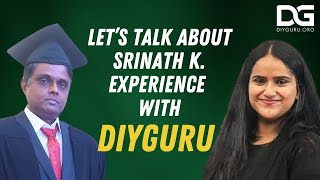
📊 Placement
Placement Spotlight: A Journey of Skills, Sustainability & Smart Choices
💬 Story
This Is More Than a Career Story — When Learning Meets Purpose

🌍 International
Mustafa From North Africa 🔥🔥 — Global EV Training
🎤 Masterclass
THE FAST TRACK TO AN EV CAREER — Masterclass by Avinash Singh
Ready to build your EV career? Talk to our counsellors today.
BOOK FREE CONSULTATION →
Your journey starts here.
DIYguru is India's leading AICTE-approved platform, equipping engineers, graduates, and professionals with the future-ready skills needed in Electric Vehicles (EVs), Battery Technology, Solar Energy, Green Hydrogen, and Clean Mobility.
Whether you're starting out or shifting your career toward sustainability — your journey begins here.
Why Choose DIYguru?
- AICTE-Approved Certifications
- Industry-Curated Courses (EV, Battery Design, Solar, Embedded Systems, BMS, MATLAB & more)
- Project-Based Learning using real case studies from Tesla, Tata Motors, Ather, and others
- Global Opportunities – Connect with 300+ hiring partners and international universities
- Work on Real-World Tools like MATLAB, SolidWorks, Python, Simulink, Ansys
Your journey starts here.
Ready to Begin? Drop your info, and we'll help you get there!
🔒 Your information is secure and will never be shared.
🎬 Unlock This Video
Enter your details to watch
Get instant access + free EV career guidance from our counsellors.
Please fill all fields correctly.
🔒 Your data is secure. We'll send you free EV career resources.


Let's Connect
Training programs · B2B partnerships · College workshops
Certification
Programs
Programs
B2B Corporate
Training
Training
College
Workshops
Workshops
Partnership &
Collaboration
Collaboration
Your data is secure · No spam · Expert callback within 2 hours