


Hands-On EV Training
Skills you can actually use in the EV industry, from day one.
Real motors, real batteries, real vehicles. Train inside India's most equipped Centre of Excellence labs and walk out with the practical skills employers are hiring for.
- Six dedicated hardware labs you actually wire and program
- Real vehicle work on Tata Tiago EV, electric scooters and retrofitted units
- ASDC and AICTE NEAT certified, trusted by 528+ companies
- Direct access to 183+ active hiring partners
Accredited by


Free Counselling
Reserve Your Lab Slot
Get a callback from a DIYguru counsellor in under 2 working hours.
50,000+Professionals trained
15+Centre of Excellence labs
183+Active hiring partners
528+Corporate partners
Why hands-on training is non-negotiable in EV
India needs to nearly double its EV-ready workforce to 30,000 trained professionals every year to hit 2030 targets, with a planned investment of ₹13,552 crore on hiring and training. Theory alone will not get you hired, but practical skills will.
2 lakh
Direct EV jobs by 2030
SIAM's EV Skill Gap Study projects two lakh direct hires across battery, motor control, charging, BMS, embedded and service roles. Hardware-trained candidates go to the front of the queue.
57%
Of fresh engineers found employable
Industry surveys consistently flag a gap between classroom learning and what OEMs need on the production floor. Lab-time on real EV hardware closes that gap faster than any certificate ever can.
38%
Faculty shortage in top institutes
Even the best engineering colleges struggle to deliver applied EV labs. DIYguru lets you skip the wait and access industry-grade equipment supervised by practising engineers.
Inside the labs
A glimpse of what your training week looks like — real workspaces, real hardware, real learners.


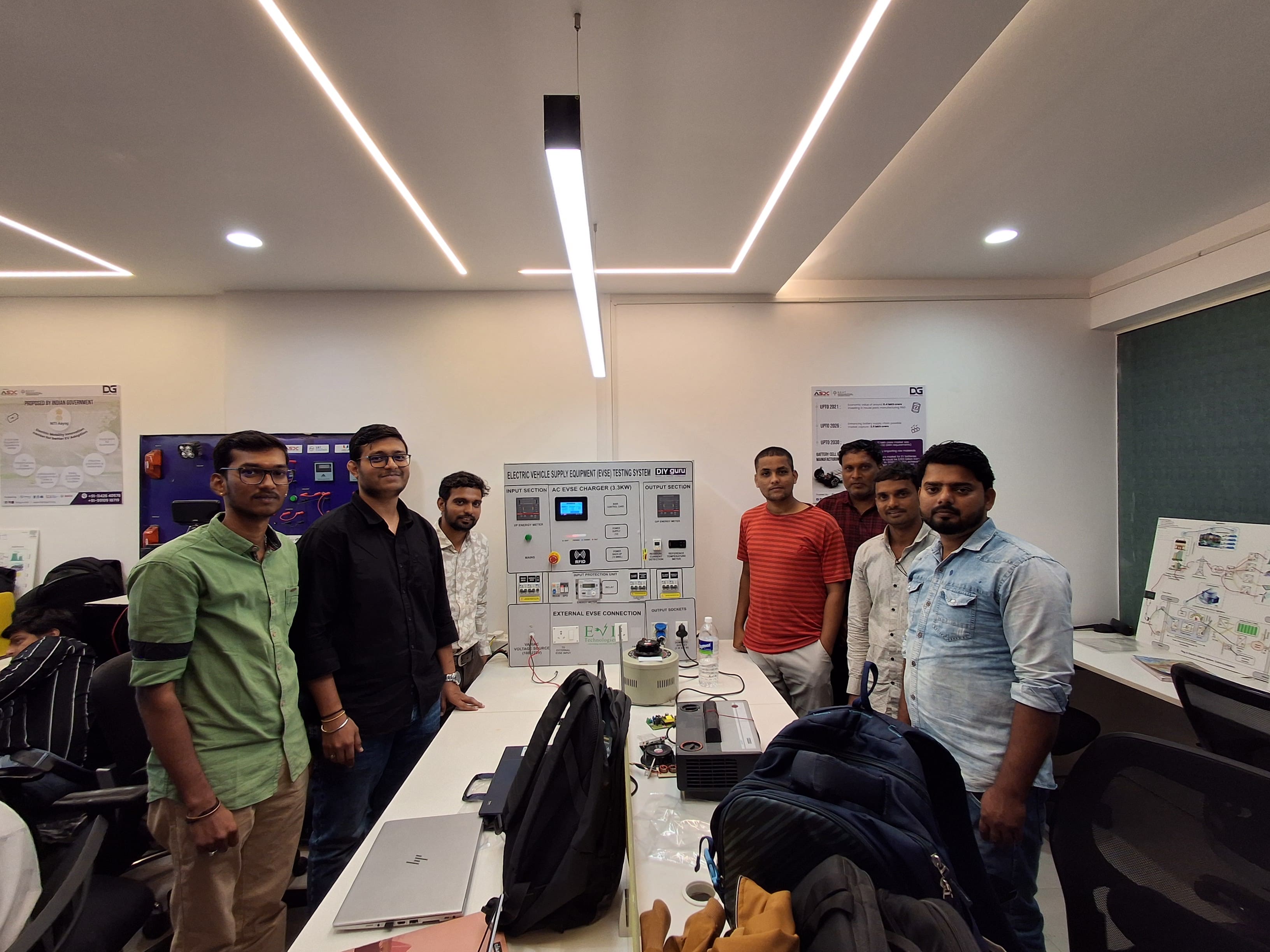
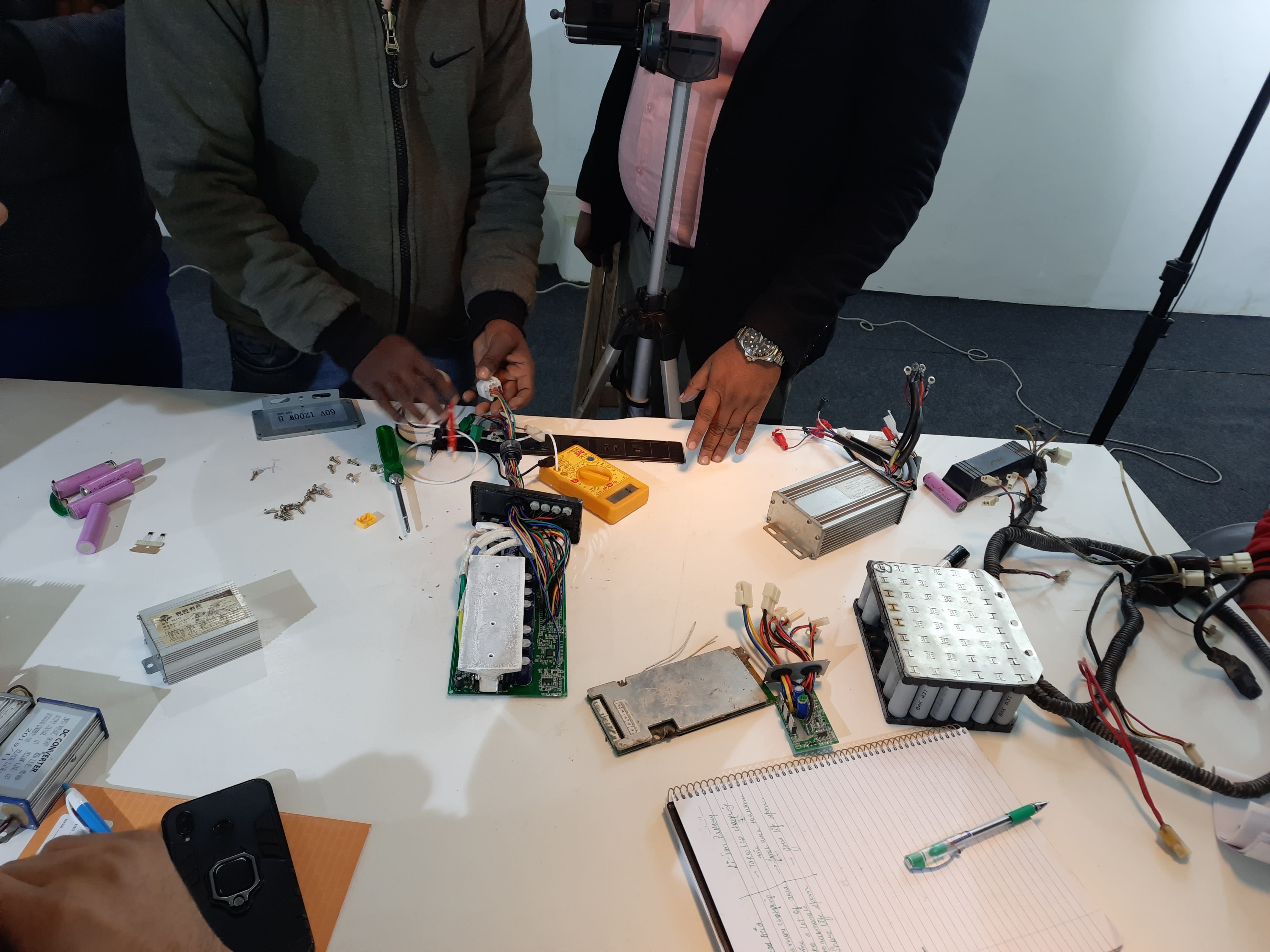
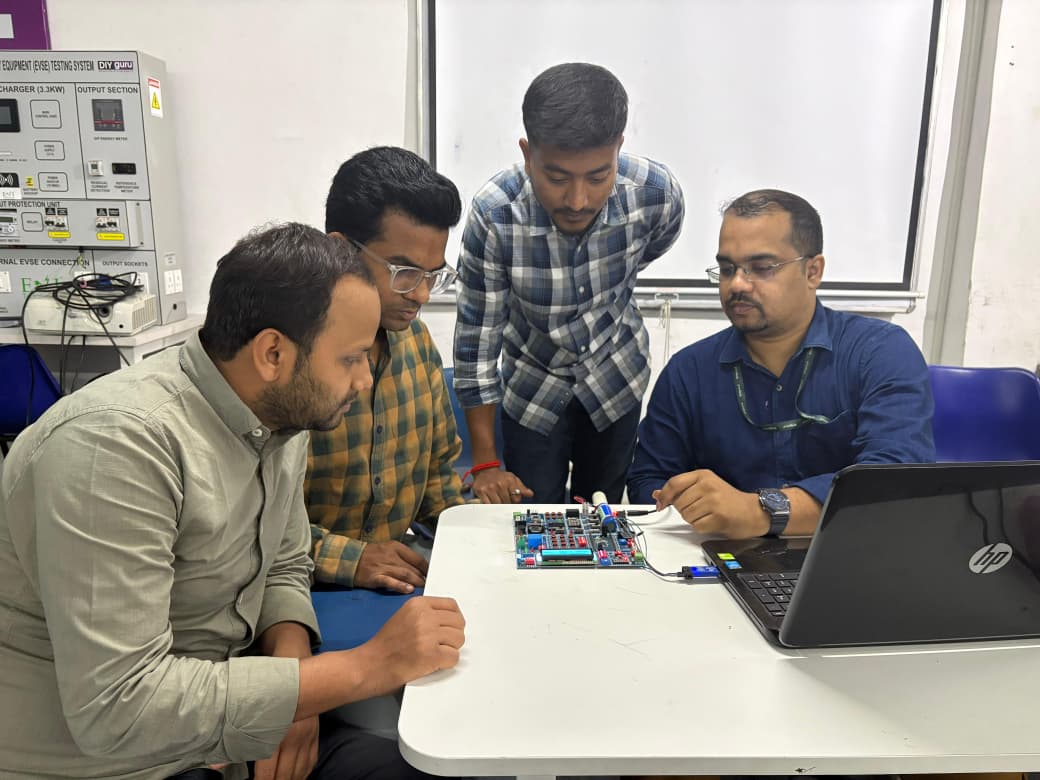
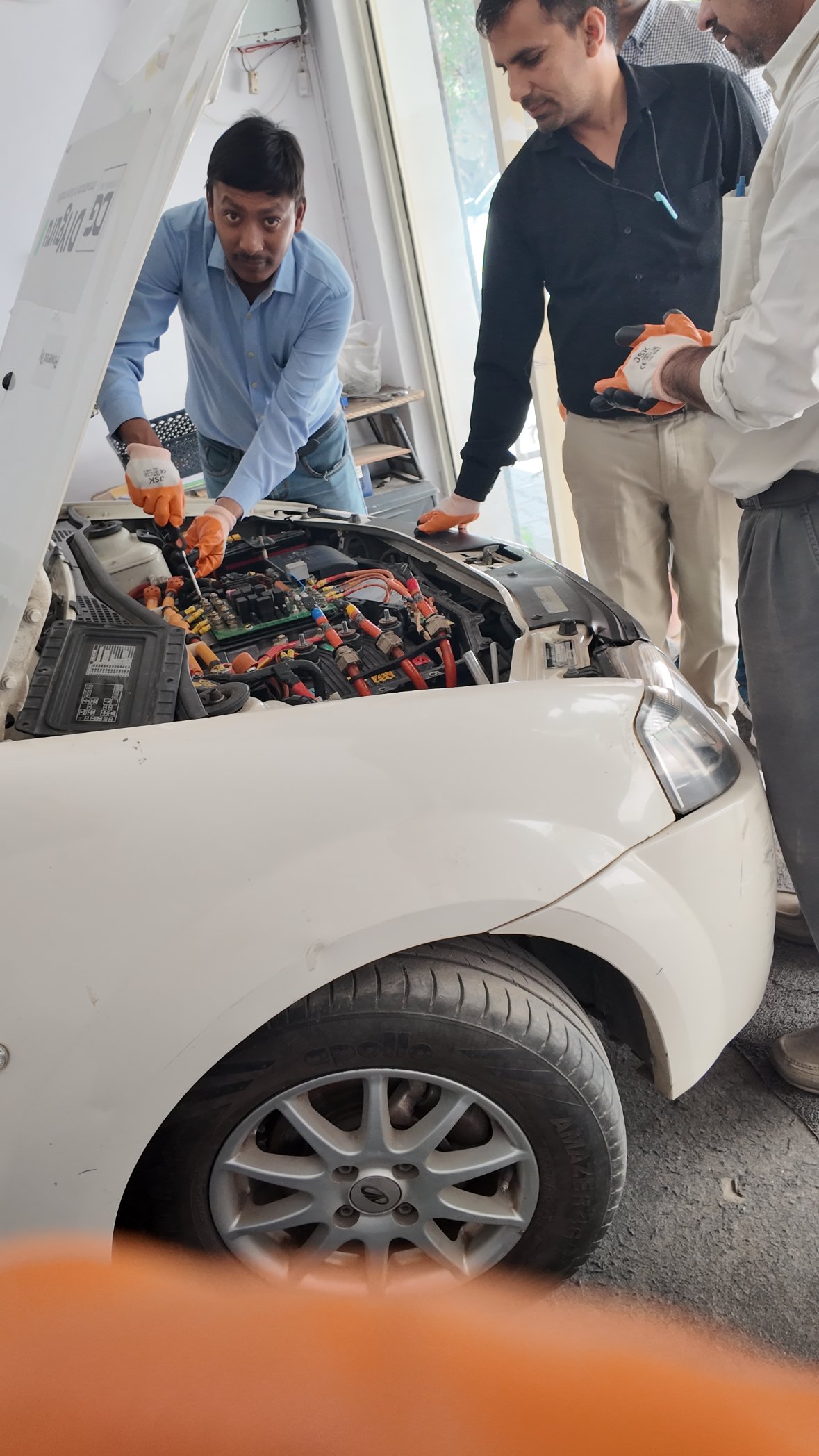
Nine hardware labs. Every system you will work on as an EV engineer.
Every learner gets supervised lab time across the full vehicle stack, from individual cells to a running electric vehicle on the chassis.
Lab 01
2-Wheeler Simulator & Test Bench
Bench-mount a complete 2-wheeler EV powertrain. Run discharge profiles, capacity tests and dynamic load analysis to see how throttle, controller, BLDC motor and BMS behave under road-mimicking conditions.
Lab 02
Charging Station Simulator & Test Bench
Wire up an EVSE from scratch. Measure voltage, current and energy efficiency, test OTP and RFID authentication, and validate safety protections under realistic fault conditions.
Lab 03
EV Retro-Fitment Solution
Convert a real internal combustion vehicle to electric. Integrate motor, battery and controller, calibrate throttle and pedal-assist, then road-test the converted unit for performance and range.
Lab 04
Electronics & Embedded System Development
Programme microcontrollers like Arduino, STM32 and ESP32 using the DIYguru Embedded Kit. PWM motor control, I2C sensor interfacing, CAN messaging and battery monitoring, all on bench hardware you wire yourself.
Lab 05
Development of Complete EV 2-Wheeler
Build a working 2-wheeler EV from chassis up. Battery pack assembly, motor mount, controller integration and harness routing — finishing with a road-ready prototype you can ride away.
Lab 06
EV Harnessing System
Design and build the wiring harness for a complete EV. HV-LV separation, connector selection, crimping, continuity testing and inspection against IPC-A-620 standards used in production.
Lab 07
On-Board Diagnostics (OBD)
Read live CAN traffic from production EVs. Decode DTCs, run service-mode commands and troubleshoot real fault conditions on the Tata Tiago EV and 2W platforms in the lab.
Lab 08
Power Distribution Unit (PDU)
Build and test the high-voltage PDU. Pre-charge circuitry, contactor sequencing, fuse coordination and HV interlock loop validation under realistic fault scenarios.
Lab 09
EV 4-Wheeler Systems
Open-platform 4-wheeler EV training on the Tata Tiago. Full HV walkthrough, OEM-style diagnostics, drive cycle testing and battery thermal observation in a real production vehicle.
All nine labs are integrated into DIYguru's full programme stack — including the PG Certificate Program (IIT Jammu collaboration), the M.Tech in EV Technology with ADYPU, and the Nanodegree tracks. Lab access comes with the programme; there is no extra charge.
Programs built around the lab, not the slide deck
Pick a program based on where you are in your career. Every one of these guarantees supervised hardware time, not just video lessons.
Certified EV Technician (CEVT)
India's most enrolled hands-on technician program. Full disassembly, fault diagnosis, repair and servicing of electric two-wheelers and three-wheelers.
2-Wheeler EV Service & Repair Workshop
Short, intensive workshop on electric scooters and bikes. Battery handling, controller swap, motor diagnostics, harness repair and live troubleshooting.
Embedded Hardware Workshop (EV BMS & Controllers)
Build a working motor controller and BMS on real microcontrollers. Programme, debug and bench-test like a junior embedded engineer at a Tier-1 supplier.
Hardware-in-Loop (HIL) Training
Co-developed with Micelio Mobility. Validate motor controllers and battery systems against simulated vehicle models, the way OEMs actually do pre-production testing.
BMS Specialist Training
Cell selection, pack assembly, BMS configuration, fault injection and protection logic. Run real charge-discharge cycles and read what the data tells you.
High Voltage Safety (4-Wheeler)
Mandatory protocols every 4-wheeler EV technician needs. Lockout-tagout, insulation testing, isolation procedures and rescue drills on live HV systems.
Real Vehicles, Not Simulators
Train on the same vehicles you will service in the field.
DIYguru labs include working electric vehicles you can actually open up, diagnose and repair under instructor supervision. From the VARCAS electric scooter platform to the Tata Tiago EV, every program ends with vehicle-level competency.
-
✓
Tata Tiago EV - 4-wheeler training Full HV system walkthrough, diagnostics with OEM-style tooling, charging interface testing.
-
✓
VARCAS electric scooter - 2-wheeler practicals Mapped to OEM service manuals. Battery removal, controller swap, harness fault diagnosis.
-
✓
Retrofitted ICE-to-EV vehicles Take a petrol vehicle and convert it. End-to-end project work supervised by veteran engineers.
-
✓
2W chassis dynamometer testing Measure power output, torque and efficiency under realistic loading. The same data OEMs use to certify products.
The exact skills that get you hired
Every skill below is mapped to a specific job role advertised by DIYguru's 183+ hiring partners. Train on these and your CV writes itself.
EV wiring & harness reading
BMS configuration & faults
CAN bus protocol on EVs
Motor controller programming
Lithium-ion pack assembly
Charger commissioning
Throttle & regen calibration
Diagnostics with multimeter / scope
PWM & sensor interfacing
Battery testing & capacity profiling
High-voltage safety procedures
EV retrofitment installation
How your training is structured
No fluff, no padding. Every program follows the same proven pathway from first day to placement-ready.
01
Foundations
Quick orientation on EV architecture, safety SOPs and the tools you will use throughout the program.
02
Subsystem Labs
Battery, motor, controller, BMS, charger. Each as a focused lab module with measurement and faults.
03
Vehicle Integration
Bring the subsystems together on a real EV. Diagnose, repair, optimise and verify performance.
04
Capstone & Placement
Industry-led project, ASDC assessment, CV review, mock interviews and access to 183+ hiring partners.
Where you can train
DIYguru hardware labs are operational at flagship campuses and partner Centres of Excellence across India. Pick the location closest to you and we will confirm the next batch.
Delhi NCRNational Capital Region
Pune — HinjewadiPune IT corridor
Pune — ADYPUCentre of Excellence
BangaloreMicelio Mobility partner lab
BhubaneswarOdisha
Frequently asked questions
Quick answers to what most learners want to know before they sign up.
How much of the training is actually hands-on?
Most DIYguru hands-on programs are structured as 60 to 70 percent supervised lab work and 30 to 40 percent applied theory. Workshops like the 2-Wheeler EV Service Workshop go even higher, with nearly the entire schedule spent on actual vehicles and benches.
Do I need an engineering degree to join?
Not for every program. ITI and diploma holders are welcome on technician-track programs like CEVT and the 2-Wheeler Workshop. Engineering specialisations such as the Nanodegree in Embedded Systems or HIL Training do expect a B.Tech or B.E. background. Use our free Course Advisor Tool to check the right fit.
Where will I do my hands-on training physically?
DIYguru runs hardware labs at five primary locations — Delhi NCR, Pune Hinjewadi, Pune ADYPU (Ajeenkya DY Patil University), Bangalore (Micelio Mobility partner lab) and Bhubaneswar. International cohorts run at partner labs in UAE, Saudi Arabia, Malaysia and Mexico.
Is there a placement guarantee?
DIYguru does not promise guaranteed placement, but we do operate one of India's largest EV-focused hiring networks with 183 plus active partners including Tata, Hyundai, Bosch, Honda, Ather, Ola Electric, Kia and many more. Eligible learners get access to placement drives, mock interviews, CV reviews and the dedicated emobility.careers job portal.
What are the fees and is there an EMI option?
Fees vary by program length and depth. Short workshops start in the lower range and flagship Nanodegrees and PG programs sit in the higher range. EMI plans are available with most leading lenders, and DET entrance scorers can unlock scholarships up to ₹25,000. A counsellor will share the exact fee structure on the callback.
Can my company sponsor me or send a team?
Yes. DIYguru runs corporate cohorts for OEMs, Tier-1 suppliers, fleet operators and government bodies. We also customise lab modules for in-house training and run train-the-trainer programs for college faculty. Mention this in the form and we will route you to the corporate team.
What certificate do I get at the end?
Depending on the program, you receive ASDC certification (for technician roles), AICTE NEAT credit recognition (for select degree-equivalent programs), and a DIYguru completion certificate that is recognised across our 528 plus corporate partners. Programs run with IIT Jammu or ADYPU carry their own institutional credentials.
Ready to actually build something?
Stop watching tutorials. Join the 50,000-plus professionals who chose hands-on training and walked into the EV industry already knowing what to do.
Or call +91 99109 18719 for an instant callback.
50,000+ trained
183+ hiring partners
2 hour callback promise
ASDC accredited
Our Clients
Trusted by 528+ Companies & OEMs
From global automotive OEMs and Tier-1 suppliers to EV startups, government bodies, and Fortune 500 companies.


Swipe to see more partners
Showing 39 of 528+ corporate training partners
Accreditations
Programs Recognised by Govt. Bodies & Industries
DIYguru is recognized and endorsed by major educational and governmental organizations including the Ministry of Education, NITI Aayog, and NEAT AICTE for its commitment to upskilling in automotive and EV technologies. The institute also collaborates with industry leaders like TATA Technologies and the Ola Mobility Institute to ensure the relevance and practicality of its training programs.


Swipe to see more accreditations
In The Media
DIYguru in the Press
ANI News
IIT Jammu Enters Into Collaboration With DIYguru To Launch Certificate Programs in EV Sector
Read →
PTI News
Tata Technologies Partners With DIYguru for Industry-Relevant E-Mobility Programs
Read →
The Print
DIYguru Partners With L&T Edutech for E-Mobility Training — Hardware-Enabled PG Program
Read →
Times of India
DIYguru and ADYPU Launch M.Tech Program in Electric Vehicle
Read →
Economic Times
DIYguru and Ajeenkya DY Patil University To Launch Integrated PG, M.Tech in EV
Read →
India Education Diary
AICTE–DIYguru MOU To Provide Jobs To One Million EV Workforce
Read →
Autocar Professional
ASDC & DIYguru Launch Nanodegree Program To Upskill Students in EV Technology
Read →
SiliconIndia
Tata Technologies & DIYguru Join Forces To Power India's Next-Gen eMobility Talent
Read →
TV9 Hindi
इलेक्ट्रिक कारों के मैकेनिक की बढ़ रही मांग — DIYguru से बना सकते हैं करियर
Read →
Zee News
Great Opportunity To Earn in the World of Electric Vehicles — Training & Method
Read →
National Skills Network
Roundtable on Skill Development for Electric Vehicles — DFID, ASDC & SSOU
Read →
Hindustan
DIYguru से हार्डवेयर सक्षमता के साथ EV बिजनेस और इंजीनियरिंग सीखें
Read →
Watch DIYguru
Lab Tours, Placements & Real Stories
🔧 Hands-On
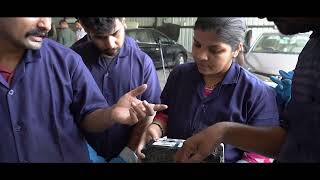
EV Hands-on Training in Pune on Tata Tiago EV 🚘🔧
🎓 Placement
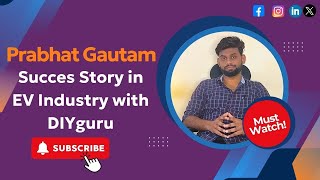
Build Your Career in the EV Industry Like Prabhat Gautam!
🏭 Lab Tour
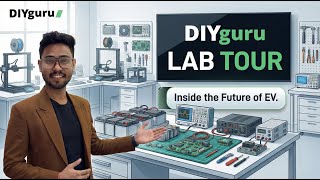
DIYguru Lab Tour — E-Mobility Hardware Lab

🔩 Hardware
Introducing the Ultimate EV Training Kit by DIYguru & EVI Technologies

🌟 Alumni
Empowering Futures: Nitin Agarwal's Journey with DIYguru in EV
🚀 About Us
Welcome to DIYguru — India's #1 E-Mobility & FutureTech Platform
📊 Placement
Placement Spotlight: A Journey of Skills, Sustainability & Smart Choices

💬 Story
This Is More Than a Career Story — When Learning Meets Purpose

🌍 International
Mustafa From North Africa 🔥🔥 — Global EV Training
🎤 Masterclass
THE FAST TRACK TO AN EV CAREER — Masterclass by Avinash Singh
Ready to build your EV career? Talk to our counsellors today.
BOOK FREE CONSULTATION →
Your journey starts here.
DIYguru is India's leading AICTE-approved platform, equipping engineers, graduates, and professionals with the future-ready skills needed in Electric Vehicles (EVs), Battery Technology, Solar Energy, Green Hydrogen, and Clean Mobility.
Whether you're starting out or shifting your career toward sustainability — your journey begins here.
Why Choose DIYguru?
- AICTE-Approved Certifications
- Industry-Curated Courses (EV, Battery Design, Solar, Embedded Systems, BMS, MATLAB & more)
- Project-Based Learning using real case studies from Tesla, Tata Motors, Ather, and others
- Global Opportunities – Connect with 300+ hiring partners and international universities
- Work on Real-World Tools like MATLAB, SolidWorks, Python, Simulink, Ansys
Your journey starts here.
Ready to Begin? Drop your info, and we'll help you get there!
🔒 Your information is secure and will never be shared.
🎬 Unlock This Video
Enter your details to watch
Get instant access + free EV career guidance from our counsellors.
Please fill all fields correctly.
🔒 Your data is secure. We'll send you free EV career resources.


Let's Connect
Training programs · B2B partnerships · College workshops
Certification
Programs
Programs
B2B Corporate
Training
Training
College
Workshops
Workshops
Partnership &
Collaboration
Collaboration
Your data is secure · No spam · Expert callback within 2 hours