


INDUSTRY BRIEF / 01


Weekly EV news digest · India
EV news India, explained through market reporting, company plans and hands-on technology lessons. Explore this November 2026 edition, then test battery connections, BMS decisions and your understanding of the industry.
This week’s top 516–22 Nov 2026
The visual briefing
Swipe through the headlines, then open the full story.
INDUSTRY BRIEF / 01
BACKGROUND EXPLAINER / 02


The reading desk
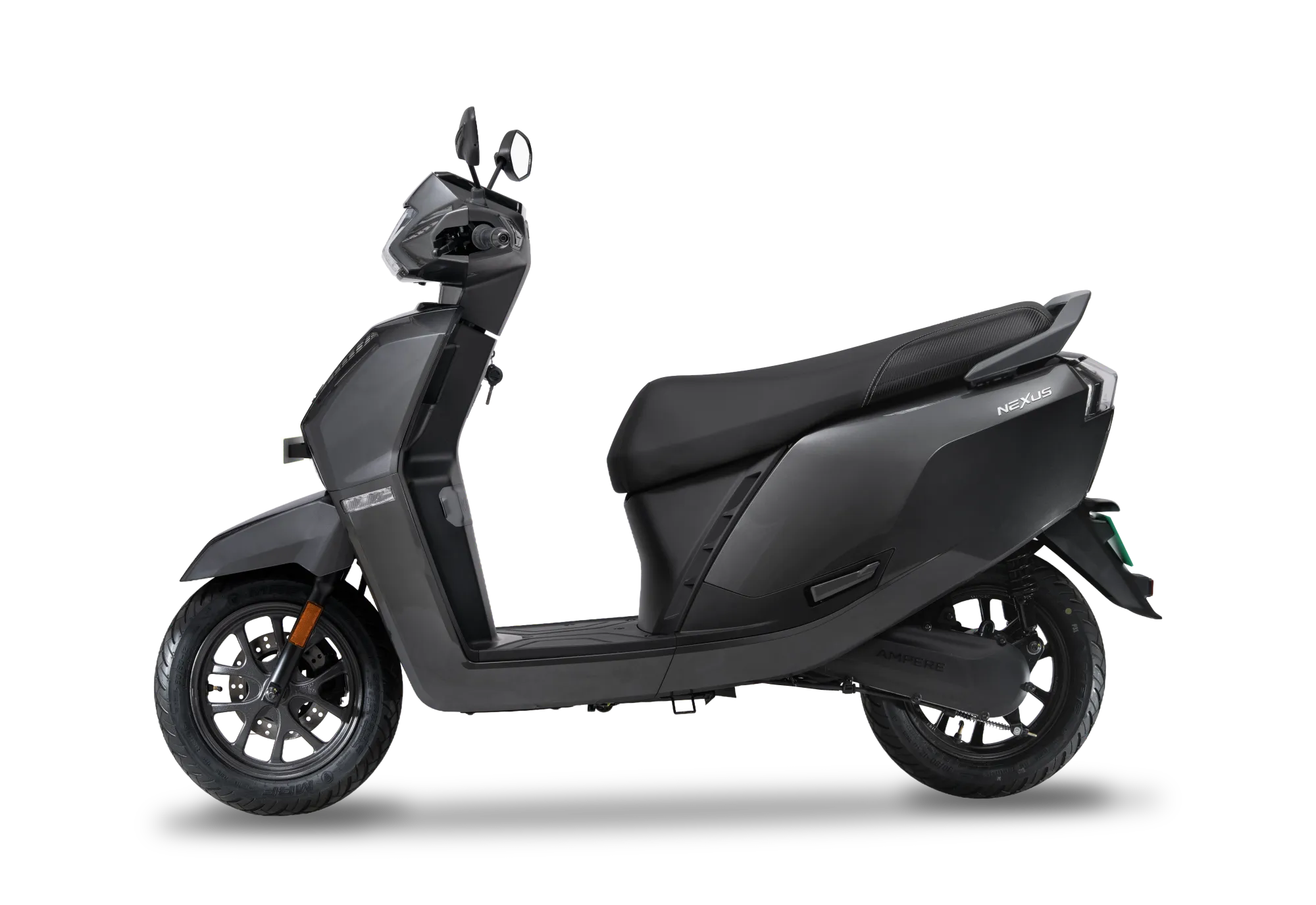
This edition combines dated news reporting with background explainers. Company targets are plans, not completed deployments. Company and vehicle images are credited to their source reports; the scooter image accompanies a background explainer.
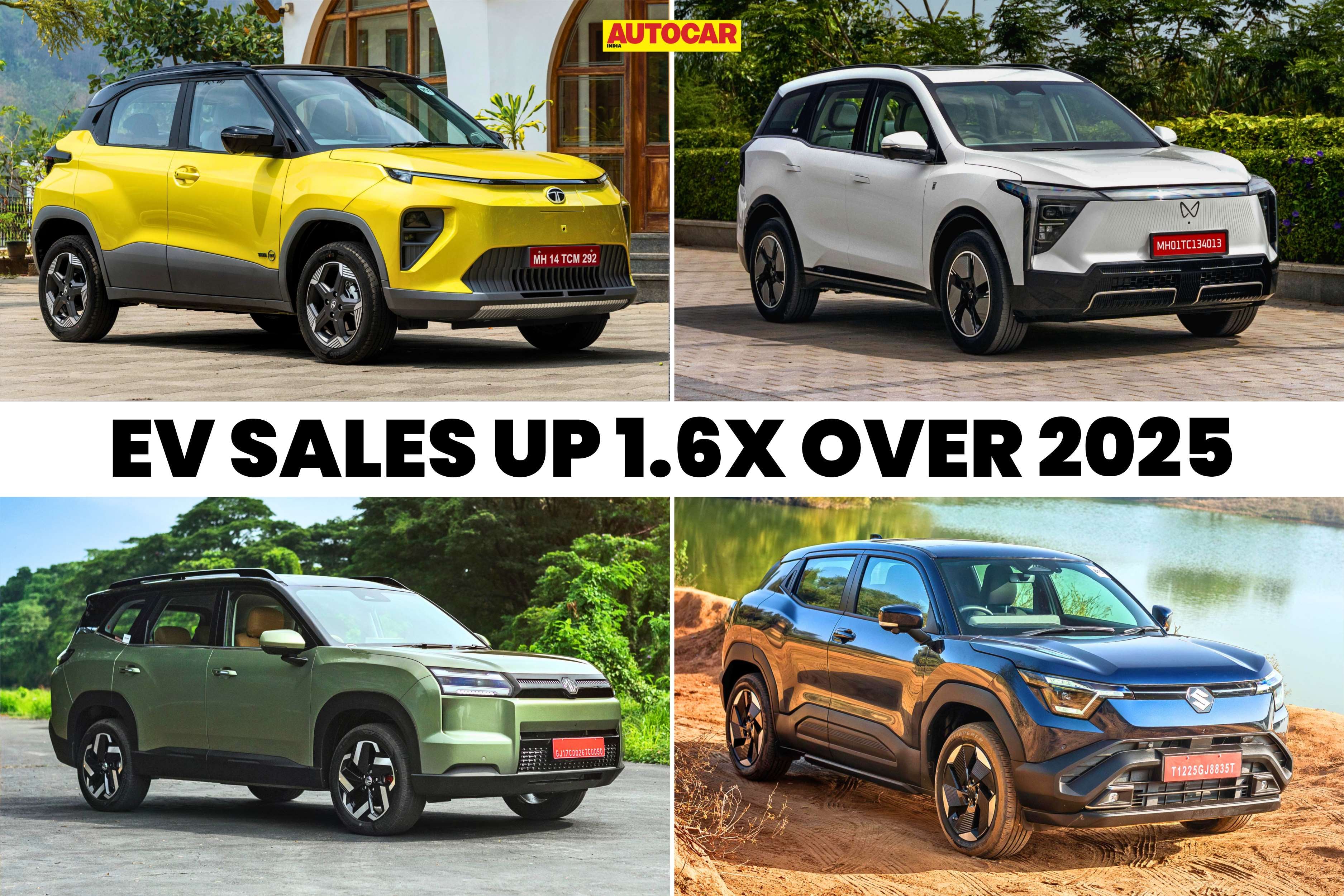
India registered 3,04,701 electric passenger vehicles between 1 January and 9 November 2026, already 56% more than in the whole of 2025.
India’s electric car market has passed a milestone it had never reached before. VAHAN registration data shows 3,04,701 electric passenger vehicles were delivered to customers between 1 January and 9 November 2026. That is 66% more than in the same period last year, and already 56% more than all of 2025, when 1,95,571 were sold.
The growth has been steady rather than a one-off spike. June was the first month ever to cross 30,000 electric cars, every month since has stayed above that level, and September set the current record of 38,440 units.
Tata Motors remains the clear leader with 1,20,895 units, a 39.67% share. Mahindra is second with 69,660 (22.86%) and MG third with 56,988 (18.70%). Newcomer VinFast (15,867; 5.20%) has already overtaken Maruti Suzuki (12,390; 4.06%), a sign that buyers are willing to try new brands. Luxury EVs added 7,323 units, led by BMW with 4,273.
Electric cars are no longer a niche. With more than 30,000 now sold every month, India is building a large base of EVs that will need routine servicing, diagnostics, charging and, in time, battery repair and recycling. Each of those is a business opportunity, and each needs trained people.
More brands mean more choice and sharper prices. Compare total cost of ownership, not just the sticker price.
EV vs petrol cost guide →TechniciansDealerships and fleet operators need staff who can work safely on 400–800 V cars.
High-Voltage Safety (4W EVs) →StudentsBattery, powertrain and embedded roles grow with every month of record sales.
EV careers guide →Source: Autocar India
Interactive explainer / 01
Switch between acceleration and regenerative braking to see the direction of energy transfer.
Battery energy flows through the inverter and motor to the wheels.
A short-term lead is a snapshot, not a final monthly ranking.
The EVINDIA article linked in the original edition concerns early February 2026, not November. We have removed the unsupported November comparison and chart. Before comparing brands, check the registration window, vehicle category and coverage of the underlying dataset.
Registrations, wholesale dispatches and customer deliveries describe different things. A full-year figure cannot be compared directly with a fortnight of registrations. Low-speed vehicles may also fall outside the registration dataset used in a comparison.
For buyers, the useful questions extend beyond a leaderboard: which service centre supports the vehicle, what does the warranty cover, and how does the usable battery capacity fit the daily route? For learners, this is a chance to connect market reporting to battery capacity, motor controls and diagnostics.
Use the series/parallel simulator below. Change the number of cells and observe how voltage, capacity and energy change independently.
Open the battery lab →Background source: EVINDIA, 6 February 2026
Interactive explainer / 02
Adjust motor speed while torque is held at 20 Nm. This ideal mechanical calculation does not model losses or a real motor torque curve.
A new partnership will help drivers finance electric three-wheelers, as Mahindra predicts tighter rules will speed the shift away from lead-acid e-rickshaws.
At an event in Mumbai on 16 November, Mahindra Last Mile Mobility (MLMML) and Uber signed an agreement to deploy 5,000 Mahindra electric three-wheelers on the Uber platform over the next 12 months. Under Uber’s EV Auto Advantage programme, the companies will help drivers switch to electric with easier access to financing and other support, starting with markets where EV adoption is still low.
MLMML’s MD and CEO Suman Mishra said the partnership aims to make EVs more economically viable for drivers and small entrepreneurs. Uber’s Head of Mobility, Pradeep Parameswaran, said it supports Uber’s EV expansion in India. Mahindra says it already has more than 4 lakh commercial electric vehicles on Indian roads, across its Treo, Zor Grand, e-Alfa, ZEO and UDO range.
Mahindra also expects a regulatory push. It anticipates tighter rules from April 2027, including limits on lead-acid battery models, which would speed the move from low-speed e-rickshaws (L3) to faster, registered L5 electric three-wheelers like autos. It expects electrification of L5 passenger three-wheelers to reach at least 70%, and is evaluating more production capacity.
Finance has always been the biggest barrier for auto drivers, who often find the higher upfront price of an EV hard to manage even though it costs far less to run. An aggregator-backed financing route could unlock thousands of buyers. And if lead-acid e-rickshaws are phased down, a large share of the fleet will move to lithium batteries, which need different service skills.
Compare lead-acid and lithium running costs before you buy or convert.
E-rickshaw guide →TechniciansLithium packs, BMS and controllers are the core of L5 three-wheeler service.
CEVT: Certified EV Technician →EntrepreneursFleet charging and service centres for electric autos are a growing niche.
EV business guide →Interactive explainer / 03
Explore an illustrative depot with equal charging sessions and no queue gaps. The result is not a forecast for the Mahindra–Uber programme.
Assumption: each vehicle needs 6 kWh and each bay supplies a constant 3 kW. Actual time depends on charger sharing, tapering and vehicle availability.
Ola Electric says making its own cells will cut costs by about 20%, while big Indian groups line up for a government-backed battery-cell tender.
On its Q2 FY27 earnings call on 18 November, Ola Electric said its gigafactory now has 6 GWh of commissioned cell capacity, after 3.5 GWh began commercial operation on 23 September. Founder Bhavish Aggarwal said there is “a meaningful cost advantage in using our own cells”, about 20% at the right scale of production, and that LFP cell integration and a Gen 4 platform from Q4 will cut costs further.
Ola plans to expand cell capacity to 20 GWh, with blended capital cost expected to fall below ₹400 crore per GWh at that scale, and plans to bring in outside equity for its cell subsidiary. It projects 4–5 lakh vehicle orders in FY28, assuming the average battery pack grows from about 3.8 kWh to 5 kWh. Revenue for the quarter was ₹421 crore, with a gross margin of about 30%, and borrowings fell to ₹1,800 crore.
The wider industry is moving too. The Ministry of Heavy Industries received 22 bids for 10 GWh of advanced chemistry cell (ACC) capacity under the PLI scheme, aimed at grid-scale energy storage. Bidders include Amara Raja, Exide, Reliance, JSW Neo Energy and Waaree.
Cells are the most expensive part of an EV battery, and India still imports most of them. Making cells at home lowers costs, reduces dependence on imports and creates a new layer of skilled jobs in cell manufacturing, pack assembly, BMS design and testing. Grid-storage demand adds a second market beyond vehicles.
Cheaper local cells could help bring down battery and vehicle prices over time.
EV charging guide →EngineersBattery and BMS design is the skill area growing fastest with this build-out.
Battery & BMS Design Nanodegree →EntrepreneursStorage, second-life batteries and recycling are emerging businesses.
Battery recycling guide →Interactive explainer / 04
Select each stage to reveal its role. This simplified manufacturing sequence illustrates the process; it does not represent a particular factory.
Electrode preparation coats active material onto current collectors, followed by drying and processing.
The Vietnamese EV maker will add a smaller VF5 SUV and launch electric scooters in early 2027 from its Tamil Nadu plant, but its bus plans are postponed.
VinFast has postponed its plans for electric buses in India to concentrate on cars and two-wheelers. “We would not like to rush too many things because we cannot do justice to so many products,” said Tapan Ghosh, CEO of VinFast Asia. “We have postponed it.” The company had earlier planned buses and two-wheelers for the second half of 2026, and has not given a new bus timeline.
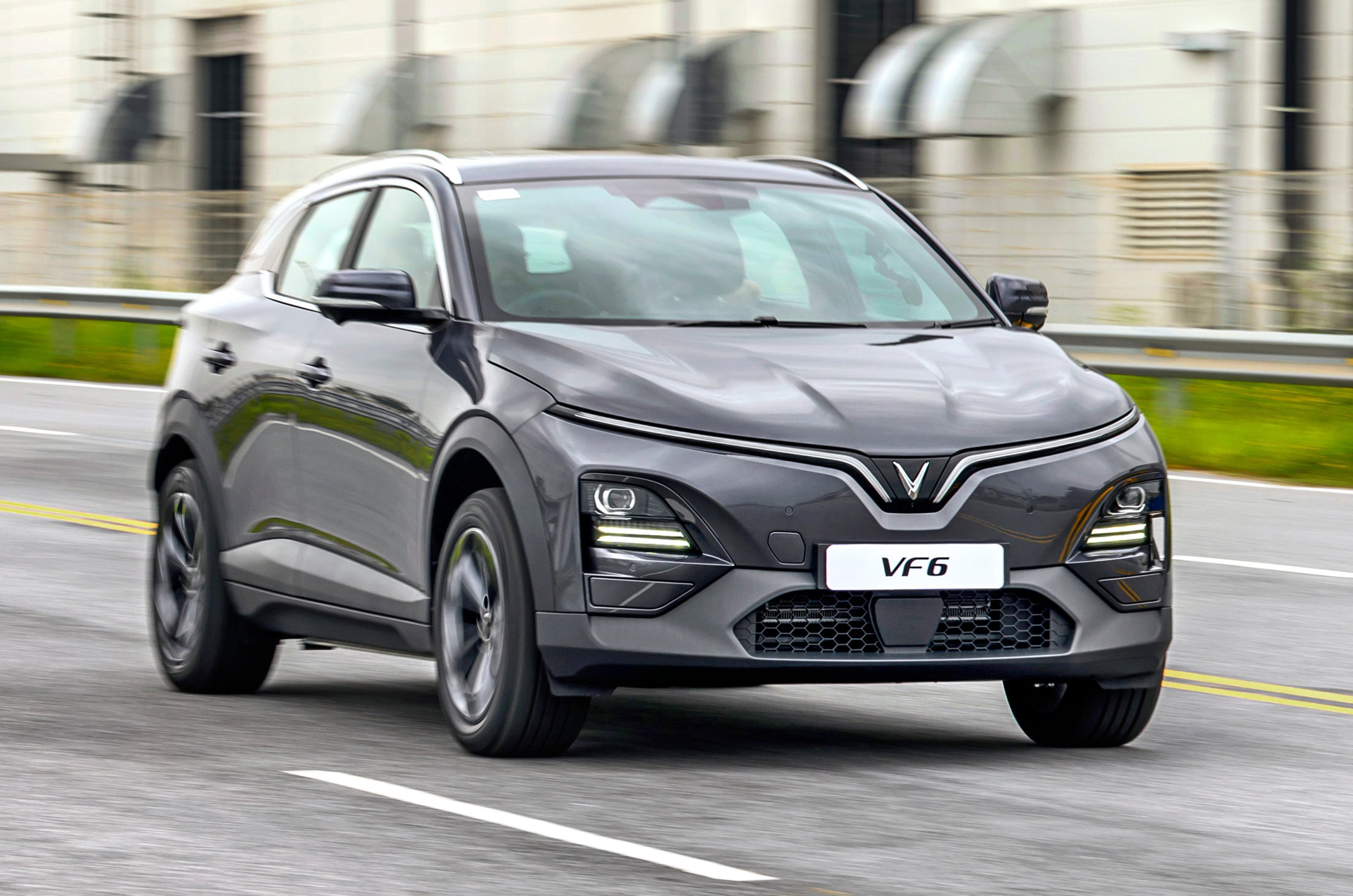
Cars come first. VinFast sells the VF6 and VF7 SUVs, the MPV7 and the Limo Green, and plans a smaller VF5 SUV in 2027 to compete with the Tata Nexon. Its plant at Thoothukudi, Tamil Nadu has capacity for 50,000 vehicles a year (expandable to 1.5 lakh), runs at about 70% utilisation, and could scale to 75,000–1,00,000 depending on demand. Monthly registrations have grown from about 300 to 2,500–3,000.
Electric scooters based on its Vietnamese Evo, Kyo and Kinet models, adapted for Indian roads, are planned for early 2027, from a separate two-wheeler line at Thoothukudi that could eventually make up to a million units a year. VinFast already has agreements with more than 50 dealers in 34 cities across 15 states, within a broader $2 billion India commitment.
Global EV makers are now building in India, not just importing. More factories mean more local jobs, especially in Tamil Nadu’s fast-growing EV cluster, and a VinFast scooter launch in 2027 would add another big player to India’s most competitive EV segment. Every new brand also needs a trained service network.
A VF5 at Nexon prices would add competition in the most popular SUV segment.
EV vs petrol cost guide →TechniciansNew brands and dealers need service staff with EV diagnostics skills.
CEVT: Certified EV Technician →StudentsEV manufacturing and quality roles are growing around Tamil Nadu’s plants.
EV careers guide →Source: Autocar Professional
Interactive explainer / 05
Select a charging route to see where AC becomes DC. Both routes ultimately charge the battery with controlled DC.
AC: conversion happens in the vehicle’s onboard charger. The EVSE manages connection and safety signalling.
Also this week
Five more stories from the week of 16–22 November 2026.
Double the 10,000 mark it reached in September 2025. It now has 51 showrooms in 40 cities; the Atto 3 has passed 9,000 deliveries and the Sealion 7 5,000.
Operator Cityflo says an e-bus’s lifetime operating cost is now only 5–10% above diesel, down from 20–30% two years ago. It expects EVs to be 30–50% of its fleet within three years.
About a dozen prototypes of its own e-truck platform are being built, with a commercial launch targeted for end-FY27 or early FY28.
Talks have included selling Tata-developed EVs under the Honda brand in India. No agreement or timeline has been confirmed.
News reports say central ministries must choose EVs (up to ₹20 lakh) for official cars, with special approval needed for petrol or diesel. Await the official notification for exact terms.
Turn reading into a next step
Use these conceptual models to connect symptoms with evidence. They are learning aids, not pack-building instructions or approved repair procedures. Real protection thresholds and test methods depend on the manufacturer, chemistry, temperature and hardware.
Progress is stored on this browser when available.
Series count determines nominal voltage. Parallel count determines capacity when identical cells share current appropriately. Nominal energy is voltage × ampere-hours; usable energy is lower and varies with operating limits. This model does not calculate safe current, wiring, thermal design or charger compatibility.
Try doubling parallel count while keeping series count fixed. Capacity and energy double; nominal voltage stays the same. Change chemistry and observe why the same series count need not mean the same pack voltage.
This fictional 16-group NMC model demonstrates how protection can respond to different evidence. The example limits are not universal service limits. Actual systems may derate, latch a fault, require a reset or implement independent charge and discharge paths.
Never use simulated values as permission to continue driving or charging a damaged battery. A missing reading is missing evidence, not a zero-volt measurement.
Record the complaint, conditions, original codes, diagnostic evidence, repair and verification outcome. Do not clear fault history before saving it. A part replacement without a supporting test can hide an intermittent fault and add unnecessary cost.
16 terms
Battery management system: monitors battery conditions and requests protection according to its configuration.
State of charge: an estimate of remaining charge, not a direct capacity measurement.
State of health: a model-dependent estimate of battery condition.
Connecting cell groups in series adds voltage.
Connecting matched cells in parallel adds charge capacity.
A reduction in terminal voltage under load; resistance, temperature and SOC influence it.
A difference between cell-group readings; compare at matching conditions.
An electrically controlled switch used to connect or disconnect a power circuit.
A controlled process that limits inrush into capacitors before the main connection closes.
A safety input that prevents operation in an unsafe or unready state.
Diagnostic trouble code: a manufacturer-defined clue requiring supporting evidence.
A communication network used by vehicle controllers.
Separation from energy sources using the approved procedure, followed by required verification.
Resistance between circuits and accessible structures; a DMM continuity check does not certify it.
Ampere-hour: charge capacity.
Watt-hour: energy; nominal voltage multiplied by ampere-hours gives a nominal estimate.
Explore DIYguru training programs and training locations. Read the HSE electric and hybrid vehicle repair guidance for general workshop hazards (UK guidance, not Indian regulation), and Texas Instruments BQ76952 documentation for an example of configurable battery monitoring and protection. Always use the actual vehicle’s service documentation for repair limits.
Behind the headlines
Every story above needs trained people: technicians to service the vehicles, engineers to design the batteries, and entrepreneurs to build the networks.
5 days, 100% offline, on real electric scooters. ₹6,000 + GST.
View programme →For technicians2 months online + 21-day workshop. ASDC & AICTE NEAT. ₹27,700.
View programme →For engineersBattery and BMS design, analysis and simulation, with placement support.
View programme →FreeStart learning EV basics online at no cost, at your own pace.
View programme →Free counselling
Talk to a DIYguru counsellor about the right EV course for your background, from a 5-day scooter repair workshop to engineering nanodegrees.
Prefer to call? +91 99109 18719 · [email protected]
An advisor will call you within 24 hours.
Your enquiry has been received. The DIYguru team will contact you using the details provided.
News is summarised from the reports above; figures are as reported by those sources. DIYguru’s analysis appears under “Why it matters” and “What it means for you”. Photos are DIYguru training photos, used for illustration. Updated 23 November 2026.
Training programs · B2B partnerships · College workshops