- Program Highlights
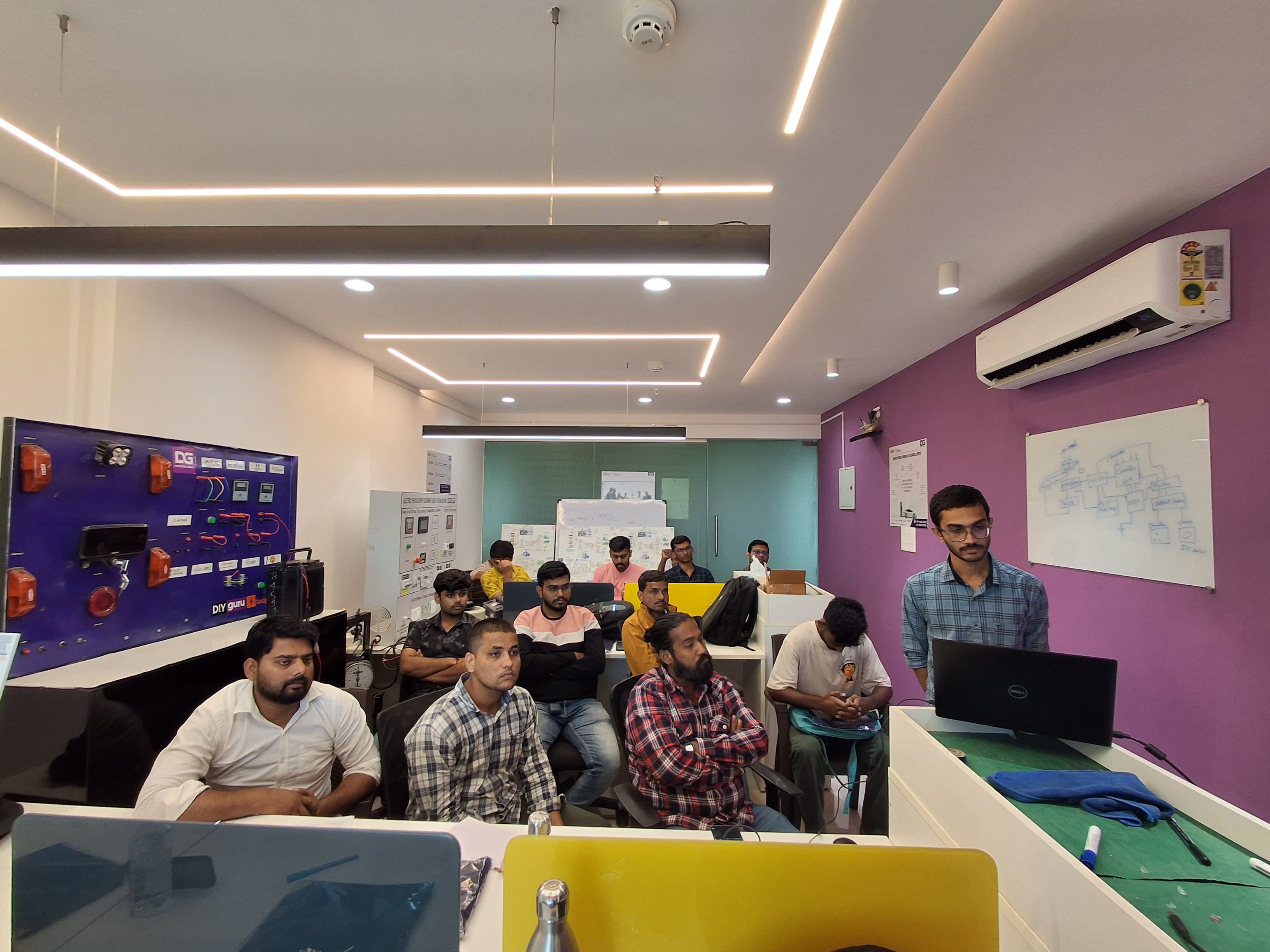
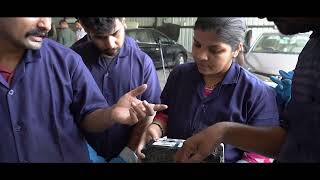
The Executive PG Certification Program in Electric Vehicle and Embedded Systems Advanced Engineering is a 12-month, hardware-enabled course certified by ASDC and AICTE, in partnership with EICT Academy, IIT Guwahati. It offers a blend of LIVE instructor-led sessions, hands-on hardware training, and extensive industry integration, with strong placement support and access to research labs for advanced EV and embedded systems learning.
- Get more information
Want to know more? Enter your information to learn more about this program from EICT – IIT Guwahati.
targeting arm CORTEX embedded
IN-HOUSE ARM BASED STM32
EMBEDDED DEVELOPED KIT
at your home!
Embedded C & DEVELOPMENT
Target entire embedded c & DEVELOPMENT PROCESS
15+
hands on
experiments
ARM
based embedded
developmenT
delivered
at your
doorstep
hil/sil
cover both
simulations &
hardware
5+
EV hardware
projects
60+
hours of hardware
live training
- Career Opportunities
- Job Opportunities:
This program provides fresh graduates and working professionals with advanced skills to thrive in the EV, renewable energy, and automotive sectors. Graduates can begin in roles involving battery systems, power electronics, and infrastructure, while professionals can lead in technical management, R&D, and specialized energy solutions, making a tangible impact on EV and energy industries.
- Key Profiles:
- Power Electronics Engineer: Fresh graduates gain foundational skills in power electronics applications for EVs, while experienced professionals lead in designing energy conversion systems, optimizing efficiency, and implementing innovative power solutions for EV technology.
- Battery Management System (BMS) Engineer: Entry-level engineers handle battery monitoring and charge control, while professionals focus on BMS development, optimizing battery life, safety, and performance through innovative protection systems and battery diagnostics.
- Charging Infrastructure Specialist: Fresh graduates work on the setup and maintenance of EV charging solutions, while professionals specialize in designing fast-charging systems, managing grid integration, and expanding charging networks to support large-scale EV adoption.
- Powertrain Engineer: Freshers gain insights into powertrain components, while professionals manage energy transfer systems, enhancing EV efficiency and handling electric drivetrains, energy storage, and motor optimization.
- Electrical Systems Engineer (EV Focus): Entry-level roles support the integration of electrical systems, ensuring compatibility between EV components, while professionals lead in R&D for electrical architecture, reliability engineering, and multi-system integration.
- Grid Integration Engineer: Graduates start with supporting grid interaction projects, while experienced engineers focus on the interface between EVs and renewable power sources, working on projects that align EV technology with smart grid initiatives for energy storage and distribution.
- Job Opportunities:
This program offers comprehensive training in vehicle design, structural analysis, and component integration, equipping both new graduates and professionals with skills relevant to EV manufacturing and prototyping. Freshers often begin in design support roles, while professionals work in product development, system optimization, and advanced structural analysis.
- Key Profiles:
- Vehicle Design Engineer: Fresh graduates focus on layout and design basics, while experienced engineers lead end-to-end vehicle design, balancing aesthetics, aerodynamics, and component placement.
- Thermal Management Engineer: Entry-level roles assist in thermal systems, while professionals design advanced thermal management solutions for batteries, motors, and electronics, enhancing system efficiency and vehicle lifespan.
- Product Development Engineer: Graduates work on prototyping and testing, while professionals manage the product lifecycle, driving R&D, and coordinating teams to refine EV components and streamline production processes.
- Structural Analysis Engineer (ANSYS Specialist): Fresh graduates support simulations, while professionals handle advanced analyses, optimizing material selection, vehicle durability, and performance under dynamic conditions.
- Manufacturing Engineer: Entry-level engineers aid in EV assembly processes, while experienced professionals develop sustainable manufacturing strategies, optimizing assembly lines and quality control for mass production of EV components..
- Safety and Compliance Engineer: New engineers support regulatory compliance testing, while seasoned professionals lead in designing safety protocols, ensuring EVs meet industry standards for crashworthiness, material safety, and environmental compliance..
- Job Opportunities:
With a foundation in control systems, embedded systems, and circuit design, this program positions both new graduates and experienced electronics engineers to excel in the EV and automotive electronics sectors. Graduates can enter junior design roles, while professionals can drive advancements in embedded systems, IoT, and automation for EVs.
- Key Profiles:
- Embedded Systems Engineer: Fresh graduates gain hands-on experience with microcontrollers and sensor integration for EV applications, while professionals develop advanced control algorithms, improving energy efficiency and vehicle functionality.
- Motor Control Engineer: Entry-level engineers focus on motor fundamentals, while experienced professionals design complex control systems, enhancing motor performance, energy conservation, and reliability in EV applications.
- AUTOSAR Engineer: Fresh graduates learn standardized automotive software architecture, while experienced engineers ensure software interoperability, compliance, and modularity in large-scale EV projects.
- Circuit Design Engineer: Freshers work on circuit fundamentals, while professionals create advanced circuits for motor drives, BMS, power converters, and control systems, ensuring reliability under high-stress EV conditions.
- Telematics and IoT Specialist: New engineers work on foundational IoT for EVs, integrating basic telematics features, while professionals lead in data integration, vehicle connectivity, remote diagnostics, and advanced communication systems. .
- Signal Processing Engineer: Fresh graduates support data acquisition and processing for EVs, while professionals work on sensor fusion, algorithm development, and real-time data analysis, enhancing system responsiveness and vehicle safety..
- Job Opportunities:
The program opens a wealth of opportunities in vehicle dynamics, system integration, and sustainable automotive technologies for both fresh graduates and working professionals. Graduates enter junior roles in system design and support, while professionals drive innovation in electric powertrains, hydrogen fuel cells, and automotive software development.
- Key Profiles:
- EV Systems Engineer: Fresh graduates start with system integration, ensuring component compatibility, while experienced professionals manage complex multi-system integration, troubleshooting, and vehicle-wide reliability.
- Battery and Powertrain Engineer: Entry-level engineers learn the essentials of powertrain and battery systems, while seasoned professionals focus on energy optimization, designing EV systems for maximum range, and reducing overall vehicle weight.
- Hydrogen Fuel Cell Specialist: Fresh graduates assist in hydrogen system development, while professionals lead R&D in hybrid and fuel cell technologies, diversifying energy sources for electric vehicles.
- Control Systems Engineer (MATLAB-SIMULINK Specialist): Graduates begin by implementing control theories in MATLAB, while professionals design advanced control algorithms, using simulations to improve energy efficiency and vehicle performance.
- Advanced Driver Assistance Systems (ADAS) Engineer: Fresh graduates support the development of ADAS technology, while experienced engineers specialize in automation, designing and testing sensor-based safety and navigation systems for EVs. .
- Chassis and Suspension Engineer: Entry-level roles involve assisting in suspension system design, while experienced engineers handle advanced dynamics, designing lightweight, energy-efficient systems that improve vehicle handling and stability. .
- Vehicle Dynamics Specialist: Fresh graduates assist in testing vehicle dynamics, while professionals optimize driving comfort, stability, and safety, leveraging knowledge in mechanics, software, and embedded systems to enhance vehicle performance. .
- FOR ENTERPRISE
Looking to enroll your employees into this program ?
- Inquire Now
- Program Outcomes
- Program Curriculum
Week 1-3: Course 1: Electric Vehicle Engineering (Essentials 1 & Essentials 2)
Module 1: Starting with EV Technology
- Overview of Electric Vehicle Types and Concepts
- Global and Indian EV Ecosystem and Market Dynamics
- Government Initiatives, Policies, and the UN Sustainable Goals
- Charging Infrastructure, Battery Manufacturing, and Service Ecosystem in India
- Challenges, Growth, and Future Trends in the Global EV Industry
Module 2: Understanding ICE to EV Transition
- Industry Shifts and Challenges in the Automotive Sector
- Emergence and Rise of E-Mobility Technologies
- Key Components in EV Technology: Powertrain, Emissions, and Fuel Systems
- Transitioning from ICE to EV: Technology Transfers and Innovations.
Module 3: Electric Vehicle Engineering
- EV Layouts, Classification, and Architecture
- Types of Electric Vehicles: Battery, Hybrid, Plug-in Hybrid, and Fuel Cell
- Storage Systems and Battery Technologies
- Motors, Energy Management, and Charging Systems
- Understanding EV Range, Efficiency, and Design Principles
Module 4: Battery Technology for EV Systems
- Introduction to Battery Technology and Components
- Battery Cell Types, Chemistry, and Energy Density
- Battery Charging Standards, Management Systems, and Thermal Management
- Battery Construction, Degradation, Recycling, and Safety
- Advances and Future Trends in Battery Technology
Module 5: Power Electronics for EV Systems
- Introduction to Power Electronics and Semiconductor Devices for EVs
- Power Electronics Operations: Switching Mechanisms, Control, and Modulation
Techniques - Thermal Control, Power Loss, and Heat Management in EV Systems
- Power Conversion Systems: DC-DC Converters, AC-DC Rectification, and DC-AC
Systems - Voltage and Current Source Systems, Power Flow, and EV Controllers
Module 6: Motor Systems for Electric Vehicles
- Overview of EV Motor Types: DC, AC, BLDC, PMSM, and Switched Reluctance
Motors - EV Traction Motors and Motor Performance Analysis
- Propulsion Systems, Regenerative Braking, and Motor Control Systems
- Motor Thermal Systems and Industry Examples of EV Motors
Module 7: Vehicle Electrification Systems
- Fundamentals of Vehicle Electrification and Power Distribution
- Vehicle Control Units (VCUs): Design, High Power Systems, and Electrical
Standards - Charging Circuits, Electrical Testing, and Telematics Systems
- Advanced Electrical Systems: EMC, Interference, and System Integration
Module 8: Electric Vehicle Charging Technology
- Introduction to EV Charging Technologies and Infrastructure
- Charging Systems: Onboard, Home, and High-Speed Solutions
- Concepts of Battery Swapping, V2G Systems, and Grid Integration
- Challenges in Charging Technology and Integration with Renewable Energy
Week 4-5: Course 2: Advanced EV Engineering: Numerical Analysis, EVs, HEVs, & Heavy Vehicle
Module 1: EV Numerical Calculations
- Understanding Key Parameters for Electric Two-Wheelers
- EV Component Selection and Sizing (Motors, Controllers, Batteries, Chargers)
- Use Case Calculations for EV Performance and Efficiency
- Torque, Power, and Motor Sizing Considerations
- Battery Pack and Charger Selection and Sizing
Module 2: Hybrid Vehicle Systems
- Introduction to Hybrid Vehicle Systems and Modes of Operation
- Key Components, Units, and Energy Management in Hybrid Vehicles
- Hybrid Powertrain and Drivetrain: Industry Ecosystem and Challenges
- Power Flow and Case Studies on Hyundai HEVs (Tucson, IONIQ)
Module 3: Heavy Vehicle Systems
- Overview of Heavy Vehicle Powertrain Systems and Energy Storage Solutions
- High Voltage Power Supply and Control Systems in Heavy EVs
- Safety Systems, Maintenance, and Fleet Management for Heavy EVs
- Market Analysis: Leading Manufacturers, Challenges, and Growth in India
Module 4: Vehicle Safety and Regulations in the EV Industry
- Introduction to EV Safety, Regulations, and High-Voltage Isolation Techniques
- Role of Sensors, Software, and Fire Safety in EVs
- Global and Indian Regulatory Standards for EV Safety
- Emergency Protocols, Crash Testing, and Government Policies for EV Safety
Module 5: EV Supply Chain Management and Logistics
- Fundamentals of EV Supply Chain Management and Logistics
- Key Components, Challenges, and Global Sourcing Strategies in the EV Supply
Chain - Digitalization, Data Analytics, and Sustainability in EV Supply Chains
- Risk Management and India’s 2030 Plan for Balancing Imports and In-House
Development
Module 6: EV Manufacturing and Assembly Processes
- Overview of EV Manufacturing Workflow, Quality Control, and Assurance
- Material Selection and Design for Manufacturing (DFM) in EVs
- Battery Pack Assembly, Chassis, and Body Integration
- Environmental Considerations and China’s Role as a Global Manufacturing Hub
Module 7: Advanced Batteries and Motor Systems
- Cell Manufacturing, Quality Assurance, and Health Estimation Algorithms for
Batteries - Thermal Management in Batteries and Advanced Techniques
- Electric Motors: Design, Optimization, Power Electronics, and Control
Techniques - Predictive Control, Diagnostics, and Integration of Motors
- Advanced Charging Technologies, Methods, and Considerations
Week 6: Project 1: Design and Optimization of an Electric Powertrain for Urban Commuter Vehicles with Integrated Thermal Management and Advanced Charging Solutions
Design and optimization of electric powertrain for 2W, 3W, or 4W urban commuter vehicles.
-
EV Powertrain Design for 2W/3W/4W urban vehicles
-
Thermal Management for battery, motor & controller
-
Advanced Charging Solutions integration
-
Component Sizing: Battery, Motor, Controller, Charger
-
Real-World Use Case: Urban commute, load, range
-
Performance Optimization: Efficiency & energy recovery
-
Cost Analysis: Performance vs. cost trade-offs
-
Outcome: Hands-on EV design, sizing, and system integration skills
Week 7-8: Course 3: MATLAB-SIMULINK Certification – Design and Control Systems
Module 1: Essentials of MATLAB
- Getting Started
- Overview and MATLAB Essentials
- MATLAB Intermediate
Module 2: Design, Develop and Plot in MATLAB
- Plotting and Graphics
- Algebra, Calculus, Differential, & Integration
- Polynomials & Transforms
Module 3: MATLAB Simulink
- Introduction to simulink
- Building blocks for simulink model.
- Modelling of EV with the SIMULINK system
- Setting parameters and conclusion
Module 4: Understanding Advisor Toolbox
- Introduction of the Advisor toolbox
- Installation of the Advisor toolbox.
- Advisor structure
- Simulation Approch
- Capabilities and limitations
Module 5: Understanding Qss toolbox
- Introduction to the Qss toolbox
- Installation of Qss toolbox
- Settings Up Qss toolbox
- Software Description of Qss toolbox
- Modeling Approach and Case Study
Module 6: Introduction to Linear Systems and Basic MATLAB Applications
- Utilization of different control structures with MATLAB
- Stability analysis of linear control system (BIBO, Routh-Hurwitz, Root locus,
Nyquist) - System representation for SISO/MIMO LTI models with a use-case of “Inverted
Pendulum on a Cart”
Module 7: System Design and Analysis
- Design a SISO system with a use case of “The DC motor”
- Design a MIMO model of Jet transport aircraft
- Arrays of linear models, their characteristics, and feedback interconnection
- Controllability, observability, and system properties with a use case of a
Geostationary Satellite - State-space representation of continuous systems
Module 8: Control System Analysis Tools
- Use of LTI viewer for analyzing models, Simulink LTI viewer
- Application of SISO designing tool
- Bode diagram design for specific application
- Root locus design with specific application example
- Nichols plot design with specific example
Week 9: Project 2: Modeling and Analysis of EV using MATLAB
This project involves the design and simulation of an electric vehicle (EV) using three MATLAB toolboxes: SIMULINK, QSS, and ADVISOR. Custom EV models are developed in each environment with implemented control strategies and performance tested under similar driving scenarios. Key metrics like energy consumption, acceleration, and battery SoC are analyzed. The final outcome is a detailed comparative study highlighting the strengths and limitations of each toolbox in EV modeling.
Week 10-11: Course 4: Battery Technology and Battery Management System (BMS) Essentials & Modeling
Module 1: Essentials of MATLAB
- Background and Evolution of Battery Technology in EVs
- Fundamentals and Electrochemistry of Battery Operation in EVs
- Battery Anatomy, Performance Metrics, and Integration in EV Systems
- State-of-the-Art Developments, Cycle Life, and Challenges in EV Battery
Technology
Module 2: Design, Develop and Plot in MATLAB
- Overview of Li-Ion Battery Technology: Key Materials and Components
- Cathode, Anode, Electrolyte, and Separator Materials
- Advanced Materials and Techniques: Nanostructures, Composites, Coatings, and
Surface Modifications - Industry Examples, Graphene and Solid-State Electrolytes, and Future Market
Trends
Module 3: MATLAB Simulink
- Raw Materials Acquisition and Electrode Fabrication Techniques
- Cell Assembly, Formation, and Aging Processes
- Module and Pack Assembly, Quality Control, and Testing Protocols
- Battery Safety Standards in India, Automation, and Environmental Sustainability
Measures
Module 4: Understanding Advisor Toolbox
- Understanding BMS in EV Systems: Architecture, Components, and Roles
- Thermal Control and Battery Balancing Techniques in BMS
- Implementation, Control Strategies, and Hardware/Software Components of BMS
- Industry Examples, Future Trends, and Innovations in BMS Technology
Module 5: Understanding Qss toolbox
- Overview of SOC/SOE and Their Role in EV Systems
- Estimation Algorithms: Coulomb Counting, OCV Method, and Managing
Uncertainties - Dynamic Response, Temperature Effects, and Practical Applications of SoC
Algorithms - Refinements, Compensations, and Enhancements Using Kalman Filtering
Module 6: Introduction to Linear Systems and Basic MATLAB Applications
- Introduction to SoH/SoP Estimation Algorithms and Battery Failure Mechanisms
- Comparative Analysis of SoH/SoP Algorithms and Capacity Estimation
Techniques - Environmental Impacts, Self-Discharge Detection, and Dual Estimation Methods
- Reliability Analysis, Case Studies, and Emerging Trends in SoH/SoP Estimation
Module 7: System Design and Analysis
- SOC/SOH Modelling using MATLAB
- Cell modeling in MATLAB
- BMS modelling using MATLAB
Week 13: Project 3: Battery management system modelling
This project focuses on Battery Management System (BMS) development and State of Charge (SOC) estimation using MATLAB/Simulink. It includes building a battery model, implementing SOC estimation algorithms (e.g., Coulomb counting, EKF), and validating them using real or experimental data. Additionally, it involves motor modeling and simulation of types like PMSM, BLDC, IM, or SRM, with proper mathematical modeling, control strategy design, and performance analysis under various conditions. The outcome is a complete simulation model, report, and performance evaluation.
Week 14-15: Course 5: Motor Technology and Motor Drive Systems
Module 1: Fundamentals of Electric Motors
- Introduction to Motor Principles and Torque Production
- Magnetic Circuits and Energy Conversion
- Specific Loadings and Motor Output Characteristics
- General Properties of Electric Motors and Safety Standards
Module 2: Power Electronics for Motor Drives
- Voltage Control Techniques and DC/AC Conversion
- Inversion Techniques and Inverter Switching Devices
- Converter Waveforms, Acoustic Noise Control
- Cooling of Power Switching Devices
Module 3: Conventional DC Motors and Drives
- Torque Production and Motional EMF
- Steady-State and Transient Performance Characteristics
- Four-Quadrant Operation and Regenerative Braking
- Different Types of DC Drives (Thyristor, Chopper-Fed, Servo, Digitally Controlled)
Module 4: Induction Motors and Drives
- Basics of Rotating Magnetic Fields and Torque Production
- Stator Current-Speed Characteristics and Methods of Starting Cage Motors
- Torque-Speed Curves and Influence of Rotor Parameters
- Speed Control and Power Factor Control
Module 5: Induction Motor Equivalent Circuits
- Similarity Between Induction Motor and Transformer
- Development of the Induction Motor Equivalent Circuit
- Properties of Induction Motors and Performance Prediction
- Approximate Equivalent Circuits and Measurement of Parameters
- Equivalent Circuit Under Variable Frequency Conditions
Module 6: Inverter-Fed and Advanced Induction Motor Drives
- Torque–Speed Characteristics – Constant V/F Operation
- Control Arrangements for Inverter-Fed Drives
- Vector (Field-Oriented) Control and Cycloconverter Drives
Module 7: Stepping Motors
- Principle of Motor Operation and Motor Characteristics
- Steady-State Characteristics – Ideal (Constant-Current) Drive
- Drive Circuits and Pull-Out Torque–Speed Curves
- Transient Performance
Module 8: Synchronous, Brushless DC, and Switched Reluctance Drives
- Synchronous Motors and Controlled-Speed Drives
- Brushless DC Motors and Switched Reluctance Motor Drives
Module 9: Motor and Drive Selection
- Power Range for Motors and Drives
- Load Requirements – Torque–Speed Characteristics
- General Application Considerations
Module 10: Advanced Motor Technology and Control for Powertrain
- Electric Motor Design Principles for EVs
- Advanced Control Techniques and High-Performance Materials
- Electric Motor Testing, Characterization, and Integration into Powertrains
- Noise, Vibration, and Harshness (NVH) Analysis
- Reliability and Lifetime Analysis of Electric Motors
Week 16-18: Course 6: Electric Vehicle Design and Simulations with Advanced MATLAB, SIMULINK & QSS
Module 1: EV Architecture Modelling & Simulations
- Buck Converter Design
- Boost Converter Design & Modeling
- 3 Phase & Multi-Level Inverter Design and Modeling
- Solar PV Based Charger Modeling
- Induction Motor Design & Modeling
- Motor Controller Design & Modeling
Module 2A: Road Load Understanding
- Introduction to Road Load Analysis
- Road Load Calculations
- Introduction to Drive Cycle
- Introduction to MATLAB Road Loads Calculations
- Introduction to Simulink Road Loads Calculations
Module 2B: Road Load Analysis
- Preparation of Drive Cycle Road Loads Calculations
- Aerodynamic Drag Force Road Loads Calculations
- All Road Loads and Power Requirements
- Torque Requirement and Conclusion
Module 3: Inverter Design and Modeling
- Introduction to Inverters
- Single Phase Inverter Modeling
- Three Phase Inverter Modeling
- Inverter Simulation and Modeling
Module 4: Advanced Simscape Modeling
- Introduction to Simscape
- Modeling Vehicle Road Loads using Simscape Toolbox
- AC/DC Full Wave/Half Wave Conversion using Simscape
- Ultracapacitor Model using Simscape Toolbox
- Battery Model using Simscape Toolbox
- Battery Pack with Fault using Simscape
- PWM Controlled DC Motor
Module 5: QSS and ADVISOR Toolbox Applications
- Designing EV using QSS Toolbox
- ICE Vehicle Physical Modeling using Simscape
- Lead Acid Battery Cell using Simscape
- Vehicle Performance Analysis using ADVISOR Toolbox
- Modeling and Analysis of HEV using QSS Toolbox
Module 6: BMS Modeling and Energy Analysis
- BMS Battery Protection
- BMS Thermal Anomaly Analysis
- Demonstration of How to Make a Drive Cycle from Data
- Energy Consumption in Battery Systems
Week 19: Project 4: EV System Design and Simulations
This project focuses on designing and analyzing Electric Vehicles (EV) using MATLAB and Simscape. It involves simulating road load forces, battery systems, power electronics, and hybrid EV configurations. Participants will learn to evaluate and optimize EV performance, efficiency, and range under real-world conditions. The project equips learners with practical skills to develop efficient and sustainable EV solutions.
Week 20-22: Course 7: Electric Vehicle 2W Design & Modeling using SOLIDWORKS OR Advanced Control Systems with MATLAB
Electric Vehicle 2W Design and Modeling using SOLIDWORKS
Module 1: Chassis and Suspension Design
- Parameters for Chassis Design
- Key components of the Chassis
- Explanation of Suspension Terms (Pitch circle diameter, Wire diameter, Height)
- Design Process of the Suspension
Module 2: Swingarm and Alloy Wheel Design
- Overview of Swingarm Position and Role in EV bikes
- Design Process of the Swingarm
- General outlook on alloy wheel design
- Using 2D drawing features in SolidWorks
- Designing the right fit tire for the alloy wheel
Module 3: Tire and Motor Controller Design
- Assembling the alloy wheel inside the tire
- Checking the fitting of the swingarm
- Designing the motor controller and DC to DC converter
Module 4: Handlebar and Final Assembly
- Designing the handlebar for the EV bike
- General overview of assembling parts for 2-wheelers
- Editing battery sketch and basic assembly
- Final scooter assembly with aesthetics (rear cover, front light)
Advanced Control Systems with MATLAB
Module 1: Advanced Control Design and Compensators
- Use of different functions for compensator design by using MATLAB
- Design of LQG-controller by using MATLAB
- Use of phase margin, gain margin, modulus margin, delay margin using MATLAB
- Understanding robust stability and internal stability by using MATLAB
- Youla parameterization by using MATLAB
Module 2: Regulator Design and Discrete Control
- P, PI, PD, PID regulator design by using MATLAB
- PID regulator design for a dead-time system and considering phase shift using
PADE approximation - General polynomial method for regulator design using MATLAB
- Analysis of sampled data system using MATLAB
- Design of discrete PID regulators using MATLAB
Module 3: Practical System Modelling and Applications
- DC motor speed and position control system modelling by using MATLAB
- Inverted pendulum system modelling by using MATLAB
- Design of buck converter in closed loop using System-Identification toolbox
- Design of boost converter in closed loop using System-Identification toolbox
- Ball & Beam system modelling and analysis using MATLAB
Week 23: Project 5: Comprehensive Design and 3D Modeling of an EV Bike System OR A cruise control system modelling using MATLAB
This project involves designing and assembling a complete 2-wheeler (2W) electric vehicle using SOLIDWORKS. It covers detailed modeling of key components like chassis, suspension, wheels, motor, battery pack, and controllers. Participants will learn to integrate all parts into a final assembly, tackling real-world design challenges and optimizations. The project equips learners with practical skills to create efficient and functional 2W EV designs ready for simulation and production.
Week 24: Hardware Workshop 1
- Objective: Hands-on training in hardware implementation and testing of electric vehicle systems.
Week 25-27: Course 8: Electronics & Circuit Design for EV Application
Module 1: Introduction to Semiconductor Electronics
- Introduction to electronics
- Definition of electonics and semiconductors
- Intinsic and Extrinsic semoconductors
Module 2: Semiconductor and Diode Configuration
- Diode configuration
Module 3: Rectifiers and Filters in Electronics Systems
- Regulated power supply and rectifiers
- Full wave rectifiers & Filters for rectifiers
- Series inductor filter and Shunt capacitor filter
Module 4: Clippers in Electronic Systems
- Clippers and their Types
- Clipper circuit with bias
- Series positive clipper circuit with bias & shunt clippers
- Shunt positive clipper with bias
- Shunt negative clipper with bias
Module 5: Clamper & Voltage Doubler Circuits
- Dual clipper circuit & Positive clampers
- Negative clampers & Biased clamper
- Half wave voltage doubler
Module 6: Special Purpose Diodes
- Special purpose diodes
- Working principle of zener diode and shottky diode
- Light Emitting Diode
- Photodiode
Module 7: BJT and FET Devices
- BJT
- BJT part 2
- Configuration of BJT
- JFET
Module 8: MOSFET and IGBT Devices
- MOSFET working
- Classification of MOSFET
- IGBT
- Applications of IGBT
Module 9: Amplifier Circuits (Operational & Differential)
- Op – Amp
- Inverting Amplifier
- Differetial Amplifier
- High and low pass filter
Module 10: Number Systems and Conversions
- Numer Systems
- Conversion of number system 1
- Conversion of number system 2
- Conversion of number system 3
- BCD Number System
Module 11: Boolean algebra and logic gate systems
- Boolean Algebra and Logic Gates part1
- Boolean Algebra and Logic Gates part2
- Boolean Algebra and Logic Gates part3
- Boolean Algebra Logic gates part4
- Boolean Algebra and Logic Gates final part5
Module 12: Proteus based Circuit Designing
- Proteus Lec1 Half wave Rectifier
- Proteus Lec2 Bridge rectifier with filter
Week 28: Project 6: EV Circuit Design and Simulations
Week 29-31: Course 9: ANSYS Engineering: From Fundamentals to Advanced Non Linear Dynamic Analysis
Module 1: Introduction to CAD/CAE and ANSYS
- Introduction to CAD CAM CAE and ANYS Systems
- Verifying and Validating your Model
- ANSYS Installation Guide (Official Student Version)
- ANSYS Interface
Module 2: Fundamentals of FEA and Material Properties
- What is FEA and FEM
- Nodes and Elements & Degrees of Freedom (DOF)
- Classification of Materials
- Isotropic and Orthotropic Materials
- Implicit and Explicit Analysis
Module 3: ANSYS Project Setup and Geometry Handling
- Understanding the Project Page and Engineering Data
- First Simulation in ANSYS Mechanical
- Accessing ANSYS Workbench Help
- Importing CAD Geometry
- Geometry Clean-up and Simplification
Module 4: Meshing, Analysis Setup, and Structural Analysis
- Creating New Geometry Using ANSYS SpaceClaim
- Creating and Editing Coordinate Systems
- Meshing Principles
- Setting-Up a Static Structural Analysis Part 1
- Boundary Conditions
- Material Selection Criteria
- Running Analysis and Results
Module 5: Running Analysis and Results
- Running Analysis and Results
- Setting up a steady-state and transient heat transfer analysis
- Applying thermal boundary conditions
- Heat generation and conduction
- Post-processing temperature distribution and heat flux
Module 6: Fluid Dynamics Analysis (CFD)
- Introduction to CFD simulations in ANSYS
- Setting up a CFD analysis
- Defining fluid properties
- Meshing for CFD
- Boundary conditions for fluid flow
- Post-processing velocity, pressure, and other flow variables
Module 7: Nonlinear Analysis
- Understanding nonlinear analysis
- Setting up static and transient nonlinear analyses
- Nonlinear material behavior
- Contact analysis
- Buckling analysis
Module 8: Optimization and Parametric Studies
- Optimization basics in ANSYS
- Design of Experiments (DOE)
- Parametric studies
- Response surface optimization
Module 9: Advanced Topics
- Introduction to ANSYS APDL scripting
- Submodeling and superposition
- Fatigue analysis
- Multiphysics simulations (e.g., fluid-structure interaction)
- High-performance computing (HPC) in ANSYS
Module 10: ANSYS Workbench Customization
- Customizing the ANSYS Workbench interface
- Using ACT (ANSYS Customization Toolkit)
- Scripting and automation with Python
Module 11: Troubleshooting and Best Practices
- Troubleshooting errors and convergence issues
- Model validation and verification
- Performance optimization
- Documentation and reporting
Module 12: Case Studies and Projects
- Walkthrough of various engineering projects
- Encourage users to tackle their own projects
- Tips for industry-specific applications (e.g., aerospace, automotive, civil engineering)
Week 32: Project 7: Advanced Nonlinear Transient Analysis of EV Systems
Week 33-36: Course 10: Embedded Systems Part I: Embedded C, Microcontroller, Arduino & Simulations
Module 1: Introduction
- Overview of Embedded Systems
- Applications of Embedded Systems in Various Industries
- Basic Components of Embedded Systems
- Trends and Future Directions in Embedded Technology
Module 2: Embedded Systems with 8051 Microcontroller
- Architecture and Features of the 8051 Microcontroller
- Programming the 8051: Assembly Language Basics
- Interfacing Devices with the 8051 Microcontroller
- Real-world Applications and Projects Using the 8051
Module 3: Embedded C language Programming
- Basics of Embedded C Programming
- Advanced C Programming Concepts for Embedded Systems
- Writing Efficient and Optimized Code for Embedded Systems
- Debugging and Testing Embedded C Program
Module 4: Embedded with Arduino
- Introduction to Arduino Platform and IDE
- Basic Programming and Interfacing with Arduino
- Advanced Arduino Projects and Applications
- Integrating Sensors and Actuators with Arduino
Module 5: Embedded Simulations using Proteus
- Starting with advanced simulations with Proteus
- Proteus and STM model libraries
- Working on electronic simulations for EV applications
- ARM based simulations for vehicle technology
Week 37: Project 8: Development of Advanced Sensor Systems with Arduino and Proteus Simulations Development
Week 38-41: Course 11: Advanced Automotive Embedded Systems – ARM Cortex Development
Module 1: Embedded STM Cube EDE
- Introduction to STM32CubeIDE and STM32 Microcontrollers
- Peripheral Programming and Configuration
- RTOS Integration and Advanced Features
- Debugging, Testing, and Optimization
Module 2: Embedded ARM Cortex Systems
- Introduction to ARM Cortex-M Microcontrollers and Development Tools
- Designing and Simulating ARM Systems in Proteus
- Embedded C Programming for ARM Cortex-M
- Advanced System Design and Optimization
Hardware Project I
- Development of Battery Monitoring System: Measure and display the voltage of
a simulated battery pack.
Hardware Project II
- Development of Current Monitoring System: Measure and display the
current drawn by a simulated EV motor.
Hardware Project III
- Development of Energy Consumption Display: Calculate and display the
energy consumption of a simulated EV system.
Hardware Project IV
- Development of Battery Overcurrent Protection: Detect and respond to
overcurrent situations in a simulated battery system.
Hardware Project V
- Development of Simulated CAN Bus and PWM Communication: This
project allows students to understand the implementation and working on
the CAN based communication in an embedded system.
Week 42-44: Course 12: Advanced Battery Technology and Powertrain Systems
Module 1: BMS Hardware
- BMS Hardware Configurations and Components
- Design, Integration, Reliability, and Testing of BMS Hardware
- Industry Case Studies, Development Challenges, and Future Innovations in BMS
Hardware - Economic Impacts, Market Study, and Introduction to BMS Software Control
Module 2: BMS Software
- Algorithm Development for BMS and Software for Battery Health Monitoring
- Data Management, Industry Examples, and Challenges in BMS Software
Development - Advances in BMS Algorithms, Integration with EV Systems, and Future Market
Trends - Security, Privacy Considerations, and Principles of Cell Balancing
Module 3: Battery Cell Balancing
- Balancing Techniques and Methods: Importance in Pack Performance
- Industry Examples, Advances, and Smart BMS with Dynamic Cell Balancing
- Challenges, Solutions, and Impact on Battery Longevity and Safety
- Cell Management in Industrial BMS Systems, Economic Considerations, and Basics
of Thermal Management
Module 4: Thermal Management Systems
- Designing Cooling Systems for Batteries: Hardware Considerations and Heat
Management - Battery Cooling Technologies and Integration with Drivetrains
- Challenges, Active and Passive Cooling, and Impact on Efficiency and Life
- Electrical and Mechanical Design, Pack Assembly, and Testing of Battery Thermal
Systems
Module 5: Essentials of EV Powertrain
- Overview of EV Powertrain and Key Components
- Integration of Powertrain with BMS
- Efficiency and Performance Optimization in Powertrain Systems
- Challenges in Powertrain Design
Module 6: Powertrain in Detail: Hardware and Management
- Thermal Management of EV Powertrain System
- Market Study: Future Directions in Powertrain Development
- Powertrain Hardware and Software Control Design
- Powertrain Safety and Regulatory Standards
Module 7: Powertrain Standards and Industry Studies
- Powertrain considerations & case studies
- Powertrain certifications and standards
- Powertrain Primary components
Module 8: Power Electronics for Powertrain
- Power Semiconductor Devices and Converters in EV Powertrain Systems
- Filters, Capacitors, Snubbers, and EMI Mitigation in Power Electronics
- Fault Diagnosis, Protection, Regenerative Braking, and Integration of EV Powertrains
Module 9: Motor Technology for Powertrain Systems
- Electric Motor Design Principles and Advanced Control Techniques for EVs
- High-Performance Materials and Testing/Characterization of Electric Motors
- Noise, Vibration, and Harshness (NVH) in Electric Motors
- Reliability, Lifetime Analysis, and Sensorless Motor Control Technologies
Module 10: Powertrain Modelling and Simulations
- EV Powertrain Modeling with MATLAB
- Modeling and Analysis of EV Powertrain Components in ANSYS
Week 45: Project 9: EV Powertrain and Battery Pack Modeling and Simulations
Week 46-48: Course 13: Advanced Charging Systems for EV Technology
Module 1: Introduction to Electric Vehicles and Charging Technology
- Overview of Electric Vehicles: History and Evolution, Types of EVs (BEV, PHEV,
HEV), Key Components of EVs - Fundamentals of EV Charging Technology: Introduction to EV Charging, Types of
EV Chargers - Charging Standards and Protocols: CHAdeMO, CCS, GB/T, Tesla Supercharger,
Basic Electrical Principles - Electrical Concepts for EV Charging: AC and DC Charging,
Module 2: EV Charging Infrastructure
- Charging Station Components and Design: Components, Design and Layout
- Installation Requirements and Best Practices: Permitting and Regulations
- Grid Integration and Load Management: Grid Impact and Challenges, Load
Management Strategies - Smart Charging and Demand Response: Site Assessment and Selection, Factors
Influencing Selection
Module 3: Charging Technologies and Innovations
- Wireless and Inductive Charging: Principles of Wireless Charging, Inductive
Charging Technology - Wireless Charging: Battery Swapping Technology, Ultra-Fast Charging
- Emerging Technologies: Concepts of V2G and V2X, Benefits and Challenges
- Business Models for EV Charging Stations: Ownership and Operational Models,
Revenue Streams
Module 4: Business Models and Economics of Charging Stations
- Partnerships and Collaborations: Economic and Financial Considerations, Analysis
- ROI and Payback Period: Incentives, Grants, and Subsidies
Module 5: Policies, Standards, and Safety
- Module 5: Policies,
Standards, and Safety - Compliance and Standards: Electrical and Fire Safety Standards, Cybersecurity
- User Safety and Public Awareness: Safety and Security Considerations
Week 48-49: Course 14: Hydrogen Fuel Cell Systems for EV Systems
Module 1: Sustainable Development and Renewable Energy
- Overview of Electric Vehicles: History and Evolution, Types of EVs (BEV, PHEV,
HEV), Key Components of EVs - Fundamentals of EV Charging Technology: Introduction to EV Charging, Types of
EV Chargers - Charging Standards and Protocols: CHAdeMO, CCS, GB/T, Tesla Supercharger,
Basic Electrical Principles - Electrical Concepts for EV Charging: AC and DC Charging,
Module 2: Hydrogen Essentials
- Atomic structure of hydrogen
- Physical and chemical properties of hydrogen
- Comparison of hydrogen to hydrocarbon fuels in terms of energy, flammability,
and safety - Fundamental gas laws and measurements
Module 3: Fundamentals of Hydrogen Fuel Cell Technology
- Hydrogen as a Future Mobility Solution
- Fundamentals and types of hydrogen fuel cells
- MATLAB modeling of hydrogen fuel cell systems
- Safety, handling, and storage challenges of hydrogen fuel
Module 4: Integration of Hydrogen in Vehicle Systems
- Design of hydrogen fuel cell engines
- MATLAB simulations for hydrogen IC engine performance
- Comparison of Hydrogen Fuel Cell Electric Vehicles (FCEVs) vs. Battery Electric
Vehicles (BEVs)
Week 50-52: Course 15: AUTOSAR & Advanced Driver Assistance Systems (ADAS)
Advanced Charging Technologies for EV Systems
Module 1: Introduction to ADAS and MATLAB
- Overview of ADAS: Definition, components, history, and significance.
- MATLAB overview: Key features, relevant toolboxes (Signal Processing, Image
Processing, Automated Driving). - Benefits of simulation and model-based design.
- Activity: Explore MATLAB environment and basic functions.
Module 2: MATLAB Basics
- MATLAB syntax, operations, variables, arrays, and matrices.
- Writing scripts and functions, including loops and control structures.
- Activity: Solve linear equations using MATLAB scripts and functions.
Module 3: Data Analysis and Visualization
- Importing, exporting, and preprocessing data in MATLAB.
- Basic statistical analysis and filtering techniques.
- Plotting and visualizing data, including 3D plots.
- Activity: Analyze and visualize ADAS sensor data.
Module 4: ADAS Sensors Overview
- Overview of camera, RADAR, LIDAR, and ultrasonic sensors: Working principles,
advantages, limitations, and data types. - Sensor data formats and preprocessing.
- Introduction to sensor fusion.
- Activity: Simulate and visualize sensor data in MATLAB.
Module 5: Signal Processing for ADAS
- Basics of digital signal processing: Sampling, Fourier transforms, and filtering.
- Noise reduction and feature extraction from sensor data.
- Activity: Implement noise reduction filters on sensor data using MATLAB
Module 6: ADAS Algorithms
- Algorithms for lane detection, object detection, and tracking.
- Implementing ADAS algorithms in MATLAB using image processing and
computer vision techniques. - Activity: Develop a lane detection algorithm using MATLAB.
Module 7: Simulating ADAS Systems
- Setting up ADAS simulations in MATLAB: Environment and scenario setup.
- Using MATLAB’s ADAS Toolbox for simulation.
- Evaluating simulation performance.
- Activity: Run an ADAS simulation scenario and evaluate its performance.
Module 8: Case Study and Project Introduction
- Review of key concepts and introduction to a comprehensive ADAS project
(e.g., collision avoidance system). - Project planning, task division, and timeline creation.
- Activity: Begin project planning and role assignments.
AUTOSAR
Module 1: Introduction to AUTOSAR
- Overview of AUTOSAR architecture
- Importance and benefits of AUTOSAR
- Key concepts and terminology in AUTOSAR
- Evolution and future of AUTOSAR
Module 2: AUTOSAR Software Architecture
- Software component design and templates
- Virtual Function Bus (VFB) and its role
- Runtime Environment (RTE) and its configuration
- Application layer and basic software modules
Module 3: AUTOSAR Methodology and Tools
- AUTOSAR development process and methodology
- Tools used in AUTOSAR development
- Configuration and generation of AUTOSAR code
- Integration and testing of AUTOSAR components
Module 4: Basic Software (BSW) Modules
- AUTOSAR development process and methodology
- Tools used in AUTOSAR development
- Configuration and generation of AUTOSAR code
- Integration and testing of AUTOSAR components
Module 5: Communication in AUTOSAR
- AUTOSAR communication stack
- CAN, LIN, FlexRay, and Ethernet in AUTOSAR
- Configuration and testing of communication modules
- Sensorless Motor Control Technologies
Week 53: Project 10: Lane Departure Warning System ADAS Design and Simulation
Capstone Project: On Site EV Development
- Skills Covered
- Mode of Learning
Complete on-site
classroom program
Location: Mumbai
LIVE + Recorded + Onsite + Hardware + Workshop
LIVE + Weekend on-site sessions
Location: Pune, Delhi
LIVE + Recorded + Hardware + Workshop
Location: Global
- Tools Covered


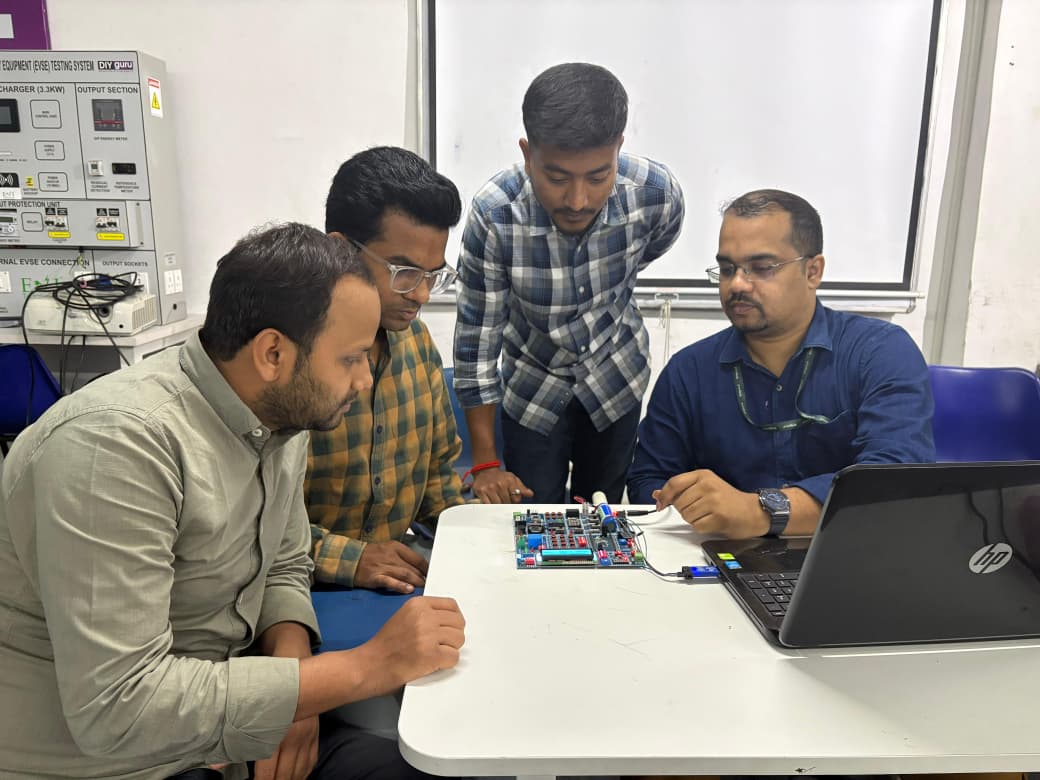
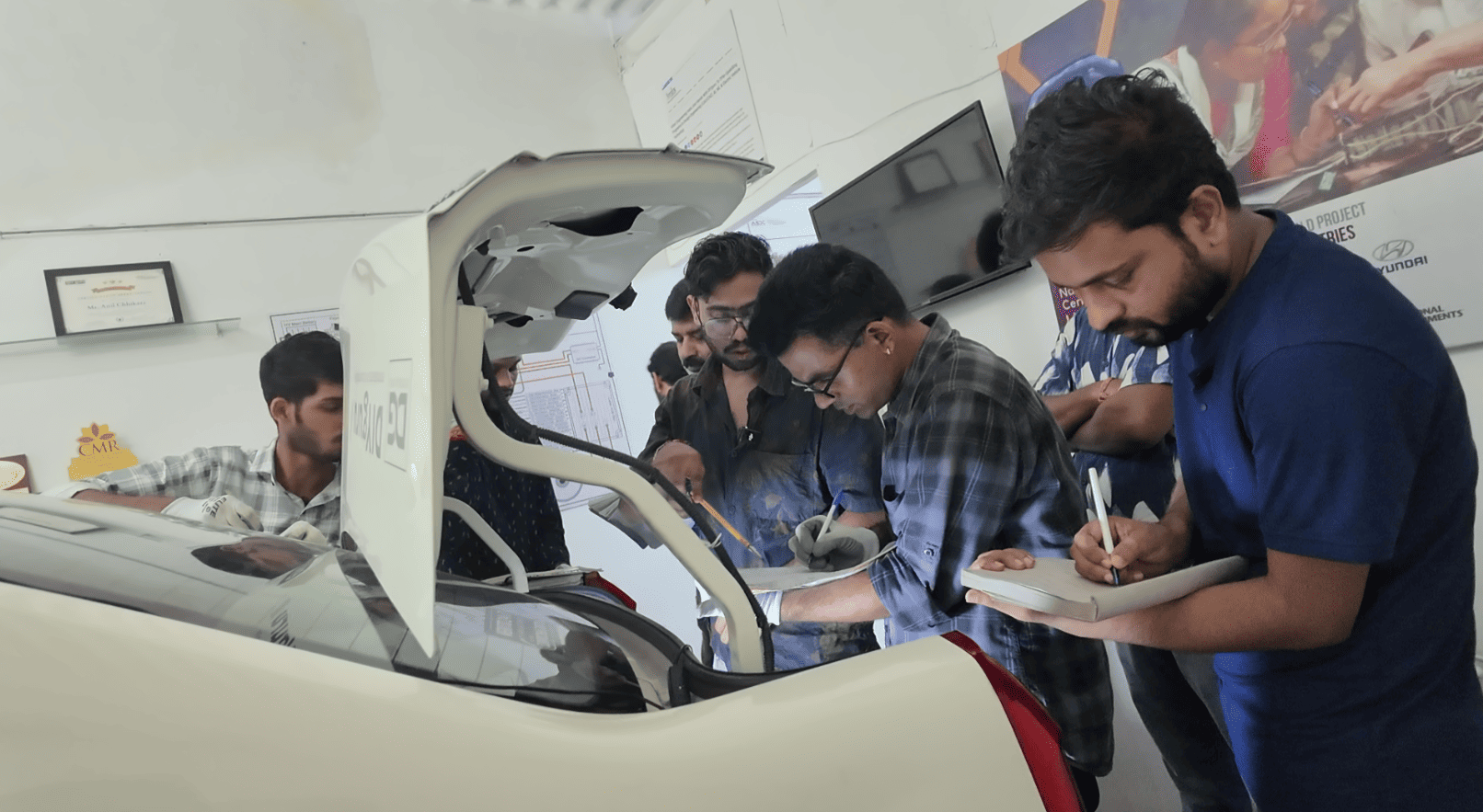
Hardware Labs Access
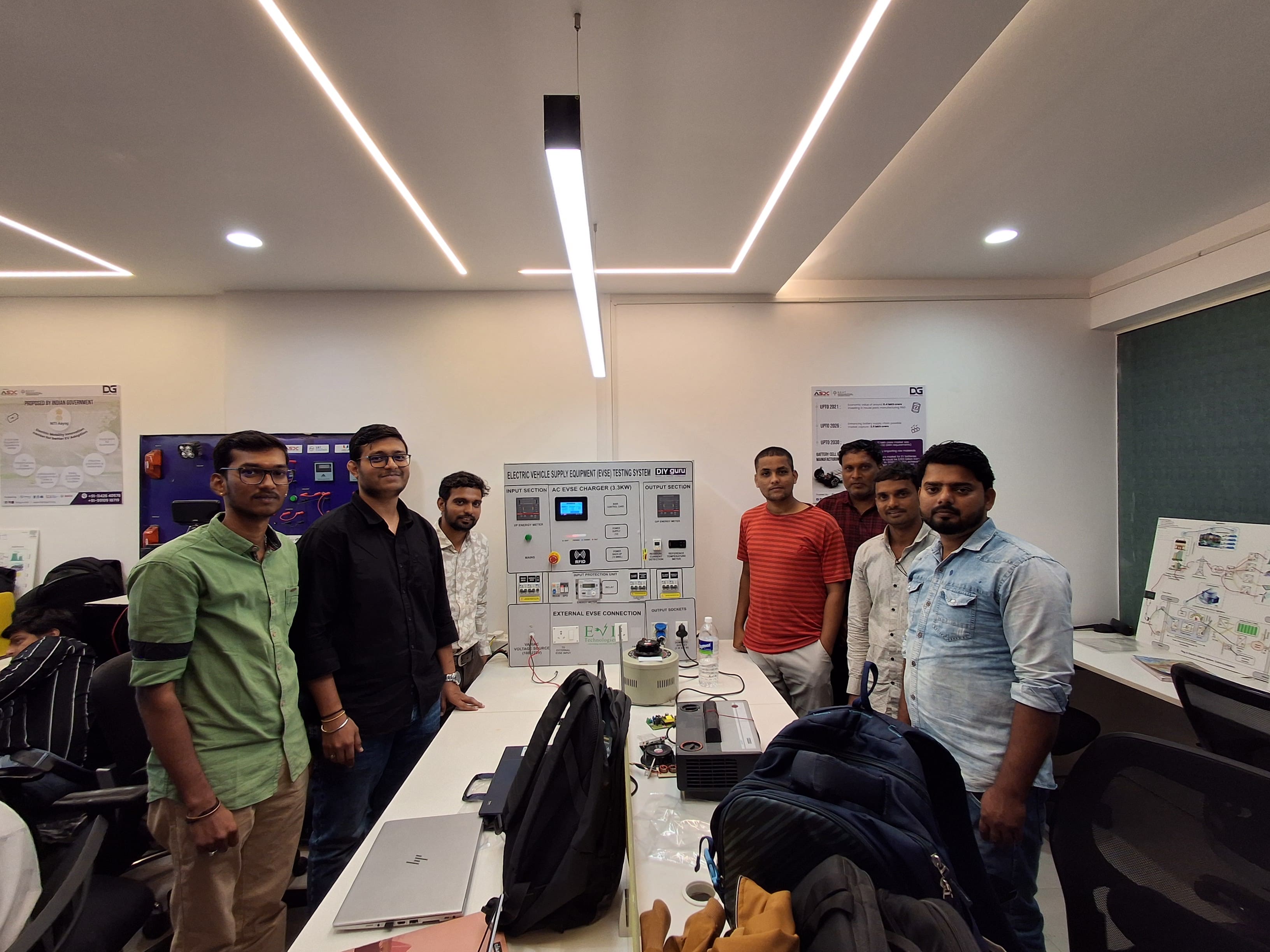
Two-Wheeler Simulator & Test Bench
Charging Station Simulator and Test Bench
EV In-house manufacturing & Development KIT
Hardware Lab Attendees
Our Alumni: Shaping the Future of Innovation
The facilities at DIYguru, especially the testing equipment, were top-notch. Interacting with founders from other EV companies during sessions provided unique insights and added significant value to my educational journey.
The DIYguru course not only introduced me to the essentials of electric vehicles but also provided a highly supportive learning environment. The tutors were incredibly patient, always ready to explain complex concepts multiple times, which greatly enhanced my understanding and confidence
The training at DIYguru proved to be very useful, especially in my role as a deputy manager in R&D. The course provided me with insights that are directly applicable to my work in auto electrical systems, enhancing both my practical skills and theoretical knowledge.

Dr. Gaurav Trivedi
Principal Investigator, IIT Guwahati

Chinmaya Chetan Biswal
BeepKart-2W | Spinny- 4W | Shuttl – EVs in Employee Logistics | MDI | TML

Dr. Bijaya Ketan Panigrahi
Professor, Department of Electrical Engineering, Founder Head, Centre for Automotive Research and Tribology (CART), IIT Delhi

Abhishek Dwivedi
Co-Founder EVeez

Arindam Lahiri
CEO of the Automotive Skills Development Council (ASDC)

Ms. Feroza Haque
Project Manager, EICT Academy, Indian Institute of Technology Guwahati

Ms. Pronamika Buragohain
Project Engineer at the E&ICT Academy, IIT Guwahati

Rahul Soni
Project Incharge – EVI Technologies

Jawaad Khan
CEO & Founder – Tadpole Projects

Prasad Kadam
Senior Technical Head – DIYguru COE Labs

Ankit Khatri
EIR – DIYguru | R&D Testing & validation Engineer at CREATARA | Ex- ICAT

Supratim Das
EIR – DIYguru | Hardware Generalist @ Google || Ex – Exponent Energy || Ex- Taqanal Energy || Ex- HCL Technology || E- Mobility, Energy Mentor
- Get more information on Placement
Want to know more? Enter your information to learn more about this program from EICT – IIT Guwahati.