⚡ UPDATES
PG in EV & Embedded Systems — IIT Jammu (12 Months) Flagship M.Tech in EV Technology — 24 Month Program Open DET Entrance Test — Unlock Scholarship Up to ₹25,000 Scholarship 50,000+ Professionals Trained Nationwide Placement Drive — 183+ Hiring Partners ASDC & AICTE NEAT Certified Programs PG in EV & Embedded Systems — IIT Jammu (12 Months) Flagship M.Tech in EV Technology — 24 Month Program Open DET Entrance Test — Unlock Scholarship Up to ₹25,000 Scholarship 50,000+ Professionals Trained Nationwide Placement Drive — 183+ Hiring Partners ASDC & AICTE NEAT Certified Programs
Accredited by
NEAT AICTE Ministry of Education ASDC
DIYguru
⚡ Apply Now — PG & Nanodegree Programs Open DET Entrance Test — Get Scholarship up to ₹25,000
📅
Bharat eMobility Recruitathon 2026 Delhi: Mar 21-23 | Pune: May 21-24
🎙️ DIYtalks · Episode 1  |  Avinash Singh (DIYguru) in conversation with Mihir Mehta (Worzo EV)  |  India's EV Skill Gap
🎙️ DIYtalks · Episode 1 ⚡ India's EV Skill Gap 🔧 Service, Repair & EV Careers

India Is Buying EVs Faster Than It Is Training People to Fix Them

EV adoption stopped being the hard problem a while ago. The real bottleneck now is service, repair, diagnostics and the trained people who can actually do that work. Watch the full conversation.

Hosted by Avinash Singh, Founder & CEO of DIYguru, in conversation with Mihir Mehta, Founder of Worzo EV.

Get Free EV Career Counselling

Watched the episode? Talk to an EV career advisor within 24 hours.

⚡ Get personalised guidance on EV skilling and careers

🔒 Your data is 100% secure. Lead is pushed to DIYguru CRM — no third parties.

What This Conversation Is Really About

Two builders, one honest discussion on the part of India's EV story that nobody puts on the brochure.

01

Selling an EV is easy. Maintaining one over its life is the hard part, and that is where India is short on people.

02

The EV technician shortage is now a bigger constraint than charging infrastructure or consumer awareness.

03

Buyers compare price and range. They should also check battery quality, motor quality, warranty and service network.

04

Tier-2 and Tier-3 India is becoming a serious EV market, but service depth there is still thin.

05

Dealers have to evolve from sales points into real service partners, or customers lose trust in EVs entirely.

06

Students, mechanics, ITI and diploma learners and engineers can build strong careers with the right hands-on skills.

India's EV Skill Gap: The Problem Nobody Put on the Brochure

India crossed a real milestone in electric mobility. Two-wheelers, passenger cars and commercial fleets are going electric at a pace that looked unrealistic only a few years ago. But underneath those sales numbers there is a quieter problem that decides whether this transition actually holds together: there are not enough trained people to service, repair and diagnose the vehicles already on the road.

That is the core of DIYtalks Episode 1. Avinash Singh, who has spent years building EV training at DIYguru, sat down with Mihir Mehta, who is building an electric two-wheeler company at Worzo EV for semi-urban and small-town India. Two builders, one honest conversation, no hype.

Up to 2 lakhSkilled EV-capable workers India needs by 2030 to meet its 30% adoption target (SIAM)
15k → 30kAnnual EV-ready workforce addition needs to double for full component localisation (SIAM)
43%Of technical competencies barely overlap between ICE and EV, so fresh skilling is unavoidable (SIAM)

EV Adoption Was Never the Real Challenge

For a long time the whole EV conversation in India was about adoption. Will people buy? Will range anxiety kill it? Is it too expensive? Those questions have largely answered themselves. People are buying, especially in the two-wheeler segment, and they are buying well beyond the metros.

The challenge moved downstream. Once a few million EVs are running on Indian roads, the question is no longer how to sell them. It is how to keep them running. Service. Repair. Maintenance. Battery diagnostics. Motor troubleshooting. That work needs trained hands, and right now demand is running well ahead of supply.

Why EV Maintenance Is Harder Than EV Sales

A sale is a single transaction. Maintenance is a relationship that lasts the life of the vehicle. An electric vehicle is not a fuel engine with a battery bolted on. It is a high-voltage system with a battery pack, a battery management system, a motor and controller, regenerative braking, thermal management and connected electronics. Diagnosing a fault correctly needs a specific skill set that most traditional garages were never built for.

This is the gap Avinash and Mihir keep returning to in the episode. Manufacturers can scale production. Dealers can scale showrooms. But you cannot fake a trained battery diagnostics technician. That person either knows how to read the system or they do not.

This Gap Is Exactly What the PG Program in E-Mobility Trains For

Battery systems, BMS, EV powertrain, diagnostics and hands-on service skills, built around what the industry is actually hiring for.

Explore the PG Program in E-Mobility

Price vs Quality in Electric Two-Wheelers

Mihir brings a builder's view here. When you sell affordable electric two-wheelers in price-sensitive markets, customers naturally anchor on the sticker price and the claimed range. Those two numbers dominate the buying decision. But they are the wrong place to stop.

A low price with a weak battery, an unreliable motor, a thin warranty and no nearby service support is not actually cheap. It becomes expensive the first time something fails and there is no one within a reasonable distance who can fix it properly. The honest version of EV buying advice is not "buy the cheapest" and it is not "buy the most expensive." It is "buy the one you can keep running."

What EV Buyers Should Actually Check

One of the most practical segments of the episode is for buyers, not just industry people. Before paying for any electric two-wheeler, the checklist should go well beyond price and range:

  • Battery quality and chemistry. This is the most expensive part of the vehicle and the one that ages.
  • Motor quality. The difference between a smooth, durable ride and constant trips to the workshop.
  • Warranty terms. What is actually covered, for how long, and what voids it.
  • Service network. Is there trained support near where you live, not three cities away.
  • Dealer reliability. Will this dealer still be around and responsive a year from now.

Dealers Have to Become Service Partners

There is a strong point in the conversation about the dealer's role changing. In the fuel-vehicle world a dealer could survive as a sales point because the servicing ecosystem around it was mature and everywhere. In EVs that ecosystem does not exist yet at the same density. So the dealer cannot just sell and step back. The dealer has to be the service partner, or the customer is left stranded and the brand loses trust fast.

Tier-2 and Tier-3 India Is the Real EV Story Now

The metros get the headlines, but the volume and the next phase of growth are coming from Tier-2 and Tier-3 cities and towns. That is exactly where Worzo is positioned. The opportunity is huge, but so is the responsibility. Selling EVs into a town with no trained EV service person nearby creates a problem that shows up six months later as frustrated customers and a damaged category reputation. Service depth has to follow sales depth, not lag years behind it.

Insights From Mihir Mehta and Worzo EV

Mihir's perspective matters because he is not theorising. He is hiring, building a dealer footprint and selling into the exact markets everyone talks about. His view is direct: an EV company can design a good product and price it well, but it still depends on the same scarce resource as everyone else, which is trained service-ready manpower. When an OEM cannot reliably find a battery diagnostics technician, every other plan slows down. That single constraint touches product, dealer expansion and customer trust at the same time.

EV selling is easy. EV maintenance is difficult. The industry that solves the second problem is the one that wins the decade. The throughline of DIYtalks Episode 1

EV Career Opportunities: Who This Is For

The flip side of a workforce shortage is a career opportunity. Every gap on the industry side is an opening on the talent side. The episode is clear about who can step in:

  • Students and fresh graduates who want to enter a growing sector instead of a saturated one.
  • Working mechanics from the fuel-vehicle world who can re-skill into high-demand EV roles.
  • ITI and diploma learners who want a hands-on, employable specialisation.
  • Engineers and automotive professionals who want to move into battery, BMS and EV powertrain roles.

The roles being created are real and varied: EV service technician, battery diagnostics professional, BMS specialist, EV two-wheeler service expert, charging infrastructure technician and service-network roles for OEMs and dealers.

Why Hands-On EV Training Matters

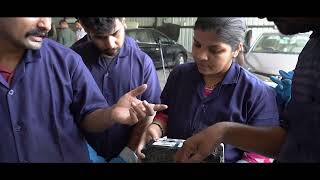
This is the part the episode does not compromise on. You cannot learn to diagnose a battery fault by only watching videos. EV competence is built on hardware. Real packs, real BMS, real motors, real diagnostic tools and structured practice. Theory matters, but employers are hiring for the ability to actually open up a system and solve a problem. Training that skips the hands-on layer produces certificates, not capable technicians.

How DIYguru Fits Into This

DIYguru's role in this story is straightforward. It sits between industry demand and the workforce that does not exist yet, and works to close that gap. With training built around real EV hardware, an industry-aligned curriculum and partnerships across the ecosystem, the goal is not just to issue a certificate. It is to produce people who an OEM like Worzo, or a dealer network, or a service centre, can actually put to work. That is the bridge: EV industry demand on one side, skilled EV workforce on the other, and structured hands-on training connecting the two.

The Roles This Gap Is Creating

A shortage on the industry side is an opportunity on the talent side. These are the kinds of roles the episode talks about.

EV Service Technician
Diagnostics, repair, after-sales
Battery Diagnostics Pro
Pack health, fault analysis
BMS Specialist
Cell balancing, SoC/SoH
EV 2W Service Expert
Two-wheeler service network
Charging Infra Technician
EVSE install and uptime
EV Service Manager
Dealer and OEM operations
Powertrain Engineer
Motor and drivetrain integration
EV Startup Operations
OEM and dealer ecosystem roles

Why Hands-On EV Training Is Non-Negotiable

Employers hire for the ability to open up a system and solve the problem. That is built on hardware, not video alone.

🔋

Real Battery & BMS Work

Hands-on with real packs, BMS boards and diagnostic tools, not just slides and theory.

🔧

Diagnostics That Transfer

Fault-finding practice that mirrors what an actual service floor demands day to day.

🏛️

Industry-Aligned Curriculum

Built with EV industry inputs so the skills map to what the field actually needs.

⚙️

Built Around the Real Gap

The focus is producing people who can be put to work, not just issuing a certificate.

Frequently Asked Questions

EV skill gap, EV careers and the PG Program in E-Mobility, answered.

It is the shortage of trained people who can manufacture, service, repair and diagnose electric vehicles relative to how fast EVs are being adopted. Industry estimates from SIAM point to a need for up to 2 lakh skilled EV-capable workers by 2030, with the annual addition of EV-ready talent needing to roughly double from 15,000 to 30,000.
An EV is a high-voltage system with a battery pack, battery management system, motor, controller and connected electronics. Diagnosing and repairing it needs specialised skills that traditional fuel-vehicle garages were not built for, so capable technicians are scarce while the number of EVs on the road keeps growing.
Yes, primarily because demand is outpacing supply. Students, mechanics, ITI and diploma learners and engineers who build hands-on EV skills enter a growing field with real hiring need across EV service technician, battery diagnostics, BMS and EV powertrain roles.
Look beyond price and range. Check battery quality and chemistry, motor quality, warranty terms, the strength of the service network near you, and dealer reliability. A cheaper EV with weak after-sales support often costs more over time.
It is built around what the industry hires for: EV systems, battery technology, battery management systems, EV powertrain, diagnostics and hands-on service skills. The focus is on producing job-ready capability, not just issuing a certificate.
The program is built for a mixed audience including students, working mechanics, ITI and diploma holders and engineers. The common requirement is the intent to build practical, hands-on EV skills. For exact eligibility, check the program page or request free counselling.
Yes. Employers hire for the ability to actually diagnose and fix systems. Theory alone does not build that. Training on real battery packs, BMS units, motors and diagnostic tools is what makes a candidate employable.
Yes. EV adoption is expanding strongly beyond metros, and service capacity in smaller cities and towns is still thin. That mismatch is creating local demand for trained EV service and battery professionals.
It is for anyone serious about the EV industry, especially people thinking about an EV career and founders and professionals building in the space. Episode 1 features DIYguru founder Avinash Singh in conversation with Worzo EV founder Mihir Mehta.
Explore the PG Program in E-Mobility on eMobility Academy, review the curriculum and outcomes, and apply or request a free callback using the counselling form on this page.

The EV Industry Is Short on People. That Is the Opportunity.

If this conversation made you rethink where the real opportunity in mobility is, the practical next step is the PG Program in E-Mobility.

Get in Touch

📞

Call / WhatsApp

+91 9910918719
Mon–Sat · 10am–7pm IST

🎙️

Watch DIYtalks

Episode 1 — watch on this page
Avinash Singh and Mihir Mehta

🎓

PG Program in E-Mobility

View program and apply

💬