


World Earth Day / EV Adoption in India
Every electric vehicle on Indian roads is a quiet act of climate repair.
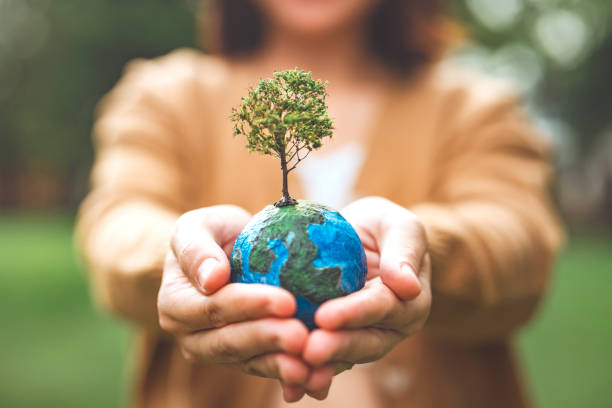
The cleanest kilometre we can drive is the one that does not burn fossil fuel. That is what India's EV transition is doing, one scooter, one car, one bus at a time. This page exists to explain what is actually happening, why it matters more than most people realise, and what role you can play in it.
2.08M
EVs sold in India in 2024, up from about 49,000 in 2016
~9.8M
Tonnes of CO₂ already avoided by India's EVs
~78M
EVs projected on Indian roads by 2030
~47M
Jobs the EV economy is expected to create

Earth Day, first observed in 1970, began as a teach-in. More than five decades later, the teach-in is still the most useful response to the problem.
Why Earth Day exists
One day a year, the world pauses to ask a question the rest of the year is too busy to face.
Earth Day is not a celebration of nature. It is an anniversary of a protest. On April 22, 1970, roughly twenty million Americans took to the streets to demand that polluted rivers, toxic air, and dying forests become something a government had to answer for. Within months, the United States had an Environmental Protection Agency. Within two years, the Clean Water Act. Within a decade, the first Earth Summit.
The day survived because the question it raised never went away. How do we live on this planet without dismantling the thing that keeps us alive?
In 2026, the theme is Our Power, Our Planet. It is pointed at electricity specifically, at the understanding that the cleanest future is one where the energy we use no longer comes from burning something. Nowhere is that shift more visible than in how we move.
The transition, in plain language
Why electric vehicles are the single largest lever India has to cut its emissions.
The argument for EVs is often made badly. It gets lost in charging speeds, battery chemistries, and subsidy details. Stripped of the jargon, the argument is simple and worth understanding, whether or not you ever buy one.
India's transport sector is the problem. And the opportunity.
electrification as the single largest lever available to cut emissions this decade. Not because EVs are perfect, but because the alternative, continuing to burn fossil fuels for transport, is mathematically incompatible with any climate target India has committed to.
The tailpipe emissions an EV avoids today are roughly equal to what the coal plant charging it emits. That changes every year as the grid adds solar. By 2030, every EV on Indian roads will be meaningfully cleaner than any petrol vehicle. By 2050, the difference will be categorical.

What a successful transition actually looks like.
It is tempting to imagine climate progress as something dramatic. Solar panels on every roof overnight. Fossil fuel bans. A single announcement that changes everything. The real version is less cinematic and far more durable. It is a scooter in a tier-three city that costs its owner about eleven rupees a day to run. It is a fleet of electric buses quietly replacing a city's diesel corridor. It is a battery swap station opening in a neighbourhood that did not have reliable electricity ten years ago.
Progress of this kind does not announce itself. It accumulates. And then one year someone notices the city's air is breathable again.
Where this is going
The next fifteen years of Indian mobility, according to the official roadmap.
These are not speculative projections. They are targets India has publicly committed to, and that manufacturers, states, and central ministries are actively executing against.
2026
The PM E-DRIVE scheme runs through March
India's current flagship EV subsidy scheme, worth roughly ₹10,900 crore, covers e-two-wheelers, e-three-wheelers, buses, ambulances, and trucks, with a fresh focus on charging infrastructure.
2027
Stricter fuel emission norms take effect
CAFE-III rules require manufacturers to bring average fleet emissions down from about 113 grams of CO₂ per kilometre to around 91.7, pushing every major OEM deeper into EV launches.
2030
The 30-70-40-80 target
India has committed to EVs being around 30 percent of private car sales, close to 70 percent of commercial vehicles, nearly 40 percent of buses, and about 80 percent of two and three wheelers. In absolute numbers, that lands near 78 million EVs on Indian roads.
2040
Zero-emission new vehicle sales
Under the COP26 Zero Emission Vehicles Declaration, India has pledged that all new cars and vans sold will be zero-emission. By this point, EV is no longer a category. It is simply what a vehicle is.
2070
Net-zero India
The long-term pledge under the Paris Agreement. Transport electrification is one of the two or three pillars on which this commitment rests, alongside renewable power generation and industrial decarbonisation.
What the numbers actually say
Three statistics that tell the whole story.
If you remember nothing else from this page, remember these three. They explain why EV adoption is not a future event, but a present one.
~49%
CAGR of India's EV market
Between 2022 and 2030, India's EV industry is projected to grow at a compound annual rate close to 49 percent, one of the fastest industrial growth trajectories in the country's history.
~₹16.8L cr
The market opportunity
NITI Aayog estimates India's EV sector represents a market opportunity close to ₹16.8 lakh crore (about two hundred billion US dollars) by 2030, spanning vehicles, batteries, charging, components, and services.
~₹1.6L cr
Annual investment required
The IEA estimates India needs roughly ₹1.6 to ₹2.7 lakh crore invested in EVs and charging infrastructure every year from 2026 to 2030 to stay on the committed trajectory.
Sources: NITI Aayog EV Report, IEA Transitioning India's Road Transport, Economic Survey 2023, S&P Global Mobility, IBEF India Brand Equity Foundation.
Beyond the vehicles
The transition reshapes far more than transport.
When a country switches how it moves, it changes what it builds, what it trains for, what it imports, and what it breathes. Here is what else is in motion.
01
Air quality in cities
Indian cities carry some of the dirtiest air in the world. EV adoption is projected to reduce nitrogen oxide and particulate matter emissions by roughly 17 percent by 2030, translating directly into fewer hospital admissions and longer lives.
02
Energy independence
India imports close to 87 percent of its crude oil. Every EV on the road is a small subtraction from that import bill. At scale, vehicle electrification is one of the largest energy-security moves the country can make.
03
Manufacturing and exports
India is already the world's fourth-largest vehicle manufacturer. The EV transition opens a window to lead in battery production, power electronics, and components. By 2040, India could be a global export hub for batteries and EV parts.
04
Jobs and skilling
The EV industry is projected to create roughly 47 million direct and indirect jobs in India by 2030. But these are not the jobs of the old auto economy. They require new skills: battery diagnostics, powertrain calibration, charging network operations, HIL testing.
05
The electricity grid itself
Millions of EVs charging on a grid still dominated by coal would cancel out much of the benefit. Which is why the EV transition is pulling the renewable energy transition along with it. Solar, storage, and EVs are becoming one system.
06
Consumer culture
Range anxiety, charging habits, resale value, insurance, servicing. Every part of what it means to own a vehicle is being rewritten. By 2040, the questions we ask about EVs today will sound as dated as asking if a phone can send pictures.
Your next step
Start the EV Career Path Advisor
Not sure where you fit in the EV transition? Let the EV Career Path Advisor figure it out.
We built a free tool that takes your background, interests, and goals, and maps them against the entire DIYguru program catalogue, every Nanodegree, the M.Tech with ADYPU, the HIL Testing Program with Micelio Mobility, and every short course. In under three minutes, it tells you which path fits you and why.
Works for students and professionals
Covers every EV specialisation
Concrete next step, not a brochure
Free, no commitment
Your place in the transition
You do not need to be an environmentalist to contribute. You need a skill the transition needs.
The most useful climate action is not always the most visible one. The engineer designing a better battery management system, the technician certifying a new charging station, the instructor training the next cohort, the policy analyst writing the next state EV policy. None of them carry placards. All of them move the needle.
DIYguru was built for exactly this kind of action. We train the workforce that the EV industry needs, across every background. The four paths below are the most common entry points. Our Career Path Advisor will help you find yours, whether it is one of these or something more specific.
Stewardship is not an abstract idea. It is a set of decisions about what we build and who we train to build it.
If you are a student
An EV Nanodegree alongside your engineering degree is the fastest way into the industry. You graduate with a portfolio, an internship, and an employable specialisation.
If you are an ICE or mechanical professional
Your existing skills transfer directly. The ICE-to-EV transition track is built specifically for working professionals moving from legacy powertrain work to electric.
If you want deep specialisation
The M.Tech in EV Technology with ADYPU, or the HIL Testing Program with Micelio Mobility, are for engineers who want to go deep into powertrain, battery systems, or validation.
If you are from a non-engineering background
The EV industry needs sales, channel partners, marketers, policy analysts, trainers, and operations leaders. Not every seat in this industry requires a degree in engineering.
Questions worth answering
What people ask about EV adoption in India.
Honest answers to the questions that come up most often, whether from curious readers, skeptical professionals, or first-time buyers.
Are EVs actually cleaner than petrol vehicles if the grid is still coal-heavy?
Even on today's Indian grid, where coal still dominates power generation, most studies find EVs emit less CO₂ per kilometre than petrol or diesel equivalents. The gap is modest now and grows wider every year as India adds renewable capacity. By 2030, every EV will be meaningfully cleaner than any comparable petrol vehicle, and by 2050 the comparison will not be close.
Why does India's EV adoption look slow compared to China or Europe?
India started later and is starting from a much lower per-capita income base. But India is not following the same curve as China or Europe. Two-wheelers and three-wheelers, which represent the bulk of Indian vehicle sales, are electrifying faster than anywhere else in the world. The passenger car segment lags but is accelerating. By the time India reaches 2030, its EV adoption rate will likely have converged with global averages.
What is the single biggest challenge to EV adoption in India right now?
Charging infrastructure, specifically the consistency and reliability of public charging. India has over 26,300 public charging stations today, but the distribution is uneven and uptime varies. The government and private players are investing aggressively, but this is the bottleneck most likely to determine how quickly EVs become the default choice for Indian buyers.
Is the EV industry a safe career bet?
The EV industry is projected to create roughly 47 million direct and indirect jobs in India by 2030. Every major Indian and global OEM is hiring EV engineers. Component suppliers, charging network operators, battery recyclers, fleet operators, and policy bodies are all expanding their EV teams. The demand is structural, not cyclical, and it will compound for at least the next fifteen years.
Can someone from a non-engineering background work in EVs?
Yes, and the industry increasingly needs them. Sales, business development, channel partner management, marketing, policy analysis, training, and operations are all in demand. The stereotype that EVs are only an engineering field is incorrect, and it is actively limiting the sector's ability to scale.
Is Earth Day still relevant?
Earth Day is a teaching tool and a coordination device. It gives the world one day a year to focus attention on a problem that otherwise spreads too thin to be actionable. The value of Earth Day is not the day itself. It is what people do in the weeks after, informed by what they learned on it.
What does DIYguru do?
DIYguru is India's leading EV skilling and training platform. We are accredited by AICTE NEAT and the Automotive Skills Development Council, and we partner with institutions like ADYPU, Micelio Mobility, and a network of engineering colleges and ITIs across India. Our programs cover EV Nanodegrees, M.Tech in EV Technology, HIL Testing, faculty development, and custom corporate training.
The simplest next step
The transition does not need spectators. It needs specialists.
Take three minutes. Find out where you fit. The rest is groundwork.
Our Clients
Trusted by 528+ Companies & OEMs
From global automotive OEMs and Tier-1 suppliers to EV startups, government bodies, and Fortune 500 companies.


Swipe to see more partners
Showing 39 of 528+ corporate training partners
Accreditations
Programs Recognised by Govt. Bodies & Industries
DIYguru is recognized and endorsed by major educational and governmental organizations including the Ministry of Education, NITI Aayog, and NEAT AICTE for its commitment to upskilling in automotive and EV technologies. The institute also collaborates with industry leaders like TATA Technologies and the Ola Mobility Institute to ensure the relevance and practicality of its training programs.


Swipe to see more accreditations
In The Media
DIYguru in the Press
ANI News
IIT Jammu Enters Into Collaboration With DIYguru To Launch Certificate Programs in EV Sector
Read →
PTI News
Tata Technologies Partners With DIYguru for Industry-Relevant E-Mobility Programs
Read →
The Print
DIYguru Partners With L&T Edutech for E-Mobility Training — Hardware-Enabled PG Program
Read →
Times of India
DIYguru and ADYPU Launch M.Tech Program in Electric Vehicle
Read →
Economic Times
DIYguru and Ajeenkya DY Patil University To Launch Integrated PG, M.Tech in EV
Read →
India Education Diary
AICTE–DIYguru MOU To Provide Jobs To One Million EV Workforce
Read →
Autocar Professional
ASDC & DIYguru Launch Nanodegree Program To Upskill Students in EV Technology
Read →
SiliconIndia
Tata Technologies & DIYguru Join Forces To Power India's Next-Gen eMobility Talent
Read →
TV9 Hindi
इलेक्ट्रिक कारों के मैकेनिक की बढ़ रही मांग — DIYguru से बना सकते हैं करियर
Read →
Zee News
Great Opportunity To Earn in the World of Electric Vehicles — Training & Method
Read →
National Skills Network
Roundtable on Skill Development for Electric Vehicles — DFID, ASDC & SSOU
Read →
Hindustan
DIYguru से हार्डवेयर सक्षमता के साथ EV बिजनेस और इंजीनियरिंग सीखें
Read →
Watch DIYguru
Lab Tours, Placements & Real Stories
🔧 Hands-On
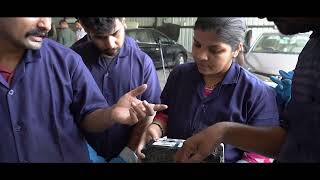
EV Hands-on Training in Pune on Tata Tiago EV 🚘🔧

🎓 Placement
Build Your Career in the EV Industry Like Prabhat Gautam!
🏭 Lab Tour
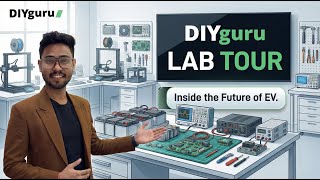
DIYguru Lab Tour — E-Mobility Hardware Lab

🔩 Hardware
Introducing the Ultimate EV Training Kit by DIYguru & EVI Technologies

🌟 Alumni
Empowering Futures: Nitin Agarwal's Journey with DIYguru in EV

🚀 About Us
Welcome to DIYguru — India's #1 E-Mobility & FutureTech Platform

📊 Placement
Placement Spotlight: A Journey of Skills, Sustainability & Smart Choices

💬 Story
This Is More Than a Career Story — When Learning Meets Purpose

🌍 International
Mustafa From North Africa 🔥🔥 — Global EV Training
🎤 Masterclass
THE FAST TRACK TO AN EV CAREER — Masterclass by Avinash Singh
Ready to build your EV career? Talk to our counsellors today.
BOOK FREE CONSULTATION →
Your journey starts here.
DIYguru is India's leading AICTE-approved platform, equipping engineers, graduates, and professionals with the future-ready skills needed in Electric Vehicles (EVs), Battery Technology, Solar Energy, Green Hydrogen, and Clean Mobility.
Whether you're starting out or shifting your career toward sustainability — your journey begins here.
Why Choose DIYguru?
- AICTE-Approved Certifications
- Industry-Curated Courses (EV, Battery Design, Solar, Embedded Systems, BMS, MATLAB & more)
- Project-Based Learning using real case studies from Tesla, Tata Motors, Ather, and others
- Global Opportunities – Connect with 300+ hiring partners and international universities
- Work on Real-World Tools like MATLAB, SolidWorks, Python, Simulink, Ansys
Your journey starts here.
Ready to Begin? Drop your info, and we'll help you get there!
🔒 Your information is secure and will never be shared.
🎬 Unlock This Video
Enter your details to watch
Get instant access + free EV career guidance from our counsellors.
Please fill all fields correctly.
🔒 Your data is secure. We'll send you free EV career resources.


Let's Connect
Training programs · B2B partnerships · College workshops
Certification
Programs
Programs
B2B Corporate
Training
Training
College
Workshops
Workshops
Partnership &
Collaboration
Collaboration
Your data is secure · No spam · Expert callback within 2 hours