


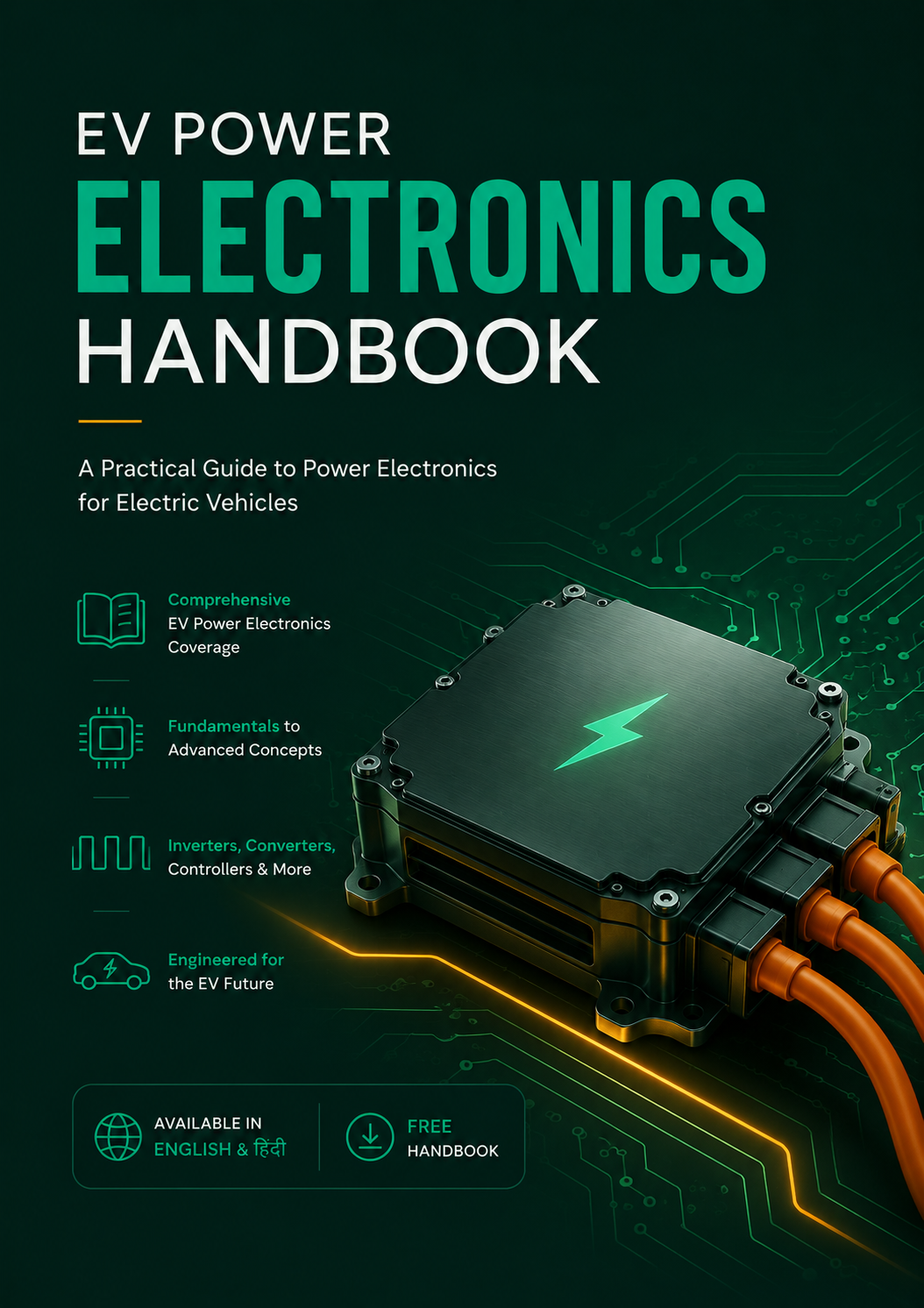
The EV Power Electronics Handbook, free in English and Hindi
Open an electric car and you see sealed boxes joined by thick orange cables. This 42-page handbook opens every one of them: inverters, DC-DC converters, rectifiers, the BMS and the charger, explained from scratch with mechanical analogies you already understand. No prior electronics needed.
One form. Both language editions unlock instantly. No card, no trial.
42pages
13chapters
9worked examples
25self-test questions
India's largest ASDC-certified EV skilling organisation
50,000+ professionals trained
52 certified programmes
Recognised by AICTE NEAT and ASDC
183+ hiring partners
The one idea that unlocks everything
A power converter is a gearbox for electricity
A gearbox converts power from one speed and torque combination to another without wasting much of it. A power converter does exactly the same to electricity: it changes the voltage and current combination while conserving the product. Every box inside an EV is one of these. That single sentence is the spine of the whole handbook.
Try the master control knob: duty cycle
Power electronics never throttles voltage down by burning the difference as heat. It chops with a fast switch and smooths with an inductor and capacitor pair. The fraction of time the switch stays on is the duty cycle, D, and the average output is D times the input. Drag the slider and watch a 400 V battery become any voltage you need.
50%Duty cycle D
200 VAverage output
Mid railTypical use
Worked example 5.1 in the handbook runs this in reverse: to make 12 V for the accessory system from a 400 V pack, D = 12 / 400 = 0.03. The switch is on just three percent of each cycle.
Chapter 2, the most useful half page in the book
Every electrical term has a mechanical twin
You do not need an electrical engineering degree to understand electric vehicles. You need about six ideas, and each one maps cleanly onto something you already know from fluids and mechanics. This is the table the whole handbook is built on.
| Electrical term | Symbol and unit | Mechanical or fluid twin | Plain meaning |
|---|---|---|---|
| Voltage | V, volts | Pressure or torque | The push that drives electricity. Higher voltage means a stronger push. |
| Current | I, amperes | Flow rate or shaft speed | How much electricity is actually moving per second. |
| Power | P, watts | Power, the same word | Rate of energy delivery. P equals V times I. |
| Energy | E, watt-hours | Work, or fuel in the tank | Power delivered over time. A battery's kWh is its tank size. |
| Resistance | R, ohms | Pipe friction or a damper | Opposition to flow. Turns electricity into unwanted heat. |
| Frequency | f, hertz | Cycles per second, rpm | How fast AC flips back and forth. India's grid runs at 50 Hz. |
| Inductor | L, henries | Flywheel | Stores energy magnetically and smooths current. Current cannot jump. |
| Capacitor | C, farads | Spring or accumulator | Stores energy electrically and smooths voltage. Voltage cannot jump. |
| Diode | one-way device | Check valve | Passes current in one direction only, with no control signal needed. |
| Transformer | turns ratio | Gear pair with magnetic teeth | Scales voltage and provides safety isolation. Shrinks as frequency rises. |
What is inside
13 chapters, five parts, from first principles to your first EV job
Identical structure in both the English and Hindi editions. Every chapter closes with a Remember This summary, and the book ends with a formula sheet, a glossary and a graded self-test.
Part I
Setting the stage
01
Why an EV is a power electronics machine
The four boxes every EV carries: on-board charger, traction inverter, DC-DC converter and off-board fast charger, and the translation each one performs.
02
Electricity for mechanical engineers, a 30-minute crash course
Six ideas, three worked examples. Voltage as pressure, P = V times I, energy as the fuel tank, DC against AC, efficiency and heat, and why high voltage keeps cables thin.
Part II
The building blocks
03
The five components that build everything
MOSFET and IGBT switches, inductors, capacitors, diodes and transformers, each paired with the mechanical component it behaves like.
04
The central trick: switching and PWM
Why converters chop instead of throttle, how duty cycle controls output, and why switching at 20 kHz to 1 MHz shrinks the magnetics.
Part III
The four core converters
05
DC-DC converters, buck and boost
Vout = D times Vin for the buck, Vout = Vin divided by (1 minus D) for the boost, with two worked examples including the 400 V to 12 V accessory converter.
06
Inverters, how the battery drives an AC motor
The H-bridge, three-phase inversion and how PWM sets both the frequency and the amplitude the motor sees.
07
Rectifiers and power factor
Diode bridges, why a charger must draw clean in-step current from the grid, and what power factor correction actually does.
08
The complete EV powertrain, box by box
How the OBC, traction inverter, DC-DC converter, battery and motor connect, and why the boxes are rarely all busy at once.
Part IV
Inside the vehicle
09
Batteries and the battery management system
Cells to modules to packs, C-rate, CC-CV charging, and how the BMS estimates SOC, SOH and RUL while balancing and protecting the pack.
10
Charging: slow, fast and wireless
AC against DC charging, why fast chargers live outside the car, bidirectional charging, and what actually limits charging speed.
11
Motors, traction inverters and regenerative braking
PMSM, BLDC and induction motors, the rotating magnetic field, and how running the motor as a generator recovers braking energy.
12
What is next: SiC, GaN, V2G and the road ahead
Wide-bandgap switches, 800 V architectures, integrated converters, vehicle-to-grid, and why India needs its own tropical, low-cost engineering.
Part V and reference
Your career, plus the revision kit
13
Careers in EV power electronics and how to get there
Seven roles mapped chapter by chapter, why a mechanical background is an advantage rather than a handicap, and the four-step path from reading to hired.
A-C
Formula sheet, glossary and 25-question self-test
Every formula on one page with its mechanical analogy, a plain-English glossary of 30-plus terms, and a graded final self-test with full solutions.
Appendix A, previewed
The one-page formula sheet
If you can explain each of these with its mechanical analogy, you have the fundamentals. The full sheet, with every symbol defined, sits at the back of the handbook.
P = V × IPower equals voltage times current. Like torque times speed.E = P × tEnergy equals power times time, the battery's kWh. Fuel in the tank.η = Pout / PinEfficiency. The remainder becomes heat. Gearbox efficiency.Vout = D × VinBuck converter, step down. A reduction gearbox.Vout = Vin / (1 − D)Boost converter, step up. A step-up gearbox.Pmech = T × ωThe bridge from electrical input to shaft output. Why EV torque is instant.Who this is written for
Built for the engineer who was never taught electronics
The handbook assumes nothing. If you can picture a gearbox, a flywheel and a check valve, you already have the mental models the book uses.
Mechanical engineers
You understand engines, gearboxes and thermal systems. This gives you the electronics half, and that combination is what EV employers struggle to find.
Electrical and electronics students
You have the theory. This shows you where every device actually sits in a real vehicle, and gives you the vocabulary for interviews.
ITI and diploma holders
Plain language, no calculus, worked numbers. Ideal groundwork before a technician or service role. The Hindi edition is written for exactly this reader.
Working professionals switching in
From automotive, manufacturing, energy or IT. A weekend of reading gets you fluent enough to hold a technical conversation about EV powertrains.
FOR FACULTY
Share it with your class
The handbook maps onto standard Power Electronics, Electric Vehicles and Electrical Machines syllabi. Distribute it freely to students, or use the self-test as a diagnostic before an EV lab module.
FOR REVISION
Exam and interview ready
Nine worked examples with full solutions, a one-page formula sheet and a 25-question graded self-test. Built to be reread the night before, not just the first time.
FOR HINDI READERS
A genuine parallel edition
All 42 pages, all 13 chapters. Technical terms stay in English so that what you learn matches real datasheets, real job descriptions and real interviews.
Chapter 13, and what happens after it
Every chapter in this book maps to a job someone is hiring for
India's EV industry is short of engineers who understand these boxes. The handbook names the roles and the chapters that prepare you for each. DIYguru then takes you the rest of the way.
94%placement rate across DIYguru nanodegree cohorts
183+active hiring partners including Bosch, Hyundai, Ather and Ola
50,000+professionals trained across 52 certified programmes
528+companies and OEMs that have trained with DIYguru
| Role | What you would do | Read these handbook chapters first | Entry band |
|---|---|---|---|
| Power Electronics Design Engineer | Design the converters themselves: chargers, inverters and DC-DC units. | Ch. 3 to 7Components, PWM, DC-DC converters, inverters, rectifiers | Up to 10 LPA |
| Battery and BMS Engineer | Design battery packs, thermal systems and the BMS that keeps them safe and healthy. | Ch. 9Batteries and the battery management system | Up to 9 LPA |
| Motor and Traction Drive Engineer | Design and tune motors and the inverters that drive them. | Ch. 6 and 11Inverters, then motors and regenerative braking | Up to 10 LPA |
| Simulation and Modelling Engineer | Model EV systems in MATLAB, run road load analysis and optimise powertrains. | Ch. 1, 5 and 8The four boxes, DC-DC converters, full powertrain | Up to 10 LPA |
| EV Powertrain and Integration Engineer | Design how the battery, inverter, motor and converters work together in a vehicle. | Ch. 1, 8 and 11The four boxes, full powertrain, motors and drives | In demand |
| Charging Infrastructure Engineer | Design, deploy and maintain home and public charging stations. | Ch. 7 and 10Rectifiers and power factor, then charging modes | In demand |
| EV Test and Validation Engineer | Test and certify EV systems for performance and safety. | All 13 chaptersValidation touches every subsystem in the vehicle | In demand |
| EV Service and Diagnostics Technician | Diagnose and repair EVs. Demand rises with every vehicle sold. | Ch. 8, 9 and 11Powertrain layout, battery and BMS, motors | In demand |
Entry bands reflect DIYguru placement data for these role families and vary by location, employer and prior experience. Roles marked in demand are actively hired for across our partner network without a published entry band.
Free download
Get both editions in one step
Fill this once and both the English and Hindi PDFs unlock on this page immediately. We will also send you the download links so you keep them.
- 42 pages, 13 chapters covering inverters, converters, PWM, batteries, BMS, charging and motors.
- Nine worked examples with full solutions, from reading a motor nameplate to sizing a duty cycle.
- A 25-question self-test with answers, plus a one-page formula sheet and a plain-English glossary.
- Both language editions unlock together. Read in English, revise in Hindi, or hand the Hindi copy to a colleague.
- A free career conversation if you want one. Our counsellors will map your background to the roles in Chapter 13. No obligation.
Your handbook is ready
Both editions are unlocked below and the links are on their way to your inbox. Start with Chapter 2 if electronics is new to you.
Two free things to do after the last page
Keep the updates coming, and find out where you fit
Stay updated
Join the DIYguru WhatsApp channel
Broadcast only, so your number stays private and nobody else in the channel can message you.
- New handbooks and free lab manuals as they release
- EV job openings pulled from emobility.careers
- Free masterclasses and live sessions
- Scholarship windows and admission deadlines
Find your fit
Take the EV Career Path Advisor
Chapter 13 lists eight roles. This free tool tells you which of them your branch, year and experience actually point to.
- Maps your background to a specific EV role, not a generic list
- Shows the skills gap between where you are and that role
- Suggests the study route that closes it
- Free, takes a few minutes, no payment
Where the handbook ends, training begins
Reading is step one. Building and measuring is what gets you hired
Chapter 13 sets out the path: cement the fundamentals, get hands-on, earn a recognised certification, build a portfolio. Here is the programme that does the last three.
Nanodegree in EV Design, Simulations and Analysis for EE Engineers
Six months, built for electrical and electronics engineers who want to design the boxes rather than just understand them. You take the handbook's converter chapters into real simulation and real hardware.
- Advanced MATLAB-Simulink: road load analysis, inverter design, power converter topologies, Simscape and BMS modelling
- PCB design for power electronics with KiCad, directly applicable to controller, BMS and on-board charger roles
- Choose a specialisation: Battery Pack Design and BMS Modelling, or Motor and Drive Systems
- Hands-on hardware workshop at DIYguru CoE centres, including EV 2W testbench, EVSE testing and pack assembly
- Triple certification from ASDC, NEAT AICTE and DIYguru, with placement support across 183+ hiring partners
Next step after the handbook
6 months
Live classes, hardware workshop, triple certification and placement support. See the full programme Talk to a counsellorQuestions people ask before downloading
Frequently asked questions
Is the EV Power Electronics handbook really free?
Yes. Both the English and Hindi editions are free. Enter your details once and both PDFs unlock immediately on this page. There is no payment, no trial and no card required.
Do I need an electronics background to read it?
No. The handbook assumes zero electronics. Every electrical idea arrives through a mechanical or fluid analogy you already know: voltage is pressure, current is flow, an inductor is a flywheel, a capacitor is a spring, a converter is a gearbox for electricity. Chapter 2 is a 30-minute crash course that gives you all the vocabulary needed for the rest of the book.
Is the Hindi version a machine translation?
No. The Hindi edition is a full 42-page parallel edition with the same 13 chapters, the same nine worked examples and the same self-test. Technical terms such as inverter, duty cycle, PWM and BMS are kept in English so that what you learn matches what you will see on real datasheets and in real job interviews.
What exactly does the handbook cover?
Why an EV is a power electronics machine, electricity for mechanical engineers, the five components that build every converter, switching and PWM, buck and boost DC-DC converters, inverters, rectifiers and power factor correction, the complete EV powertrain box by box, batteries and the BMS, slow, fast and wireless charging, motors, traction inverters and regenerative braking, SiC, GaN, 800 V architectures and V2G, and careers in EV power electronics. It closes with a formula sheet, a glossary and a 25-question self-test with solutions.
Can I use this for my college exams, lab file or project?
Yes. It maps well onto standard Power Electronics, Electric Vehicles and Electrical Machines syllabi in Indian B.Tech, B.E. and diploma programmes. The formula sheet, glossary and self-test are built for revision. Faculty are welcome to share it with a class or map it into an existing lab slot. If you want help with formal syllabus mapping, contact us on the number below.
Which jobs does this knowledge lead to?
Chapter 13 maps every concept to real roles: EV powertrain and integration engineer, battery and BMS engineer, charging infrastructure engineer, power electronics design engineer, motor and traction drive engineer, EV test and validation engineer, and EV service and diagnostics technician. Across DIYguru's 183+ hiring partners, entry-level bands for these role families run up to roughly 10 LPA depending on location, employer and prior experience.
Why is a mechanical engineer well placed for EV power electronics?
Because the industry needs people who understand systems, not just circuits. A mechanical background gives you an edge in thermal management, which matters enormously when converters and packs run hot, and in packaging, integration, motor mechanics and manufacturing. Add the power electronics understanding from this handbook and you become the engineer who can bridge both worlds, which is exactly what employers struggle to find.
What should I study after finishing the handbook?
The handbook ends where structured training begins. For electrical and electronics engineers, the natural next step is the six-month Nanodegree in EV Design, Simulations and Analysis, which covers MATLAB-Simulink modelling, inverter and power converter design, PCB design with KiCad and a choice of Battery/BMS or Motor and Drive specialisation, with hands-on hardware workshops and placement support. If you are from another branch, use the free course advisor tool to find the right entry point.
Can I share the handbook with my classmates or team?
Please do. Share this page rather than the raw PDF so they get the latest edition and both languages. If you want to distribute it across a department, a college or a company, contact us and we will help with a bulk arrangement and syllabus mapping.
Those sealed boxes stop being a mystery in about two hours
42 pages. 13 chapters. English and Hindi. Free, with no payment and no trial. Start where thousands of engineers have already started.
Questions about programmes or placements? Call or WhatsApp +91 99109 18719 or write to [email protected]
Our Clients
Trusted by 528+ Companies & OEMs
From global automotive OEMs and Tier-1 suppliers to EV startups, government bodies, and Fortune 500 companies.


Swipe to see more partners
Showing 39 of 528+ corporate training partners
Accreditations
Programs Recognised by Govt. Bodies & Industries
DIYguru is recognized and endorsed by major educational and governmental organizations including the Ministry of Education, NITI Aayog, and NEAT AICTE for its commitment to upskilling in automotive and EV technologies. The institute also collaborates with industry leaders like TATA Technologies and the Ola Mobility Institute to ensure the relevance and practicality of its training programs.


Swipe to see more accreditations
In The Media
DIYguru in the Press
ANI News
IIT Jammu Enters Into Collaboration With DIYguru To Launch Certificate Programs in EV Sector
Read →
PTI News
Tata Technologies Partners With DIYguru for Industry-Relevant E-Mobility Programs
Read →
The Print
DIYguru Partners With L&T Edutech for E-Mobility Training — Hardware-Enabled PG Program
Read →
Times of India
DIYguru and ADYPU Launch M.Tech Program in Electric Vehicle
Read →
Economic Times
DIYguru and Ajeenkya DY Patil University To Launch Integrated PG, M.Tech in EV
Read →
India Education Diary
AICTE–DIYguru MOU To Provide Jobs To One Million EV Workforce
Read →
Autocar Professional
ASDC & DIYguru Launch Nanodegree Program To Upskill Students in EV Technology
Read →
SiliconIndia
Tata Technologies & DIYguru Join Forces To Power India's Next-Gen eMobility Talent
Read →
TV9 Hindi
इलेक्ट्रिक कारों के मैकेनिक की बढ़ रही मांग — DIYguru से बना सकते हैं करियर
Read →
Zee News
Great Opportunity To Earn in the World of Electric Vehicles — Training & Method
Read →
National Skills Network
Roundtable on Skill Development for Electric Vehicles — DFID, ASDC & SSOU
Read →
Hindustan
DIYguru से हार्डवेयर सक्षमता के साथ EV बिजनेस और इंजीनियरिंग सीखें
Read →
Watch DIYguru
Lab Tours, Placements & Real Stories
🔧 Hands-On
EV Hands-on Training in Pune on Tata Tiago EV 🚘🔧
🎓 Placement
Build Your Career in the EV Industry Like Prabhat Gautam!
🏭 Lab Tour
DIYguru Lab Tour — E-Mobility Hardware Lab

🔩 Hardware
Introducing the Ultimate EV Training Kit by DIYguru & EVI Technologies

🌟 Alumni
Empowering Futures: Nitin Agarwal's Journey with DIYguru in EV
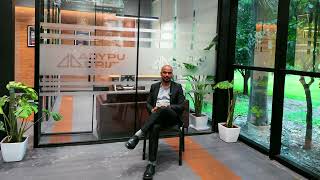
🚀 About Us
Welcome to DIYguru — India's #1 E-Mobility & FutureTech Platform
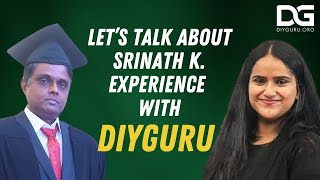
📊 Placement
Placement Spotlight: A Journey of Skills, Sustainability & Smart Choices
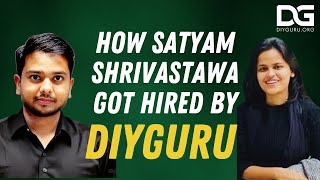
💬 Story
This Is More Than a Career Story — When Learning Meets Purpose

🌍 International
Mustafa From North Africa 🔥🔥 — Global EV Training
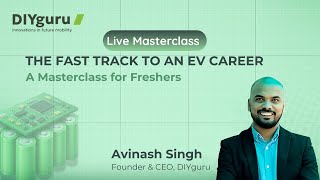
🎤 Masterclass
THE FAST TRACK TO AN EV CAREER — Masterclass by Avinash Singh
Ready to build your EV career? Talk to our counsellors today.
BOOK FREE CONSULTATION →
Your journey starts here.
DIYguru is India's leading AICTE-approved platform, equipping engineers, graduates, and professionals with the future-ready skills needed in Electric Vehicles (EVs), Battery Technology, Solar Energy, Green Hydrogen, and Clean Mobility.
Whether you're starting out or shifting your career toward sustainability — your journey begins here.
Why Choose DIYguru?
- AICTE-Approved Certifications
- Industry-Curated Courses (EV, Battery Design, Solar, Embedded Systems, BMS, MATLAB & more)
- Project-Based Learning using real case studies from Tesla, Tata Motors, Ather, and others
- Global Opportunities – Connect with 300+ hiring partners and international universities
- Work on Real-World Tools like MATLAB, SolidWorks, Python, Simulink, Ansys
Your journey starts here.
Ready to Begin? Drop your info, and we'll help you get there!
🔒 Your information is secure and will never be shared.
🎬 Unlock This Video
Enter your details to watch
Get instant access + free EV career guidance from our counsellors.
Please fill all fields correctly.
🔒 Your data is secure. We'll send you free EV career resources.


Let's Connect
Training programs · B2B partnerships · College workshops
Certification
Programs
Programs
B2B Corporate
Training
Training
College
Workshops
Workshops
Partnership &
Collaboration
Collaboration
Your data is secure · No spam · Expert callback within 2 hours