

⚡ UPDATES
PG in EV & Embedded Systems — IIT Jammu (12 Months) Flagship M.Tech in EV Technology — 24 Month Program Open DET Entrance Test — Unlock Scholarship Up to ₹50,000 Scholarship 95,000+ Professionals Trained Nationwide Placement Drive — 320+ Hndustry Partners ASDC & AICTE NEAT Certified Programs PG in EV & Embedded Systems — IIT Jammu (12 Months) Flagship M.Tech in EV Technology — 24 Month Program Open DET Entrance Test — Unlock Scholarship Up to ₹50,000 Scholarship 95,000+ Professionals Trained Nationwide Placement Drive — 320+ Hndustry Partners ASDC & AICTE NEAT Certified Programs
Accredited by
NEAT AICTE Ministry of Education ASDC
DIYguru
⚡ Apply Now — PG & Nanodegree Programs Open DET Entrance Test — Get Scholarship up to ₹50,000
📅
Bharat eMobility Recruitathon 2026 Delhi: Mar 21-23 | Pune: May 21-24

Industry fieldnotes / 23–24 November 2026

India EV market outlookFive developments.
A closer look.

India EV market outlook: explore festive sales, long-term forecasts, manufacturing performance, electric truck operations and charging technology. Read the reporting, then experiment with the systems behind it.

Start the briefing → Explore the interactive lab
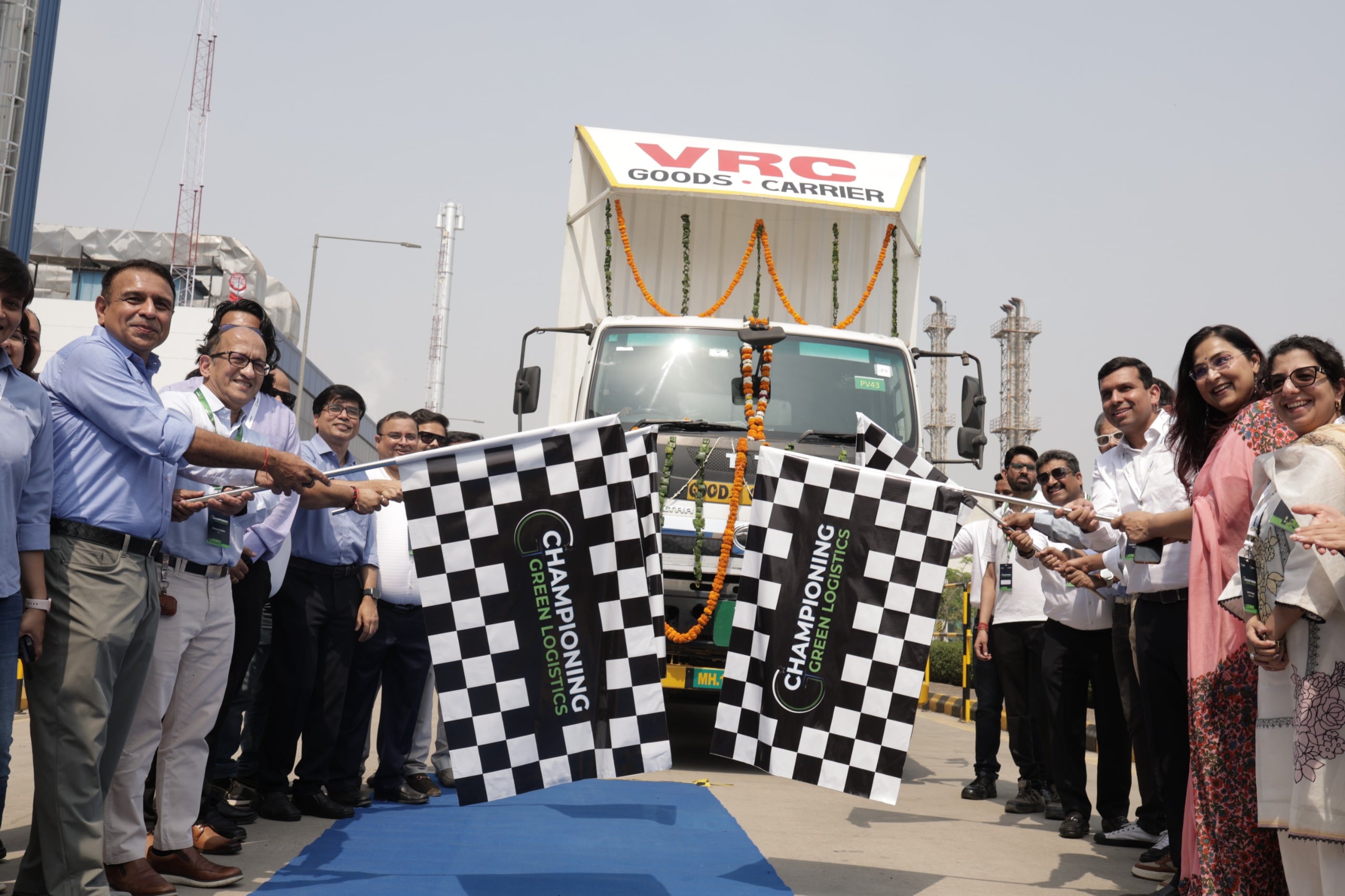
PepsiCo India team and partners at the electric vehicle green corridor launch
Electric freight in focus. Image: Autocar Professional

Your reading desk

Explore the India EV market outlook

Reporting dates and source links are retained. Forecasts are scenarios, company announcements are attributed claims, and learning models use illustrative assumptions.

Sales23 Nov 2026

One in ten vehicles sold this festive season was electric

India sold a record 5.53 million vehicles in the 42-day festive season, and EV sales crossed 5 lakh for the first time, up 52.6%.

The dealers’ body FADA released its festive-season figures on 23 November. The 42-day period, from the first day of Navratri (11 October) to 15 days after Dhanteras (21 November), saw a record 5.53 million vehicles sold at retail, 2.2% more than last year, even though passenger vehicle sales fell 7.16%.

Electric vehicles were the standout. EV retail sales rose 52.6% and crossed 5 lakh units in a festive season for the first time, so nearly one in ten vehicles sold was electric. Electric two-wheeler sales grew 61.1%, electric cars 72.9%, and electric commercial vehicles more than doubled.

FADA president Sai Giridhar said supply held EVs back. Strong sales of petrol and diesel vehicles dragged overall EV penetration down “from over 11 per cent to around 9 per cent during the period”, and he said better vehicle availability “could have added another 60,000 to 70,000 electric units to the festive tally”.

Festive-season EV sales growth, by segment

Why it matters

The festive season is when Indian families make their biggest vehicle purchases, and this year one in ten chose electric. Demand ran ahead of supply, which means more EVs on the road every month and more pressure on dealers and service networks to find trained EV staff.

What it means for you

Source: Business Standard

Share

Interactive explainer / 01

Energy follows your driving mode

Switch between acceleration and regenerative braking to see the direction of energy transfer.

BatteryInverterMotorWheels

Battery energy flows through the inverter and motor to the wheels.

Forecast23 Nov 2026

BloombergNEF: India to sell 5.2 million electric cars a year by 2040

BNEF’s India EV Outlook 2026 says electric car sales will pass 3 lakh this year, double by 2030 and reach nearly 5.2 million a year by 2040.

BloombergNEF’s India Electric Vehicle Outlook 2026 says India sold 2.9 million EVs in the first ten months of 2026, after more than 2.4 million in 2025. Electric passenger vehicle sales should pass 3,05,000 this year, up 42% and 6.7% of car sales, with private buyers making most purchases.

In its Economic Transition Scenario, electric car sales reach about 6,20,800 by 2030 (10.2% of car sales) and nearly 5.2 million a year by 2040. Electric two-wheelers, already 9.4% of two-wheeler sales, pass 4.5 million a year by 2030 and 13.2 million by 2040. Light commercial EVs could reach 64% of sales by 2040.

The build-out needed is huge. India may need more than 8.7 million charging connectors by 2040, about $29 billion of investment, and EV charging could use 96 TWh of electricity, 6.8% of national demand. BNEF also warns that, apart from three-wheelers, “no other vehicle segment is expected to meet” India’s 2030 electrification targets without stronger policy and investment.

Electric car sales per year in India (BNEF)

Why it matters

This is a 15-year demand curve for EV skills. Every one of those cars, scooters and chargers has to be designed, built, installed and serviced. The warning that most segments will miss 2030 targets also shows where the gaps are: affordable models, charging access and trained people.

What it means for you

Source: Autocar Professional

Share

Interactive explainer / 02

Why speed changes motor power

Adjust motor speed while torque is held at 20 Nm. This ideal mechanical calculation does not model losses or a real motor torque curve.

Power = torque × speedP (kW) = T (Nm) × rpm ÷ 9549

Policy23 Nov 2026

Auto PLI scheme beat its investment target, but sales reached only 22.6%

A NITI Aayog review finds carmakers invested more than promised under the auto PLI scheme, but extra sales and jobs are far behind target.

NITI Aayog’s Impact Assessment of PLI Schemes, prepared with IIM Ahmedabad, reviews the ₹25,938 crore auto PLI scheme approved in September 2021. Companies invested ₹44,326 crore by March 2026, above the ₹42,500 crore target. But extra sales reached only ₹52,414 crore against a five-year target of ₹2,31,500 crore, or 22.6%, and the scheme created 67,820 jobs against a target of 1,48,147.

EVs dominate what the scheme did support: 13,61,488 incentivised EVs, including 10,42,172 electric two-wheelers, 2,38,385 electric three-wheelers, 79,540 electric cars and 1,391 electric buses. Payouts to carmakers jumped to nearly ₹2,000 crore in FY2026 from ₹322 crore in FY2025, led by Bajaj Auto (₹625.65 crore), Tata Motors (₹403.18 crore), Ola Electric (₹366.78 crore), TVS Motor (₹320.51 crore) and Mahindra (₹283.82 crore).

Total disbursements were ₹2,386 crore as of March 2026, only about 9.2% of the outlay. NITI Aayog notes it is hard to separate the scheme’s effect from wider industry growth, and that its “contribution to export competitiveness is yet to be established”.

Auto PLI: results as % of target (to March 2026)

Why it matters

India has built the factories; now it needs the demand and the people. The jobs target is less than half met, and the scheme requires at least 50% local value addition, so there is room for many more skilled roles in EV component manufacturing, quality and testing.

What it means for you

Source: Autocar Professional

Share

Interactive explainer / 04

From cell materials to a usable battery pack

Select each stage to reveal its role. This simplified manufacturing sequence illustrates the process; it does not represent a particular factory.

ElectrodesCell assemblyFormationPack + BMS

Electrode preparation coats active material onto current collectors, followed by drying and processing.

Electric trucks23 Nov 2026

How PepsiCo India makes electric trucks pay for transporters

Guaranteed 2–5 year freight contracts mean transporters who switch to electric trucks are no worse off than with diesel, from the first month.

PepsiCo India now runs 15 electric 32-foot trucks, including diesel container trucks converted to battery-electric by Kalyani Powertrain, a Bharat Forge subsidiary. It started in March 2026 with eight converted trucks on a 115 km corridor from its Kosi Kalan plant near Mathura to its Pataudi hub in Haryana, and has since added trucks in Pune and Assam. Each truck covers about 4,500 km a month.

The key is the contract. A new electric truck costs nearly 3 times an equivalent diesel truck, and a converted one about 2–2.2 times. PepsiCo gives transporters freight contracts of 2 to 5 years, priced so they are no worse off than with diesel from the first month. “It should not be a penalty to them,” said Rinkesh Satija, PepsiCo India’s VP of supply chain operations. PM E-DRIVE adds up to ₹9.6 lakh per new electric truck when an old diesel truck is scrapped.

Its distributors also run 941 electric three- and four-wheelers from Piaggio, Bajaj Auto and Tata Motors, which pay back in about two years. India sold 821 electric heavy trucks (above 12 tonnes) from January to July 2026. PepsiCo India aims to cut transport emissions by 40% by 2030.

Why it matters

The biggest barrier to electric trucks is not technology but risk: who pays for a truck that costs three times as much? Guaranteed long-term contracts solve that, and the model can be copied by any large shipper. Conversions by Kalyani Powertrain also show that retrofitting is becoming real business, not just a hobby.

What it means for you

Source: Autocar Professional

Share

Interactive explainer / 03

A fleet is also a charging schedule

Explore an illustrative depot with equal charging sessions and no queue gaps. The result is not a forecast for the PepsiCo programme.

QueueCharging baysReady for duty

Assumption: each vehicle needs 6 kWh and each bay supplies a constant 3 kW. Actual time depends on charger sharing, tapering and vehicle availability.

Charging24 Nov 2026

Dynolt deploys over 1 lakh Made-in-India EV chargers in 18 months

The Bengaluru power-electronics startup designs its own charger hardware and firmware, and says three of India’s top ten EV makers buy only from it.

Dynolt Technologies, a Bengaluru power-electronics company founded in 2022, has deployed more than 1 lakh EV chargers for two- and three-wheelers within 18 months of starting commercial sales, with fivefold year-on-year growth. It supplies EV makers and battery-swapping operators, and says three of India’s ten leading EV makers source their charging technology only from Dynolt.

Unlike many charger brands that assemble imported kits, Dynolt designs and builds its own power conversion hardware, embedded firmware and control software. It has more than 300 employees, including over 100 engineers, has received a grant from the Ministry of Electronics and IT (MeitY), and runs an after-sales repair network to extend charger life and reduce e-waste.

Co-founder and CEO Rajesh Sura said the company was set up to build power conversion technology for Indian manufacturers so they rely less on outside suppliers. Next on its roadmap are chargers for electric cars and power electronics for energy storage, vehicle-to-grid (V2G) and vehicle-to-load (V2L). It plans to grow to more than 150 engineers by the end of 2027.

Why it matters

Every EV ships with a charger, and most have been built from imported parts. An Indian company designing its own power electronics at this scale shows the skills India needs: power electronics, embedded firmware and charger repair. These are some of the best-paid and hardest-to-fill roles in the EV industry.

What it means for you

Source: Autocar Professional

Share

Interactive explainer / 05

AC and DC charging take different routes

Select a charging route to see where AC becomes DC. Both routes ultimately charge the battery with controlled DC.

AC supplyAC EVSEOnboard chargerBattery

AC: conversion happens in the vehicle’s onboard charger. The EVSE manages connection and safety signalling.

Also in the news

More EV news in brief

More stories from 23–24 November 2026.

Two-wheelers

VinFast plans 300 scooter dealers

VinFast is targeting 300 electric scooter dealerships across 100 Indian towns by the end of 2027, with mass-market scooters arriving in early 2027.

Manufacturing

VinFast’s local sourcing stays at 15%

Parts localisation at VinFast India remains at 15%. The company says higher volumes are the key to sourcing more parts locally.

Heavy trucks

821 electric heavy trucks sold

India sold 821 new electric heavy goods vehicles (above 12 tonnes) between January and July 2026, according to VAHAN.

Electricity

EV charging to use 6.8% of India’s power

BloombergNEF projects EV charging will need more than 96 TWh by 2040, about 6.8% of India’s total electricity demand.

Fuel

Road fuel demand to peak in 2034

BNEF expects India’s road transport fuel demand to peak above 2.5 million barrels a day in 2034, then fall as EVs spread.

Turn reading into a next step

India EV market outlook: build your learning pathway

India EV market outlook: technology lab

Use these conceptual models to connect symptoms with evidence. They are learning aids, not pack-building instructions or approved repair procedures. Real protection thresholds and test methods depend on the manufacturer, chemistry, temperature and hardware.

Your chapter progress

Progress is stored on this browser when available.

ComplaintRecorded dataHypothesisVerification
Moving dashes illustrate the reasoning sequence, not electrical current.

EV news India learning lab: series and parallel

Series count determines nominal voltage. Parallel count determines capacity when identical cells share current appropriately. Nominal energy is voltage × ampere-hours; usable energy is lower and varies with operating limits. This model does not calculate safe current, wiring, thermal design or charger compatibility.

Try doubling parallel count while keeping series count fixed. Capacity and energy double; nominal voltage stays the same. Change chemistry and observe why the same series count need not mean the same pack voltage.

BMS decisions: test a fault scenario

This fictional 16-group NMC model demonstrates how protection can respond to different evidence. The example limits are not universal service limits. Actual systems may derate, latch a fault, require a reset or implement independent charge and discharge paths.

What the evidence says

Appropriate next step

Never use simulated values as permission to continue driving or charging a damaged battery. A missing reading is missing evidence, not a zero-volt measurement.

From symptom to evidence: guided walkthroughs

Record the complaint, conditions, original codes, diagnostic evidence, repair and verification outcome. Do not clear fault history before saving it. A part replacement without a supporting test can hide an intermittent fault and add unnecessary cost.

Search the EV technology glossary

16 terms

BMS

Battery management system: monitors battery conditions and requests protection according to its configuration.

SOC

State of charge: an estimate of remaining charge, not a direct capacity measurement.

SOH

State of health: a model-dependent estimate of battery condition.

Series

Connecting cell groups in series adds voltage.

Parallel

Connecting matched cells in parallel adds charge capacity.

Voltage sag

A reduction in terminal voltage under load; resistance, temperature and SOC influence it.

Cell imbalance

A difference between cell-group readings; compare at matching conditions.

Contactor

An electrically controlled switch used to connect or disconnect a power circuit.

Precharge

A controlled process that limits inrush into capacitors before the main connection closes.

Interlock

A safety input that prevents operation in an unsafe or unready state.

DTC

Diagnostic trouble code: a manufacturer-defined clue requiring supporting evidence.

CAN

A communication network used by vehicle controllers.

Isolation

Separation from energy sources using the approved procedure, followed by required verification.

Insulation resistance

Resistance between circuits and accessible structures; a DMM continuity check does not certify it.

Ah

Ampere-hour: charge capacity.

Wh

Watt-hour: energy; nominal voltage multiplied by ampere-hours gives a nominal estimate.

Further learning and primary references

Explore DIYguru training programs and training locations. Read the HSE electric and hybrid vehicle repair guidance for general workshop hazards (UK guidance, not Indian regulation), and Texas Instruments BQ76952 documentation for an example of configurable battery monitoring and protection. Always use the actual vehicle’s service documentation for repair limits.

Free counselling

Don’t just read EV news. Build a career in it.

Talk to a DIYguru counsellor about the right EV course for your background, from a 5-day scooter repair workshop to engineering nanodegrees.

  • Free, no-obligation call within 24 hours
  • Hands-on training on real EVs at DIYguru labs
  • ASDC & AICTE NEAT certified programmes
  • Placement support through emobility.careers

Prefer to call? +91 99109 18719 · [email protected]

Get free counselling

An advisor will call you within 24 hours.

🔒 Your details go only to DIYguru. No spam.

Top stories
Call Now WhatsApp
DIYguru

Let's Connect

Training programs · B2B partnerships · College workshops

🎓
Certification
Programs
🏢
B2B Corporate
Training
🏫
College
Workshops
🤝
Partnership &
Collaboration
Your data is secure · No spam · Expert callback within 2 hours