


Engineering graduates
Explore battery systems, embedded development, modelling and EV design specialisations.
Explore engineering pathways →

At EV Pathfinder Live, learners from B.Tech, diploma, non-technical and working-professional backgrounds asked one honest question. This is the answer they got, and how to be in the room next time.
The EV talent gap is real. This session covered the six career domains, the tools taught in the lab, and what placement outcomes look like.
Amith Mandal and Ashraf walk you through EV career domains, lab training, tools and placement outcomes in EV Pathfinder Live.
If the embedded player does not load, watch EV Pathfinder Live on YouTube.
Demand is growing faster than the supply of trained people, and you do not need one specific degree to enter. But a certificate alone will not carry you. The learners who stand out can open a battery pack, read a wiring harness, use a scan tool and explain how the systems work together.
Not sure where you stand? Take the free EV aptitude test or try the EV career path advisor.
Amith Mandal, Senior EV Technical Faculty at DIYguru, has a master's in product design and analysis and about a decade of work across EVs, CAD and CAE. He opened with four forces behind the shift: global warming and pollution, limited fossil fuel, engine inefficiency, and lower maintenance costs.
The market numbers back him up. Autocar Professional's Vahan-based analysis shows every segment setting a record in FY2026, and momentum carried on: Mercom India reports 8.37 lakh EVs sold in Q2 2026, up 52.3% on the year.
| Segment | FY2026 retail sales | Growth | What it means for careers |
|---|---|---|---|
| Electric two-wheelers | 14.0 lakh | 22% | Service technicians, battery and BMS roles |
| Electric three-wheelers | 8.3 lakh | 19% | Fleet maintenance, workshop supervisors |
| Electric passenger vehicles | 2.0 lakh | 85% | Design, embedded, high-voltage diagnostics |
| Electric commercial vehicles | 19,648 | 122% | Powertrain, charging, thermal systems |
The career column is DIYguru's own reading. Sales figures are from Autocar Professional's reports on Vahan data.
Amith walked through six areas. Open the program link under any domain to see its curriculum, fees and eligibility.
Model the vehicle, then simulate how it behaves before anything is built. A natural route for mechanical engineers.
EV Automotive Design Nanodegree →Configure lithium-ion cells with nickel strips, do the electrical calculations, and work with smart and IoT-linked BMS. Open to diploma and engineering holders who know basic chemistry and electrical maths.
Battery & BMS Nanodegree →BLDC, PMSM and axial flux motors, plus inverters and chargers. Amith pointed to a shortage of specialist motor design engineers in India.
EV Modelling & Simulation Nanodegree →Programming and electronic control now run the mechanical systems. This covers ECUs, VCUs, microcontroller boards and diagnostics.
Embedded Systems Nanodegree →Range anxiety is solved on the ground, by people who can install, connect and troubleshoot charging equipment.
Charging Technologies Certification →Customer satisfaction depends on this team, and service technicians, maintenance engineers and workshop supervisors are in high demand.
Certified EV Technician (CEVT) →His advice across all six: an EV combines mechanical, electrical, electronics, computer science and chemical engineering. Pick one domain to go deep in, but learn how the battery, motor and controller, charger and vehicle control unit work together. That awareness across departments is what makes you more employable.
Explore the energy path from a battery pack to the drive motor. Select a component to see its engineering role and watch the animated system respond. Illustrations are conceptual, not repair diagrams.
Stores electrical energy as direct current (DC). Its voltage, capacity and thermal condition influence the vehicle's operating range.
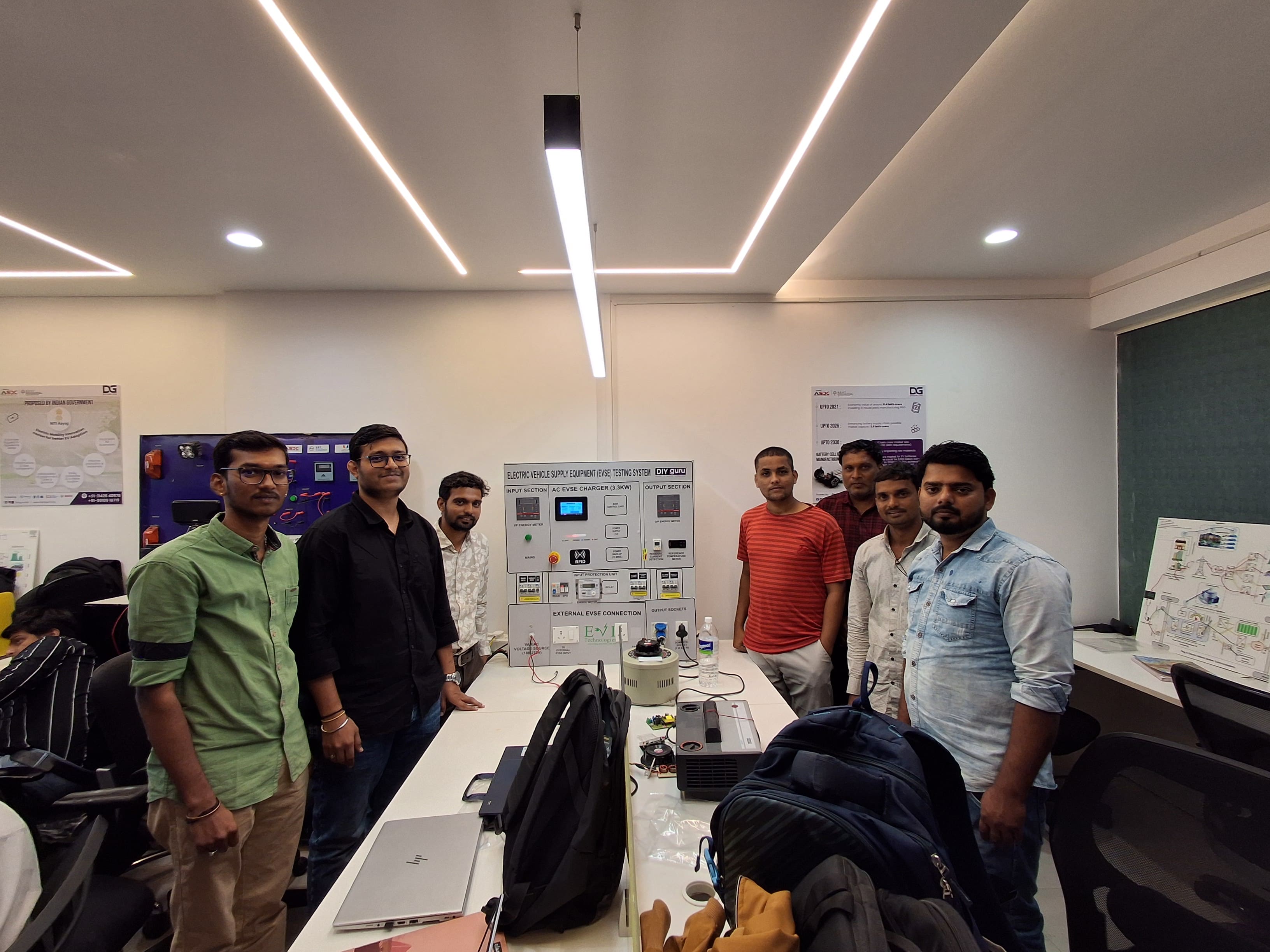
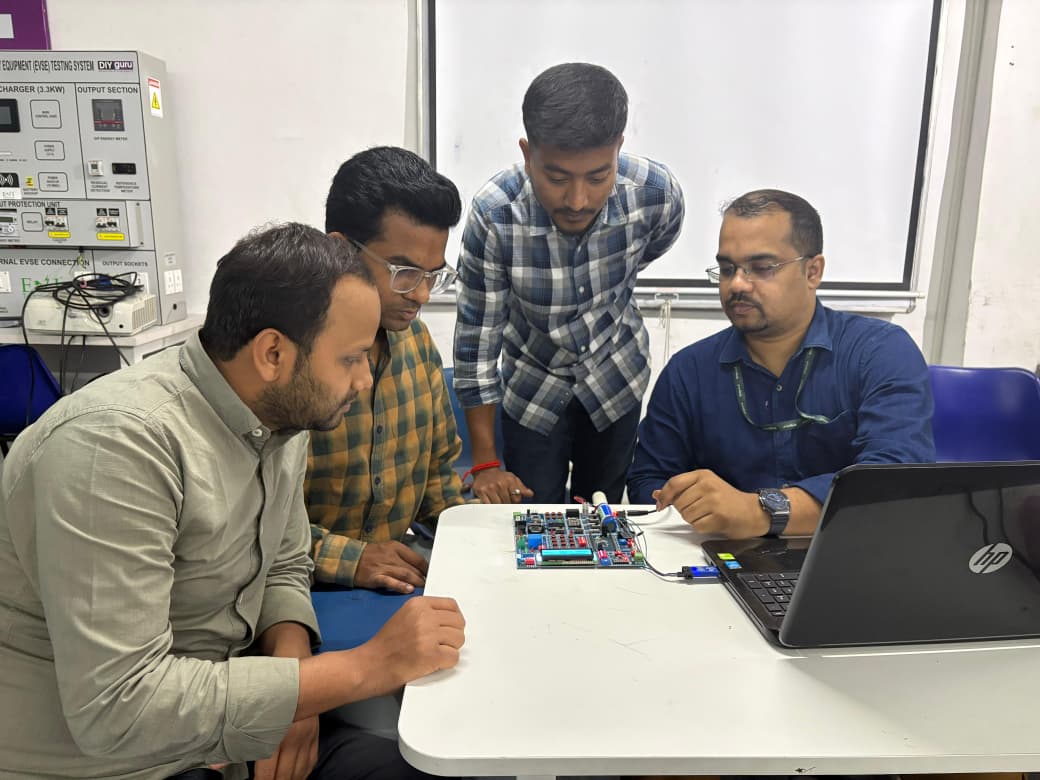
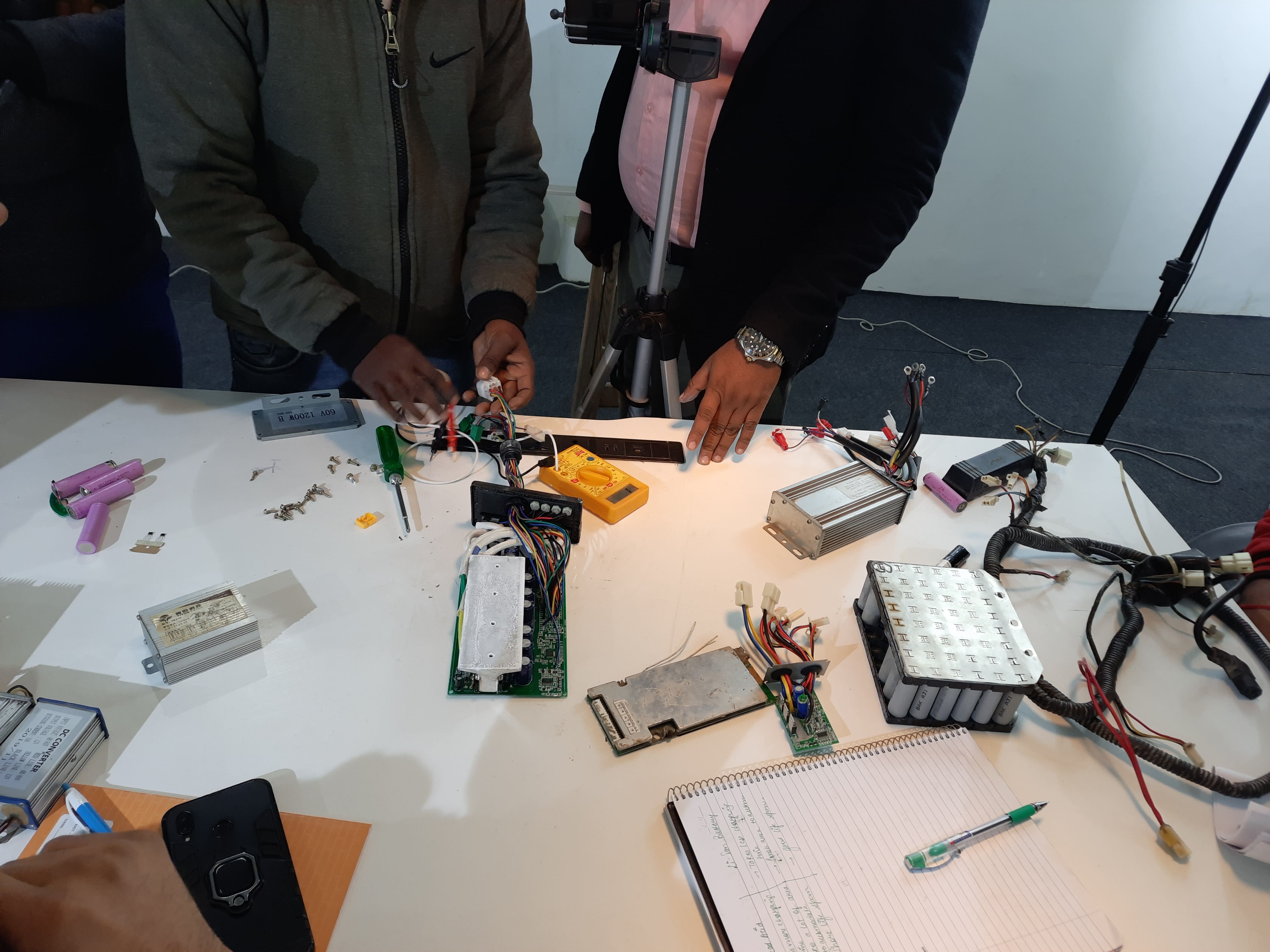
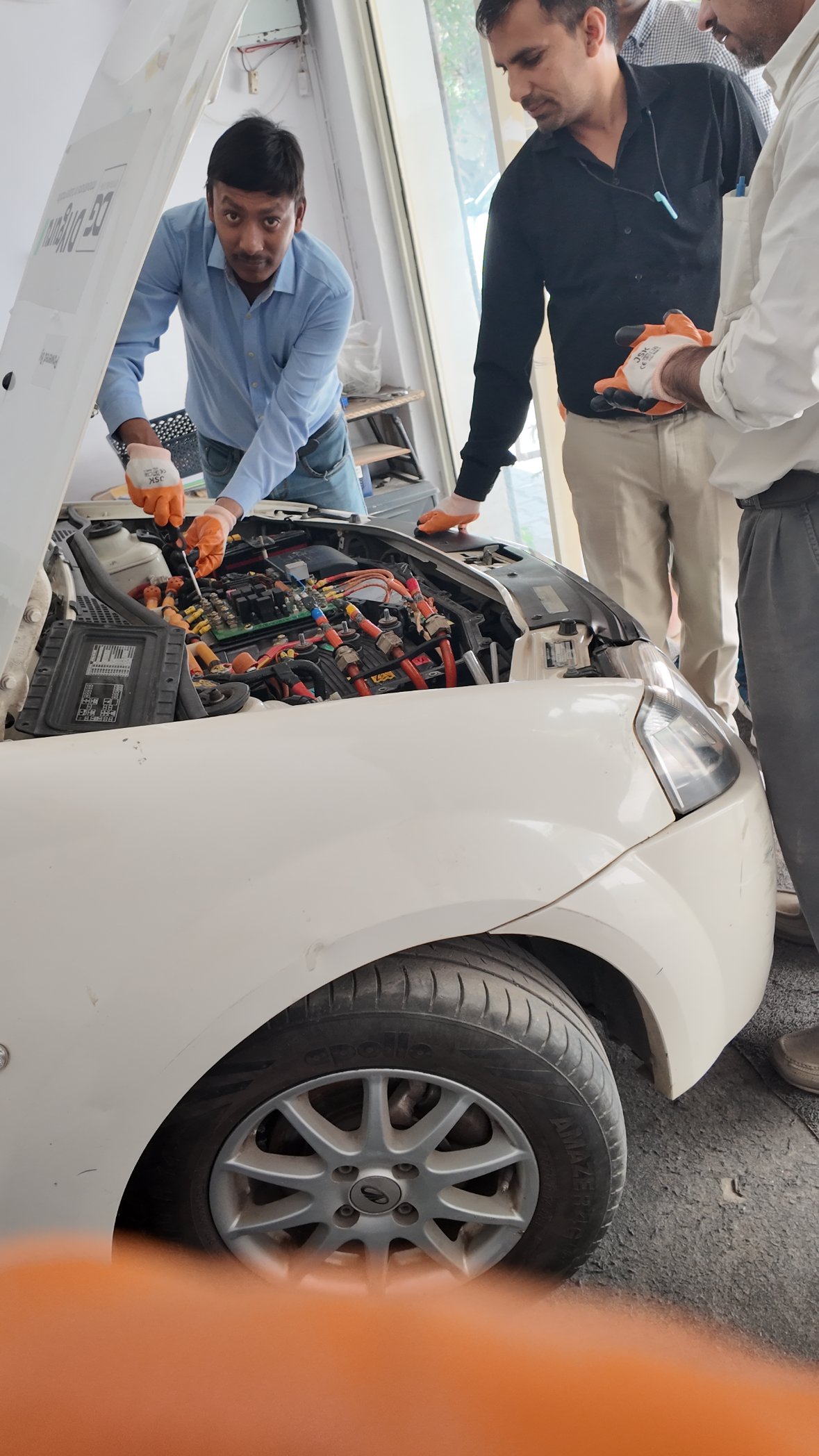
Attendees were taken through the DIYguru lab setup, station by station. You first troubleshoot dummy faults on a simulator, then move to a physical vehicle.
Ashraf, Head of GTM at DIYguru, answered this with results from DIYguru's own hiring events and its training-to-placement process.
placement rate presented for DIYguru's 7-step training-to-placement process.
shortlists from two hiring events: 25 companies at one, and 12 companies at the second edition of the Recruitathon.
approximate starting salary shared for Certified EV Technician graduates. Check other roles with the EV salary estimator.
Hiring partners mentioned in the session included Tata Motors, TVS, JBM, PMI and Yulu. Programs are recognised by ASDC and AICTE NEAT, Ministry of Education. Graduates can also apply directly through emobility.careers, DIYguru's EV jobs portal.
The session closed with a video from Shakir Sha, a 24-year-old electronics and telecommunication graduate, on the hands-on skills he built in BMS, EV technology and charging systems. More journeys are on the success stories page.
Outcomes depend on the program, your performance and the hiring market. DIYguru provides placement support; I3C–IIT Jammu and IIT Jammu do not make placement promises or guarantees for these programs.
| If you are | Start with | Why |
|---|---|---|
| 12th pass, ITI or diploma | Certified EV Technician (CEVT) or EV Battery Technician | Workshop skills for service and battery roles |
| B.Tech, clear on your domain | Battery, Embedded or Design Nanodegree | Six months of focused depth in one area |
| B.Tech, aiming for R&D or still unsure | 12-month PG Program with IIT Jammu | Exposure to battery, embedded, ADAS, power electronics, motor control and design |
| Looking for a full degree | PGD / M.Tech in EV Technology | A 24-month postgraduate degree route |
| Working professional | EV Diagnostics or BMS Specialist training | Add EV skills to your current automotive or electrical experience |
Whether you're choosing your first career or transitioning from another industry, start with DIYguru's collection of career planning resources.
Explore battery systems, embedded development, modelling and EV design specialisations.
Explore engineering pathways →Compare technician pathways, practical skills and entry-level opportunities.
Explore technician resources →Review upskilling choices and career-switching resources for electric mobility.
Plan your EV transition →Attendees of this session were offered 25% off PG and Advanced programs and 15% off CEVT. Offers are set for each session, and we announce them live.
Tell us where to send the invite. It is a good fit if you are:
Can't wait? Message us on WhatsApp.
We will send the next session's details to you. Meanwhile, find your fit with the Course Advisor Tool.
See what past sessions covered: Hardware-in-Loop, embedded systems in SDVs, EV battery diagnostics, or browse all webinars.
The market is growing quickly, with 24.5 lakh EVs retailed in FY2026, and the session estimated that demand for trained people is well above current supply. Your results will depend on the practical skills you build.
The poll at this webinar included non-technical attendees, and roles such as EV sales and marketing do not need an engineering degree. Technical roles need basic electrical and chemistry knowledge, which you can build. The Course Advisor Tool can suggest a starting point.
If you know your domain, choose a 6-month Nanodegree. If you want R&D or wide exposure, Ashraf suggested the 12-month PG Program.
The session recommended technician programs for ITI, diploma and 12th-class learners. Start with CEVT, which is built around hands-on workshop training.
Fill in the invite form above, or check the events calendar.
Compare programs, check eligibility, or speak to someone today on 9910918719.
Tell us your background and the EV domain you want to explore. A DIYguru advisor can help you compare suitable training pathways.
Prefer browsing first? Visit the EV Career Toolkit for more resources, or call 99109 18719.
Submitting a request does not confirm a calendar appointment. Our team will contact you to arrange the next step.
Enter your details once to keep watching and get invites to our next live EV sessions.
Returning you to the video now.

Training programs · B2B partnerships · College workshops