- Training and Certification Ecosystem
- Government-Supported Reskilling Initiatives
- ARAI Certification Tracks
- Industry-Academia Collaboration
- Certification Pathways
- Entry-Level Certifications (3-6 months)
- Intermediate Certifications (6-12 months)
- Advanced Certifications & Postgraduate Diplomas (12-18 months)
- Private Sector and EdTech Contributions
- International Benchmarks
- Key Takeaways
- FAQs
Training and Certification Ecosystem #
The successful transformation of India’s automotive workforce into an EV-ready talent pool depends on a structured reskilling and certification ecosystem. Unlike traditional ICE training pathways that evolved over decades, EV education in India is being fast-tracked through government support, industry-academia collaboration, and private edtech platforms.
Government-Supported Reskilling Initiatives #
The Indian government has positioned skilling and reskilling in EV technologies as a strategic priority under Skill India Mission and allied programs.
ARAI Certification Tracks #
The Automotive Research Association of India (ARAI) plays a pivotal role in creating standardized training benchmarks for EV professionals.
- EV Technology Specialist
- In-depth course on EV architecture, powertrain, and energy systems.
- High-Voltage Safety Professional
- Mandatory certification for technicians handling battery packs and charging infrastructure.
- EV Diagnostics Expert
- Specialized in fault detection, predictive maintenance, and compliance testing.
- Battery Pack Assembly & Recycling
- Focus on second-life applications and end-of-life management.
These certifications are widely recognized by OEMs, Tier-1 suppliers, and service centers.
Industry-Academia Collaboration #
A robust university-industry partnership is emerging to address the skills gap:
- 42 Universities in India now offer dedicated EV engineering programs, ranging from undergraduate electives to specialized M.Tech courses in e-Mobility.
- 18 Skill India Centers have been upgraded with EV manufacturing labs.
- Centers of Excellence (CoEs) established in partnership with IITs and global OEMs to research battery innovation, EV software, and mobility solutions.
- OEMs like Tata Motors, Mahindra Electric, Hero Electric, and Ola Electric sponsor EV training chairs and labs within universities.
Certification Pathways #
Reskilling is not linear, but follows a stackable certification model, enabling progressive growth.
Entry-Level Certifications (3-6 months) #
- Basic EV Technology (Skill India, ASDC)
- Electric Vehicle Fundamentals (DIYguru, Coursera, edX)
- High-Voltage Safety (ARAI, IMI UK Level 2 Certification)
Intermediate Certifications (6-12 months) #
- Battery Management Systems (NSDC & industry partners)
- EV Powertrain Design (IIT-led certification programs)
- Charging Infrastructure Development (Skill India + Tata Power Academy)
Advanced Certifications & Postgraduate Diplomas (12-18 months) #
- Connected Vehicle Technologies (Bosch, Tata Elxsi, IIT Madras collaboration)
- Autonomous Systems Integration (IIT Hyderabad, Intel India programs)
- Sustainable Design Engineering (International collaboration with Germany, Japan)
Private Sector and EdTech Contributions #
Private players are bridging the practical training gap through hands-on programs:
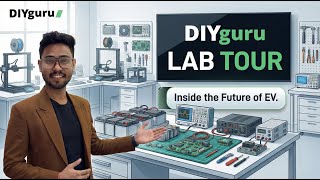
- DIYguru
- India’s leading EV upskilling platform with IIT/NSDC-certified programs.
- Offers PG Certification in EV Technology with IIT Jammu/IIT Guwahati.
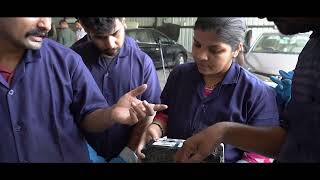
- Hands-on workshops using real EVs, motors, and batteries.
- OEM Training Academies
- Hero Electric Academy, Ola FutureFactory Training Center, Ather Energy Learning Hub train service professionals.
- EdTech Platforms (Coursera, Udemy, Great Learning)
- Offer modular courses on AI for EVs, power electronics, and mobility solutions.
- Offer modular courses on AI for EVs, power electronics, and mobility solutions.
International Benchmarks #
India is also aligning with global standards to ensure cross-border employability:
- IMI (UK) Level 2-3 Certifications in Hybrid/EV Maintenance.
- SAE International Programs on EV safety, powertrain, and battery systems.
- Fraunhofer (Germany) partnerships on battery research and recycling technologies.
- Japanese METI-supported training on hydrogen and EV hybrid systems.
Key Takeaways #
- The EV reskilling ecosystem in India is maturing rapidly, with government, academia, and industry co-creating structured pathways.
- A tiered certification model ensures entry-level workers, mid-career professionals, and advanced specialists can all find suitable programs.
- Global alignment of certifications will enhance India’s export of skilled EV workforce to regions like the Middle East, Europe, and Southeast Asia.
- By 2030, India is expected to have trained over 500,000 EV professionals through this integrated certification ecosystem.
FAQs #
Q1. Why is reskilling important for India’s EV workforce?
Reskilling ensures that India’s automotive workforce transitions from ICE-based skill sets to EV-ready expertise, enabling them to handle emerging technologies like battery systems, charging infrastructure, and EV diagnostics.
Q2. What government initiatives support EV reskilling in India?
Programs under Skill India Mission, PMKVY 4.0, Green Skill Development Programme, ASDC certifications, and DIYguru-NEAT AICTE collaborations provide subsidized and structured EV training.
Q3. What role does ARAI play in EV certification?
ARAI develops standardized certification tracks such as EV Technology Specialist, High-Voltage Safety Professional, and Battery Recycling Expert, which are widely recognized by OEMs and service centers.
Q4. How are universities contributing to EV skill development?
Over 42 universities in India now offer EV-focused programs, while IITs and OEMs are setting up Centers of Excellence for battery innovation, mobility software, and advanced EV technologies.
Q5. What are the different certification pathways available for EV professionals?
Certification pathways follow a tiered model:
- Entry-Level (3-6 months): EV basics, high-voltage safety.
- Intermediate (6-12 months): BMS, powertrain design, charging infra.
- Advanced (12-18 months): Connected vehicles, autonomous systems, sustainable design.
Q6. How is the private sector contributing to EV upskilling?
Platforms like DIYguru, Coursera, and Udemy, along with OEM academies (Hero, Ola, Ather), offer hands-on training, industry projects, and PG certifications in EV technology.
Q7. What international benchmarks align India’s EV certification ecosystem with global standards?
India is adopting IMI (UK) Level 2-3 certifications, SAE International programs, Fraunhofer (Germany) collaborations, and Japanese METI-supported hydrogen-EV hybrid training.
Q8. How many EV professionals are expected to be trained in India by 2030?
By 2030, India aims to train over 500,000 EV professionals through government initiatives, private platforms, and international collaborations.
Q9. What are the key benefits of a structured EV certification model?
It ensures employability across all career stages, meets OEM requirements, improves safety standards, and boosts India’s potential to export skilled EV professionals globally.