- 2.1 Dr. Rajesh Kumar
- Expanded Key Insights
- Expanded Research Priorities
- Closing Note from Dr. Rajesh Kumar
- 2. Research and Development Leadership
- 2.2 Prof. Srinivas Malladi
- Expanded Key Insights
- Expanded Educational Strategy
- Closing Note from Prof. Srinivas Malladi
- FAQs:
- 1. What are the key battery technology trends highlighted by Dr. Rajesh Kumar?
- 2. Why does Dr. Kumar stress interdisciplinary research in EVs?
- 3. How can quantum computing impact EV development?
- 4. What is CASR doing to prepare India for autonomous vehicles?
- 5. How is CASR integrating sustainability in EV R&D?
- 6. What role do global collaborations play in CASR's strategy?
- 7. What is Prof. Srinivas Malladi's view on bridging academia and industry?
- 8. Why is practical skill development critical for EV engineers?
- 9. Which emerging EV domains are IIT Bombay focusing on?
- 10. How is IIT Bombay transforming its EV curriculum?
- 11. What opportunities exist for students to gain industry exposure?
- 12. How does IIT Bombay support entrepreneurship in EVs?
- 13. What global partnerships does IIT Bombay maintain?
- 14. What is the common vision shared by both leaders?
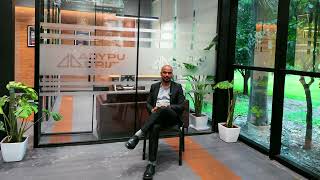
2.1 Dr. Rajesh Kumar #
Position: Director, Centre for Automotive Research (CASR)
Interview Focus: Advanced EV Technologies and Research Directions
Expanded Key Insights #
- Emerging battery technology trends
Dr. Kumar highlighted that India’s EV growth is closely tied to advances in energy storage. The transition from lithium-ion to solid-state and sodium-ion batteries is gaining momentum, with CASR leading multiple projects funded by the Department of Science and Technology (DST). He also pointed out the importance of localized supply chains–from raw material processing to cell manufacturing–to reduce India’s reliance on imports. - Importance of interdisciplinary research
EV innovation does not happen in silos. Dr. Kumar emphasized the need to merge disciplines such as materials science, mechanical engineering, AI-driven data analytics, and quantum computing. For example, CASR is currently working on projects that integrate machine learning algorithms for predictive battery health monitoring and lightweight nanocomposite materials for EV structures. - Quantum computing in mobility solutions
Although still in the research stage, CASR is exploring how quantum computing can accelerate battery material discovery, route optimization for fleet management, and advanced crash simulations. Dr. Kumar believes India must invest early in these frontier technologies to gain a competitive edge. - Future of autonomous vehicle technologies
He acknowledged that while full autonomy (Level 4 and 5) is still years away for India, research must prepare the ground today. CASR is collaborating with IITs and automotive OEMs on sensor fusion algorithms, V2X (vehicle-to-everything) communication, and ADAS calibration for Indian road conditions.
Expanded Research Priorities #
- Advanced battery chemistry research
Current efforts include developing sulfur-based cathodes, silicon anodes, and solid-state electrolytes to significantly boost energy density, safety, and lifespan. CASR is also running pilot programs on battery recycling and second-life applications to build a circular energy economy. - Sustainable mobility innovations
Beyond vehicles, CASR is focusing on green manufacturing processes, life-cycle emissions analysis, and renewable-integrated charging infrastructure. One active project involves solar-powered charging hubs for rural EV adoption. - Interdisciplinary technology integration
CASR has partnered with Tech Mahindra and Tata Elxsi to integrate AI, cloud platforms, and IoT solutions into R&D workflows. This includes digital twins for EV powertrain testing, predictive maintenance algorithms, and cloud-based fleet energy optimization. - Global research collaboration
Dr. Kumar stressed the importance of international partnerships. CASR is collaborating with research centers in Germany, Japan, and the US on solid-state batteries, hydrogen fuel cells, and autonomous systems. He believes these collaborations will accelerate India’s ability to leapfrog in EV innovation.
Closing Note from Dr. Rajesh Kumar #
“India cannot simply follow global EV trends–it must leapfrog by innovating for its unique mobility challenges. From developing robust EVs for harsh climates to designing low-cost batteries for mass adoption, our research priorities are aligned with India’s realities. At CASR, our mission is to ensure that every breakthrough translates into a scalable, sustainable, and globally competitive solution.“
2. Research and Development Leadership #
2.2 Prof. Srinivas Malladi #
Position: Head of EV Technologies, IIT Bombay
Interview Focus: Academic-Industry Collaboration and Skill Development
Expanded Key Insights #
- Bridging academic and industry requirements
Prof. Malladi emphasized that India’s EV transition requires universities to go beyond theory and ensure that students are equipped with industry-ready skills. He noted that academic research often progresses faster than industry adoption, so structured collaboration models are vital. IIT Bombay has launched joint R&D labs with Tata Motors, Mahindra Electric, and Ashok Leyland to align curriculum with real-world EV problems. - Importance of practical skill development
He underlined that students must work on prototypes, perform live testing, and engage in hands-on diagnostics. The institute now mandates capstone projects co-supervised by industry mentors–ranging from BMS algorithm design to lightweight chassis development. This ensures graduates don’t just understand EV theory but can build and troubleshoot actual systems. - Emerging technological domains
According to Prof. Malladi, the next decade of EV innovation will be driven by domains such as battery recycling, hydrogen fuel cells, embedded software integration, and autonomous navigation for Indian traffic conditions. IIT Bombay has launched research clusters in Battery Circular Economy, AI for Mobility, and Smart Grid Integration. - Creating innovation-driven learning ecosystems
He argued that students need an entrepreneurial mindset, not just employability. IIT Bombay has created EV incubator programs where students can commercialize their prototypes, access seed funding, and test products at campus testbeds.
Expanded Educational Strategy #
- Curriculum transformation
The institute has revised its M.Tech and PhD programs to include modules on EV power electronics, battery modeling, and sustainability assessment. Courses are delivered with case studies, live simulation tools, and access to advanced laboratories. - Industry-integrated learning programs
IIT Bombay runs executive programs with companies like Tata Technologies and DIYguru to upskill working professionals. Students are also exposed to 6-month internships at OEMs and Tier-1 suppliers, ensuring a strong transition into the workforce. - Research-driven skill development
Students actively participate in government-funded R&D projects such as Mission LiFE (Lifestyle for Environment) and FAME-II policy-driven pilots. These projects train them in policy interpretation, compliance, and scalable product development. - Global knowledge exchange
Through partnerships with TU Munich (Germany), University of Michigan (USA), and Nanyang Technological University (Singapore), IIT Bombay enables student exchanges and joint research on solid-state batteries, V2G systems, and smart charging networks. Prof. Malladi highlighted that cross-border exposure is essential to prepare India’s students for global EV competitiveness.
Closing Note from Prof. Srinivas Malladi #
“India’s EV industry will thrive only if we create a generation of innovators who can think across disciplines. Academia must not only supply talent to industry but must also co-create knowledge, co-develop products, and co-lead innovation. At IIT Bombay, our goal is to turn students into future-ready leaders who can design, build, and scale sustainable mobility solutions for the world.“
FAQs: #
1. What are the key battery technology trends highlighted by Dr. Rajesh Kumar? #
Dr. Kumar emphasized the shift from lithium-ion to solid-state and sodium-ion batteries. CASR is also developing sulfur cathodes, silicon anodes, and solid electrolytes to enhance energy density, safety, and lifespan.
2. Why does Dr. Kumar stress interdisciplinary research in EVs? #
He believes EV innovation requires collaboration across materials science, AI, mechanical engineering, and quantum computing. CASR projects include predictive battery health monitoring, nanocomposite materials, and AI-based fleet optimization.
3. How can quantum computing impact EV development? #
Quantum computing can accelerate material discovery for batteries, optimize fleet routing, and improve crash simulations. While still early-stage, CASR is investing in this frontier technology for long-term competitiveness.
4. What is CASR doing to prepare India for autonomous vehicles? #
CASR is working with IITs and OEMs on sensor fusion, ADAS calibration, and V2X communication suited for Indian roads, laying the foundation for future autonomy (Levels 3-5).
5. How is CASR integrating sustainability in EV R&D? #
CASR is focused on circular energy solutions such as battery recycling, second-life applications, solar-powered rural charging hubs, and green manufacturing to minimize life-cycle emissions.
6. What role do global collaborations play in CASR’s strategy? #
Dr. Kumar highlighted partnerships with research centers in Germany, Japan, and the US on solid-state batteries, hydrogen fuel cells, and autonomous driving systems to accelerate India’s EV innovation.
7. What is Prof. Srinivas Malladi’s view on bridging academia and industry? #
Prof. Malladi stressed that universities must equip students with practical, industry-ready skills. IIT Bombay has joint labs with Tata Motors, Mahindra Electric, and Ashok Leyland to solve real-world EV challenges.
8. Why is practical skill development critical for EV engineers? #
He underlined that students must build prototypes, perform live testing, and troubleshoot systems. Mandatory capstone projects co-supervised by industry mentors ensure applied learning beyond theory.
9. Which emerging EV domains are IIT Bombay focusing on? #
Key areas include battery recycling and circular economy, hydrogen fuel cells, embedded software integration, and autonomous navigation adapted to Indian traffic.
10. How is IIT Bombay transforming its EV curriculum? #
The institute revised M.Tech and PhD programs to cover EV power electronics, battery modeling, and sustainability, using case studies, simulations, and advanced lab facilities.
11. What opportunities exist for students to gain industry exposure? #
Students participate in 6-month OEM internships, executive programs with Tata Technologies and DIYguru, and government-funded pilots like FAME-II and Mission LiFE.
12. How does IIT Bombay support entrepreneurship in EVs? #
Through incubator programs, students can commercialize prototypes, access seed funding, and test solutions in dedicated EV testbeds.
13. What global partnerships does IIT Bombay maintain? #
The institute collaborates with TU Munich (Germany), University of Michigan (USA), and NTU Singapore for joint research and student exchange in solid-state batteries, V2G, and smart charging.
14. What is the common vision shared by both leaders? #
Both Dr. Kumar and Prof. Malladi stress that India must leapfrog global EV trends by focusing on localized, sustainable, and scalable solutions–backed by interdisciplinary research, industry-academia collaboration, and skill-driven education.